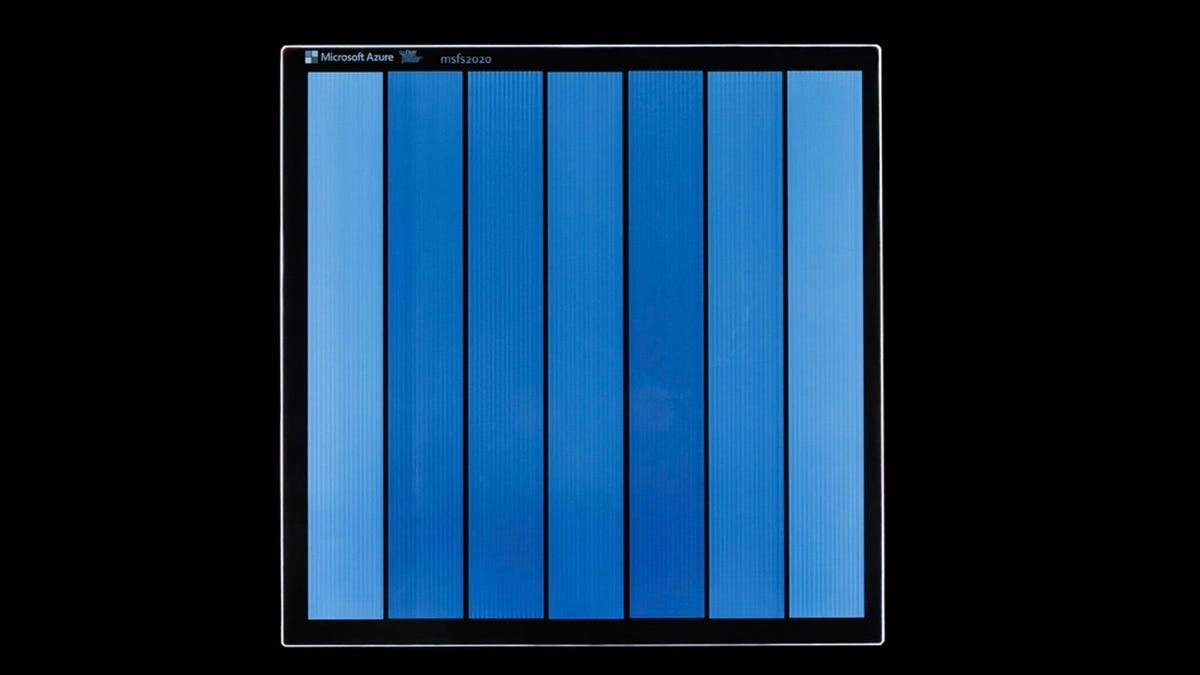
Microsoft researchers have successfully demonstrated a revolutionary method to store vast amounts of data inside quartz glass plates using femtosecond lasers, a breakthrough that promises to preserve critical information for over 10,000 years. This initiative, known as Project Silica, fundamentally rethinks archival storage by moving away from degradable magnetic media to a substrate that is virtually indestructible, waterproof, and resistant to electromagnetic pulses. By encoding data into the physical structure of glass, Microsoft is targeting the massive environmental and financial costs associated with maintaining the world's expanding digital history.
This technology is designed specifically for the cloud era, addressing the limitations of current archival systems that rely on magnetic tape. While tape degrades and requires costly rewriting and temperature-controlled environments every few years, the glass plates developed under Project Silica require zero energy to maintain once the data is written. This development marks a significant step toward sustainable data centers, potentially eliminating the cycle of e-waste generated by retiring obsolete storage hardware.
The Physics of Laser-Etched Glass Storage
The core of this technology relies on ultrafast femtosecond lasers to create nanoscale three-dimensional structures, known as voxels, inside pure quartz glass. Unlike traditional optical discs that store data on the surface, Project Silica writes data across hundreds of layers within the glass itself. The laser pulses permanently alter the physical structure of the glass, changing how it responds to polarized light. This process allows for incredibly high data density, with a single palm-sized plate capable of holding terabytes of data.
Retrieving this data requires a sophisticated interplay between hardware and software. A computer-controlled microscope reads the glass plate by passing polarized light through it. As the light interacts with the voxels, its polarization changes, creating a visual pattern that is captured by a high-speed camera. Advanced machine learning algorithms then decode these optical patterns back into binary data. This separation of the reading and writing processes ensures that the storage medium remains passive and durable, while the reader technology can be upgraded independently over time.
Sustainability and the End of Data Migration
For enterprise clients and cloud providers like Azure, the primary value proposition of Project Silica is the elimination of data migration. In current data centers, magnetic tapes must be replaced every five to seven years to prevent data rot, a process that is labor-intensive and generates significant electronic waste. Glass storage disrupts this cycle entirely. Once data is etched into the quartz, it is stable for millennia without the need for climate control or electricity to preserve the bit integrity.
The physical resilience of the glass plates is unmatched by any existing commercial storage medium. Microsoft researchers have subjected the plates to extreme conditions, including baking, boiling, scouring with steel wool, and flooding, without any data loss. This durability makes glass storage an ideal solution for preserving humanity's most valuable data, from cultural heritage and legal records to scientific data and medical histories, ensuring they remain accessible for future generations regardless of environmental changes.
Comparison: Glass vs. Traditional Archival Storage
| Feature | Project Silica (Glass) | LTO Magnetic Tape | Hard Disk Drive (HDD) |
|---|---|---|---|
| Lifespan | 10,000+ Years | 15-30 Years | 3-5 Years |
| Maintenance | Zero (Passive) | High (Climate Control) | High (Active Power) |
| Durability | Water/Heat/EMP Proof | Sensitive to Heat/Magnets | Fragile Mechanical Parts |
| Data Migration | None Required | Every 5-7 Years | Every 3-5 Years |
Frequently Asked Questions
Can I rewrite data on the glass plates?
No, Project Silica uses a WORM (Write Once, Read Many) model. Once the laser etches the voxels into the glass, the data is permanent and cannot be modified, making it ideal for secure archival and legal records.
How much data can one glass plate hold?
While capacities are constantly evolving, current iterations of the palm-sized quartz plates can store several terabytes of data, roughly equivalent to thousands of movies or millions of documents.
When will this technology be available for consumers?
This technology is currently designed for cloud-scale storage within Azure data centers. It is not intended for consumer home use, but rather as a backend solution for long-term cloud backup services.
My Take
Project Silica represents a necessary evolution in how we think about data permanence. As our digital footprint grows exponentially, the reliance on fragile magnetic media is becoming an ecological and economic liability. Microsoft's move to utilize glassa material that has preserved physical artifacts for centuriesto store digital code is a poetic and practical masterstroke. While it won't replace your SSD for daily tasks, it is undoubtedly the future of the cloud's "cold storage," ensuring that the knowledge we create today survives long after the servers that generated it have rusted away.
This article was written by AI from reporting by cnet.com.