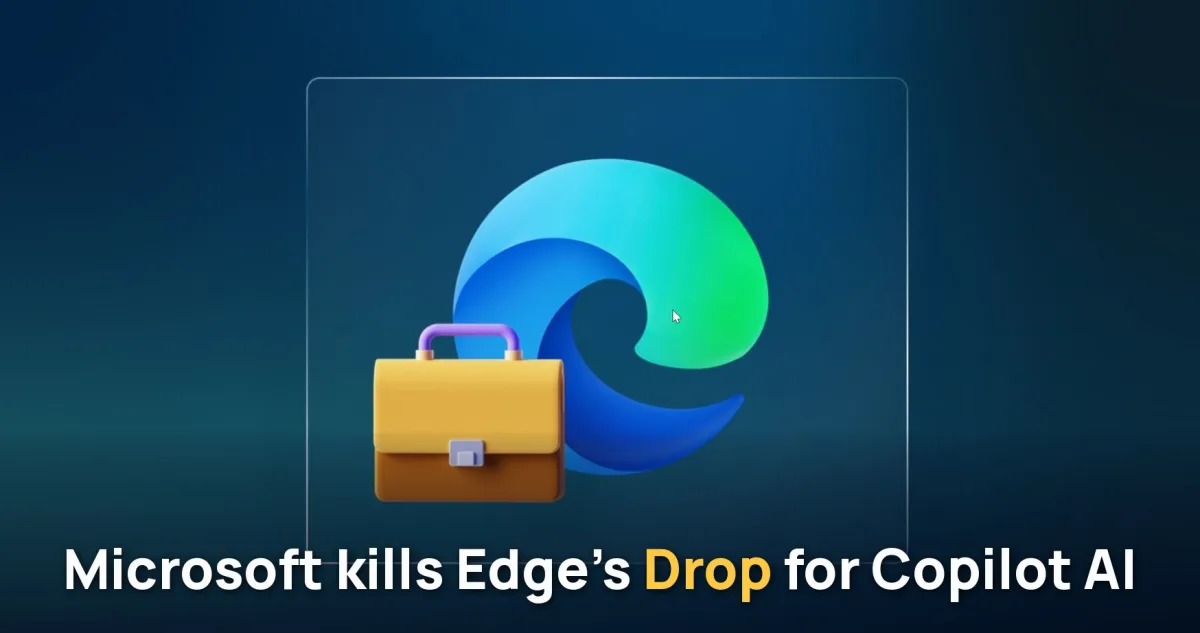
Microsoft is officially killing off Edge Drop, the browser’s beloved cross-device file-sharing tool, leaving users with a narrow window to back up their saved text notes. This aggressive feature purge follows the recent removal of Sidebar and Collections in Edge 149, signaling a massive shift as the company guts traditional browsing tools to make way for a complete Copilot AI takeover.
Edge Drop debuted as a standout utility that allowed users to seamlessly drag and drop files, images, and text between PCs, Android, and iOS devices without relying on third-party apps or email workarounds. Powered by your OneDrive storage, the feature offered instant, uncompressed transfers. According to Microsoft's official support document, it was designed as a secure, native bridge across the Microsoft ecosystem.
How to Back Up Your Edge Drop Notes
While your shared files and images remain safely stored in your OneDrive account, any text snippets or clipboard content shared via Drop will be permanently deleted when the feature goes offline.
- Open your Microsoft Edge browser (the warning is currently rolling out in Edge Canary).
- Locate the new warning banner stating: "Drop is being retired."
- Click the explicit "Download text" button provided in the alert.
- Save the generated.txt file to your local drive to preserve your clipboard history.
The systematic removal of Sidebar, Collections, and now Drop is not a coincidence. Microsoft Edge is now operating under the Microsoft AI division, spearheaded by the Copilot leadership team. The browser is being fundamentally redesigned to share a unified design system with the Copilot app, which is built on WebView.
By stripping away legacy features, Microsoft is clearing the interface to ensure Copilot becomes the undisputed focal point of the browsing experience. The company is actively bridging the gap between the browser and its AI assistant, reusing design elements to create a seamless, AI-first environment.
The Hidden Cost of the AI Browser Wars
Microsoft’s decision to nuke genuinely useful, everyday utilities like Drop and Collections reveals a risky pivot in its browser strategy. Edge originally carved out its niche by offering built-in productivity tools that Google Chrome and Firefox lacked. By sacrificing these unique selling points on the altar of Copilot, Microsoft is betting that generative AI will be enough to retain its power users.
However, this strategy risks alienating the very demographic that championed Edge in the first place. Stripping away a seamless, native file-sharing bridge forces users back to clunky workarounds like the Phone Link app or third-party cloud services. If the promised Copilot integration fails to deliver immediate, practical value that offsets the loss of these tools, Edge could quickly lose its identity as the ultimate productivity browser.