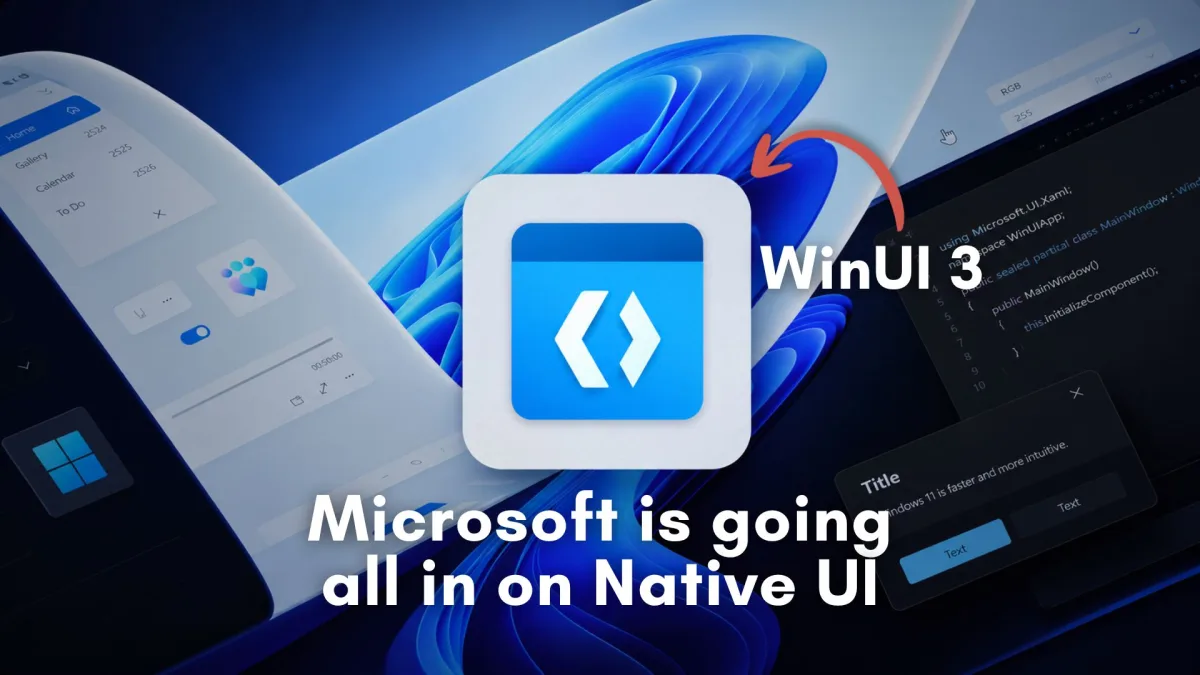
If your PC feels sluggish when opening native applications, you are not alone. Microsoft is preparing a critical Windows 11 WinUI performance update designed to drastically reduce RAM consumption across the operating system. Targeted at everyday users and enterprise developers frustrated by framework overhead, this upcoming patch aims to stabilize memory management before the company rolls out a completely rewritten Start menu.
At the recent Build 2026 conference, Microsoft admitted that its native framework is currently unoptimized, causing noticeable stuttering on lower-end machines. The development team is now prioritizing fundamental quality fixes over new features, ensuring that core OS elements do not degrade overall system performance.
How to Optimize Windows 11 Native App Performance
While Microsoft finalizes its memory management update, you can take immediate steps to reduce framework lag on your machine.
- Change your default File Explorer landing page from the Home tab to This PC. This ensures faster loading times, as the Home tab relies heavily on unoptimized framework elements that cause noticeable delays.
- Monitor your background processes using Task Manager. This enables you to identify which native apps are currently hogging memory before the official patch arrives.
- Install the latest cumulative updates via Windows Update. This ensures your system is ready to receive the new Windows system compositor integration as soon as it drops.
The Shift to the System Compositor
To combat the sluggishness of native apps, Microsoft is moving the WinUI framework directly to the Windows system compositor. This architectural shift is expected to make both individual applications and the broader OS interface significantly faster. The initial code for these memory usage improvements has already been pushed to the company's public Git repository.
On the performance side we’ve invested heavily in really improving memory usage as well as switching over to a system compositor, which should yield some even better performance improvements.
- Chris Anderson, Windows UI Team, Microsoft
Because of these ongoing optimizations, the highly anticipated rewrites of the Start menu and the Agenda view in the Notifications center have been delayed. Microsoft developers are internally testing reliability fixes to ensure that when the new Start menu finally ships, it will use less RAM and eliminate UI stuttering.
"I really want to spend the time before I dive into the new and exciting things that I think are attractive and shiny baubles in the feature," Anderson explained. He emphasized that fixing bugs and improving fundamentals are the absolute priorities right now.
Enterprise Push and Dropping the Version Number
Beyond performance, Microsoft is addressing massive feature gaps that have kept enterprise developers from adopting the framework. The company is preparing built-in DataGrid and Charting controls, reducing the need for developers to rely on third-party open-source libraries. A complete system tray implementation is also in the works to address long-standing developer complaints.
To signal its long-term commitment, Microsoft is officially dropping the "3" from WinUI 3. Moving forward, the framework will simply be known as WinUI. Anderson confirmed that the company has "no intention of building a new framework," aiming to reassure developers who feared another sudden shift in Microsoft's UI strategy.
The Rebranding That Could Save Windows Development
Dropping the version number from WinUI is more than a cosmetic change; it is a desperate plea for developer trust. For years, Microsoft has alienated creators by constantly introducing and then abandoning UI frameworks. By committing to a version-less WinUI and integrating it directly into the Windows shell, the company is finally signaling long-term stability.
However, this strategy hinges entirely on execution. If the upcoming Start menu rewrite launches with the same memory leaks that plague current native apps, enterprise adoption will stall permanently. Microsoft is making the right call by halting feature development to fix the foundation, but the true test will be whether these system compositor changes actually translate to measurable RAM reductions on everyday hardware.
This article was written by AI from reporting by windowslatest.com.