
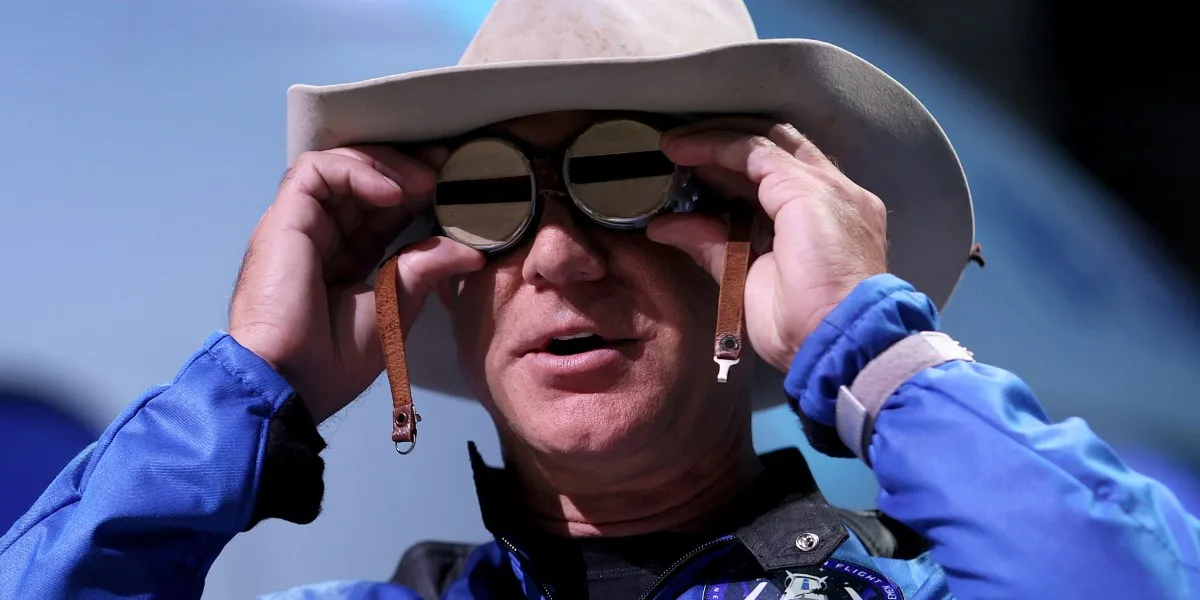
While some tech leaders warn that artificial intelligence could end civilization, Amazon and Blue Origin founder Jeff Bezos remains highly optimistic about the future. Speaking at Italian Tech Week 2025, Bezos predicted that by 2045, millions of people will be living in space, while robots will take over the burden of commuting and physical labor.
“I don’t see how anybody can be discouraged who is alive right now,” Bezos said, rejecting the pessimistic rhetoric that has followed the launch of ChatGPT. He argued that technological tools will continue a pattern of increasing civilizational abundance, comparing modern advancements to the invention of the plough 10,000 years ago.
Robots to handle off-planet labor
In Bezos's vision, humanity's expansion into space will accelerate rapidly over the next couple of decades. However, he noted that this migration will be driven by desire rather than necessity. “They’ll mostly be living there because they want to,” he said. “We don’t need people to live in space.”
Instead of humans performing difficult tasks on other planets, Bezos expects machines to take over. “If you need to do some work on the surface of the moon or anywhere else, we will be able to send robots to do that work, and that will be much more cost-effective than sending humans,” he explained.
Tech leaders align on space timelines
Other prominent technology executives share Bezos's expectation of a near-term space economy. OpenAI CEO Sam Altman predicts that within 10 years, college graduates will be working in “some completely new, exciting, super well-paid” jobs in space. Altman noted that he is jealous of younger generations, as his own cohort's early-career jobs will look “boring” and “old” by comparison.
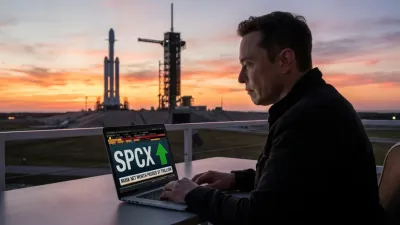
Elon Musk, CEO of Tesla and the $1.95 trillion space exploration company SpaceX, believes humans will reach Mars as soon as 2028, with unmanned SpaceX rockets scheduled to launch next year.
Dylan Taylor, founder and CEO of Voyager Technologies, also expects rapid progress. Taylor, who became a billionaire at 53 after Voyager went public on the NYSE last year at a $3.8 billion valuation, told Fortune that humans will definitely be living and working in space by the early 2030s. Voyager, which holds multiple NASA contracts, is currently building a replacement for the International Space Station.
“We’ll have a moon base, people living and working on the moon,” Taylor said. “You’ll be able to look up at the moon and see lights on the moon.” Taylor's background includes founding Space for Humanity in 2017, before founding Voyager two years later. He also invested early in Relativity Space alongside Mark Cuban, and acted as an angel investor in Space Adventures.
Bill Gates focuses on Earth and AI
Microsoft cofounder Bill Gates offers a contrasting view on where billionaires should direct their resources. In a previous interview with comedian James Corden, Gates suggested prioritizing our current planet, saying, “Space? We have a lot to do here on Earth.”
Gates remains uncertain about the ultimate impact of technology, noting that if he could speak to a time traveler, he would ask whether AI helped or doomed humanity. However, he does see an optimistic scenario where AI handles hard work, potentially making a two-day workweek the norm. “If you zoom out, the purpose of life is not just to do jobs,” Gates said.
This article was written by AI from reporting by fortune.com.