Confirmation and Timeline
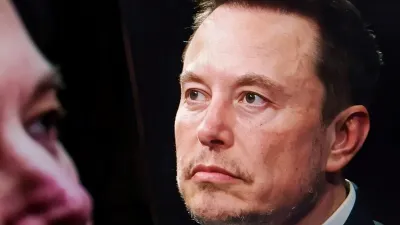
Elon Musk confirmed on X that xAI will open-source its Grok 3 AI model, directly fulfilling a pledge made in August 2025. This announcement aligns with earlier statements from August 2025, where Musk indicated Grok 3 would follow Grok 2.5 into open source within six months, targeting a February 2026 release. Grok 3, xAI's flagship model released on February 17, 2025, was trained using 10x more computing power than Grok-2 on the Colossus data center with around 200,000 GPUs.
Background on Grok Series and Open-Sourcing
xAI's open-source strategy dates back to March 2024, when Grok-1 was released under the Apache-2.0 license, sharing its architecture and weight parameters. In August 2025, xAI open-sourced Grok 2.5, making its code available on Hugging Face for developers to download, run, and modify. Despite being superseded by Grok 4 and Grok 4 Heavy in July 2025, Grok 2.5 offered significant improvements over Grok-1. Grok 3 outperformed models like OpenAI's GPT-4o on benchmarks such as AIME for math reasoning and GPQA for PhD-level science, with a mini version for faster responses.
Initially exclusive to X Premium+ and SuperGrok subscribers, Grok 3 introduced features like DeepSearch for internet and X-based summaries. xAI positions these releases as a commitment to democratizing AI, contrasting with closed models from competitors.
Why This Matters
Open-sourcing Grok 3 accelerates innovation by granting developers worldwide free access to a state-of-the-art model, fostering custom applications in fields like research and enterprise tools. For developers and researchers, this means building on xAI's advancements without proprietary barriers, potentially leveling the playing field against dominant players like OpenAI. Amid multibillion-dollar investments and regulatory scrutiny over AI transparency, this move underscores xAI's push for openness, which could influence policy debates on model accessibility.
Realistic Scenario: Enterprise Deployment
Consider a mid-sized fintech firm integrating open-source Grok 3 into its fraud detection system. Developers fine-tune the model on proprietary transaction data, leveraging its superior reasoning to flag anomalies 20% more accurately than legacy tools. This setup reduces costs compared to paid APIs and allows rapid iteration, helping the firm comply with data privacy regs while scaling operations.
Forward-Looking Implications
Releasing Grok 3's code could spark a wave of derivative models, enhancing global AI capabilities and pressuring rivals to open their systems. As xAI eyes government contracts with Grok For Government, this transparency might ease adoption in regulated sectors. For everyday users like engineers tweaking chatbots for personal projects, it means more powerful, customizable AI at no cost, reshaping how individuals harness technology.
Context of Regulatory Scrutiny
The pledge comes amid heightened oversight of AI firms, with xAI's $6 billion Series B funding from partners like a16z and Sequoia highlighting its scale. Critics have questioned benchmark comparisons, such as Grok 3's use of consensus@64 techniques, but open-sourcing invites independent verification. Social media buzz on X shows excitement, reviving interest in Musk's vision for accessible AI.
Human Impact
Researchers in underfunded labs, previously sidelined by expensive models, now gain tools to tackle real-world problems like climate modeling, empowering human ingenuity over corporate gatekeeping.
xAI's Broader Ecosystem
Grok 3 builds on updates like multilingual support, Aurora image generation, and API access with free credits. Available on grok.com, iOS, Android, and X, it integrates real-time search and tool use in later versions like Grok 4. This open-source step positions xAI as a leader in transparent AI development.
This article was written by AI from reporting by dataconomy.com.