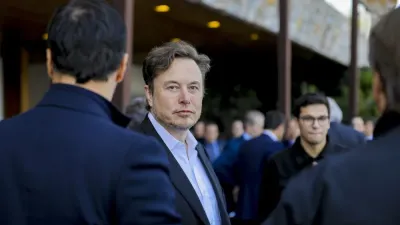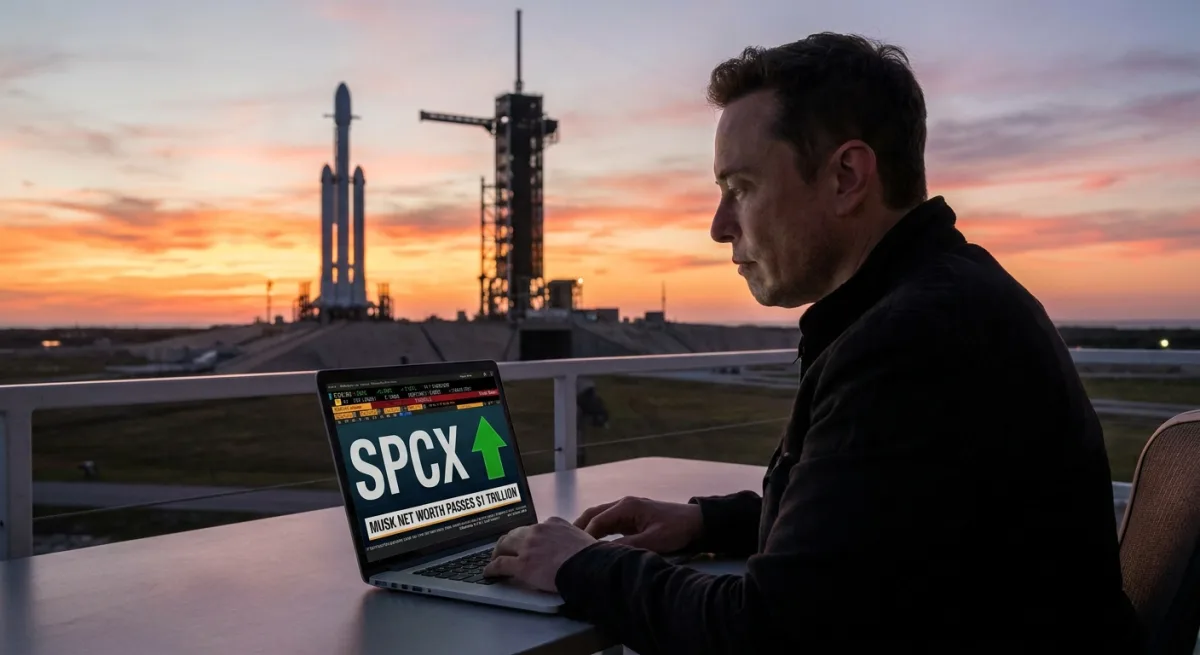
Elon Musk has officially become the world’s first trillionaire, driven by the highly anticipated SpaceX IPO that sent his net worth soaring past the 13-figure mark. With shares of the newly public entity (SPCX) opening at $150, the valuation easily surpassed the $138 benchmark required to push Musk's personal wealth over $1 trillion.
Prior to the public offering, Musk’s net worth hovered around $800 billion. The historic milestone is anchored by his 4.8 billion shares in SpaceX, combined with his existing wealth from companies like Tesla. To put this into perspective, Musk is now worth roughly as much as the next four wealthiest individuals in the world combined. According to Forbes, Larry Page, Sergey Brin, Jeff Bezos, and Larry Ellison hold a collective wealth of just over $1 trillion, with Bezos and Ellison each holding less than a fourth of Musk’s current net worth. This achievement comes exactly 110 years after John D. Rockefeller became the world’s first billionaire in 1916.
The financial surge follows a massive corporate restructuring earlier this year, where SpaceX consolidated Musk’s rocket, artificial intelligence, and social media platforms under a single umbrella. In its S-1 filing, the company outlined an ambitious roadmap to "build the systems and technologies necessary to make life multiplanetary, to understand the true nature of the universe, and to extend the light of consciousness to the stars." A key technological pillar of this new conglomerate is the concept of "orbital AI compute," which aims to deploy AI data center servers into space using SpaceX's reusable rockets.
The Orbital Compute Gamble Behind the Trillion-Dollar Valuation
While the $1 trillion milestone is a historic financial headline, the true driver of this valuation is the unprecedented consolidation of aerospace, AI, and social data into a single corporate entity. By merging xAI and X (formerly Twitter) into SpaceX, Musk isn't just launching rockets; he is attempting to build an off-planet infrastructure for artificial intelligence.
The concept of "orbital AI compute" theoretically solves the massive energy and cooling bottlenecks facing terrestrial data centers, leveraging the vacuum of space and unfiltered solar energy. However, this $150-per-share opening price assumes flawless execution. If the latency issues or payload costs of launching heavy AI servers prove insurmountable, the SPCX stock could face a severe reality check, dragging Musk's historic net worth down with it.