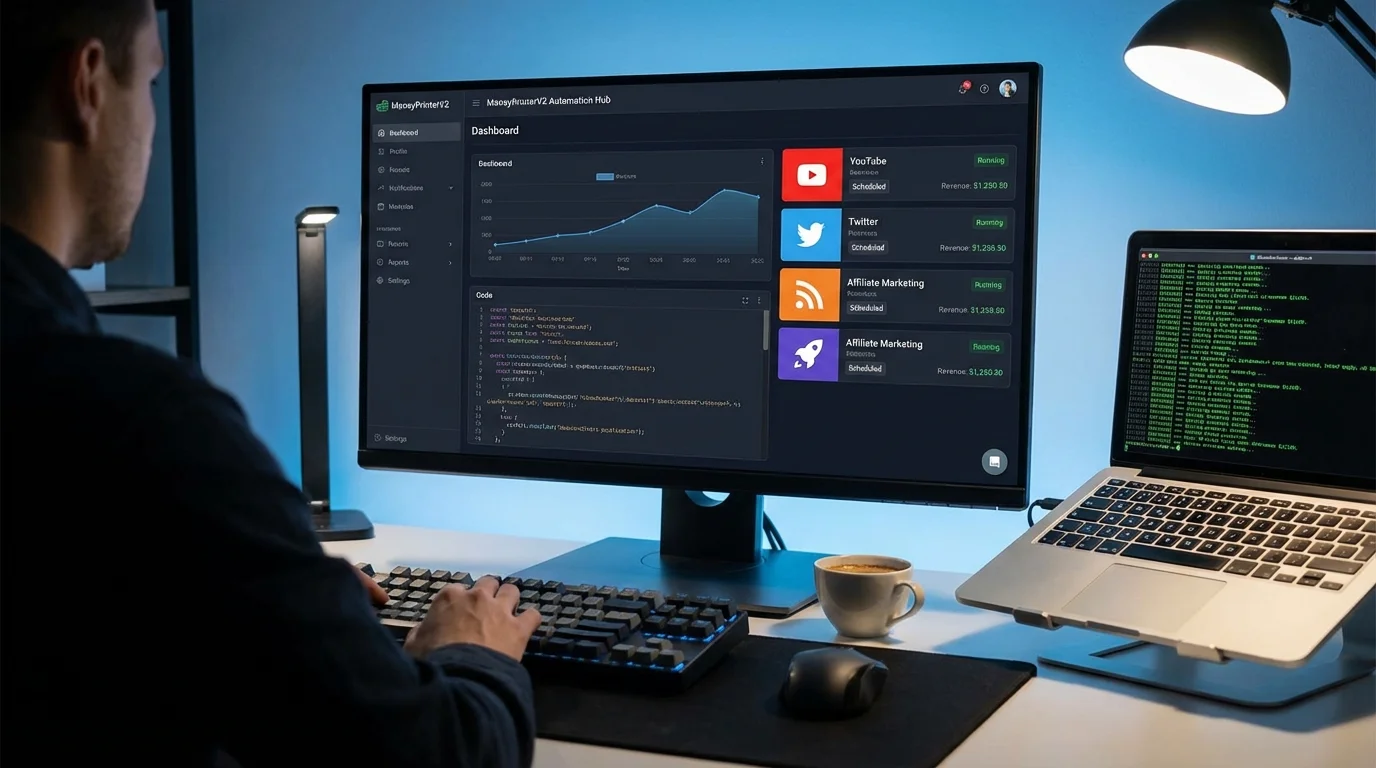
For digital entrepreneurs and developers looking to streamline their passive income streams, the newly rewritten MoneyPrinterV2 automation tool offers a comprehensive solution. This open-source Python application automates the process of making money online by handling everything from YouTube Shorts creation to cold email outreach. Designed specifically for content creators, affiliate marketers, and developers, this tool eliminates the manual grind of daily posting and lead generation. By deploying this script, users can set up autonomous systems that manage social media accounts and discover local business leads without constant human intervention.
As the digital landscape becomes increasingly saturated, leveraging automation is no longer just an advantage - it is a necessity for scaling operations. MoneyPrinterV2 represents a significant upgrade over its predecessor, introducing a modular architecture and expanding its capabilities to include CRON job scheduling for consistent content delivery. The integration of tools like KittenTTS and gpt4free further enhances its ability to generate dynamic media on the fly.
Prerequisites and System Requirements
Before diving into the installation process, you must ensure your system is properly equipped to handle the automation scripts. The application relies on specific programming environments to execute its modular tasks effectively.
- Python 3.12: This specific version is mandatory for the core functionality and dependency management of the application.
- Go Programming Language: Required specifically if you plan to utilize the local business scraping and cold email outreach features. You can download it from the official Go website.
- Git: Necessary for cloning the repository directly to your local machine.
How to Install and Configure MoneyPrinterV2
Follow these chronological steps to deploy the automation environment safely on your local machine or server.
- Clone the official repository. This ensures you have the latest source code directly from the developer.
git clone https://github.com/FujiwaraChoki/MoneyPrinterV2.git- Navigate to the project directory and copy the example configuration file. This enables you to input your specific API keys and account details safely without overwriting the template.
cd MoneyPrinterV2
cp config.example.json config.json- Create a virtual environment. This ensures that the project dependencies do not conflict with other Python applications on your system.
python -m venv venv- Activate the virtual environment. This enables your terminal to use the isolated Python instance for all subsequent commands.
For Windows users, use the following command:
.\venv\Scripts\activateFor Unix or macOS users, use this command instead:
source venv/bin/activate- Install the required dependencies. This ensures all necessary libraries for Twitter bots and YouTube automation are downloaded and ready.
pip install -r requirements.txt- Run the main application script. This initiates the automation interface and begins executing your configured tasks.
python src/main.pyMy Take
The evolution of the MoneyPrinter project into its second version highlights a growing trend in the open-source community: the democratization of digital marketing automation. By integrating accessible tools like KittenTTS and gpt4free, the developer has significantly lowered the barrier to entry for sophisticated content generation. This allows solo developers to deploy systems that previously required dedicated marketing teams or expensive enterprise software.
However, users must navigate this landscape carefully. While automating YouTube Shorts and affiliate marketing on Twitter can drive substantial traffic, relying heavily on automated cold outreach requires strict adherence to anti-spam regulations. The inclusion of the Go language requirement specifically for email scraping indicates a robust backend, but the ethical responsibility remains entirely on the user. Ultimately, MoneyPrinterV2 is a powerful educational framework that demonstrates the immense potential of Python-based automation, but its real-world success will depend entirely on the quality of the underlying strategy and the user's ability to adapt to platform algorithm changes.