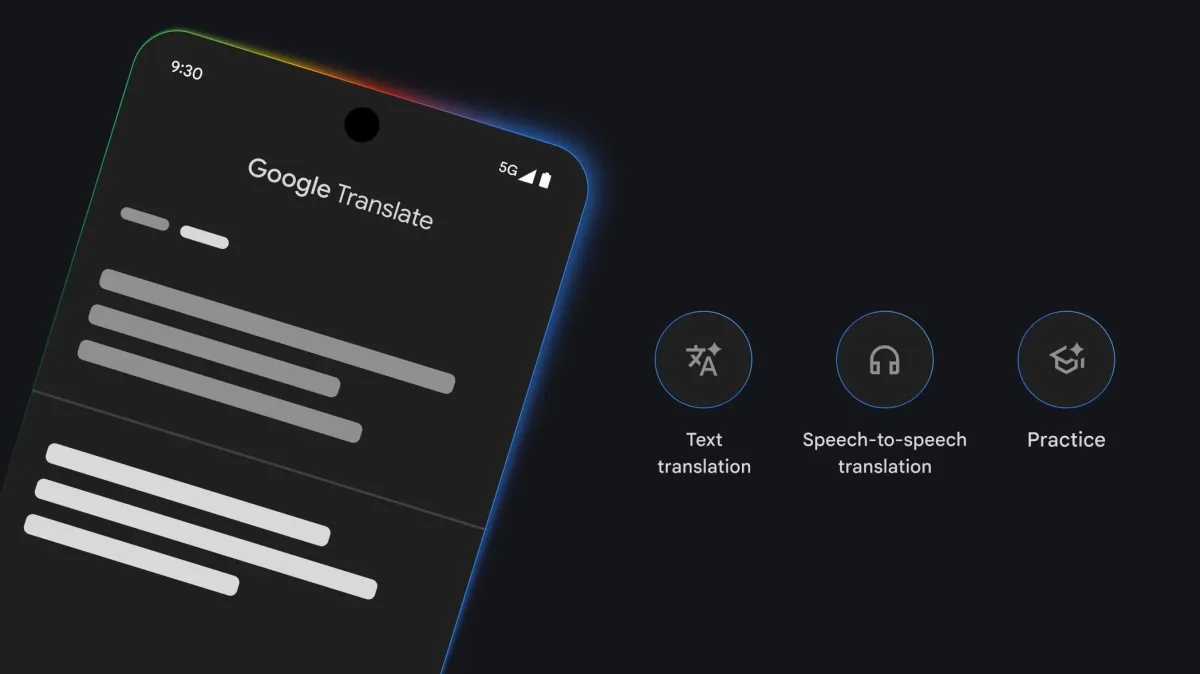
Breaking down language barriers on the go just got significantly easier for iPhone users, regardless of which earbuds they own. Google has officially rolled out its real-time headphone translation feature to the Google Translate iOS app, eliminating the strict hardware requirements often found in native Apple ecosystems. This update transforms any standard pair of Bluetooth headphones into a live interpreter, supporting over 70 languages for seamless cross-cultural communication.
Originally launched as a beta for Android devices late last year, the Live Translate feature is now bridging the gap for iOS users. According to Google, the rollout is also expanding geographically, bringing enhanced support to users in France, Germany, Italy, Japan, Spain, Thailand, and the U.K. By leveraging cloud-based processing, the app delivers rapid, conversational translations directly into the user's ear.
How to Use Live Translate on iPhone
Getting started with Google's real-time translation requires minimal setup and works with any brand of wireless audio gear. Follow these steps to activate the feature:
- Ensure your preferred wireless Bluetooth headphones are actively connected to your iPhone.
- Open the latest version of the Google Translate app.
- Tap the Live Translate option on the main interface.
- Select Listening to begin receiving real-time audio translations.
Google Translate vs. Apple Intelligence
This release positions Google as a direct competitor to Apple's native translation capabilities, which debuted in late 2025. Apple’s Live Translation feature is heavily gated, requiring an iPhone compatible with Apple Intelligence alongside specific hardware like the AirPods 4 or AirPods Pro. In contrast, Google’s solution is entirely hardware-agnostic, functioning with any basic Bluetooth headset.
However, this accessibility comes with a notable trade-off regarding data privacy. Apple processes its translations entirely on-device, ensuring that sensitive conversations never leave your iPhone. Google’s Live Translate relies on cloud processing to deliver its Gemini-powered results, which may prompt privacy-conscious users to weigh the convenience against potential data exposure.
The Strategic Shift in Mobile Translation
Google’s decision to bypass hardware restrictions on iOS is a calculated strike against Apple’s walled garden. By making real-time translation available to anyone with a basic pair of Bluetooth earbuds, Google is effectively commoditizing a feature that Apple positioned as a premium hardware selling point.
For frequent travelers and international business professionals, the sheer utility of accessing 70 languages without needing a $250 pair of AirPods is undeniable. While Apple retains the high ground on privacy with its on-device processing, Google’s cloud-backed approach ensures that cutting-edge AI translation is universally accessible, cementing its dominance in the global utility app market.
This article was written by AI from reporting by macrumors.com.