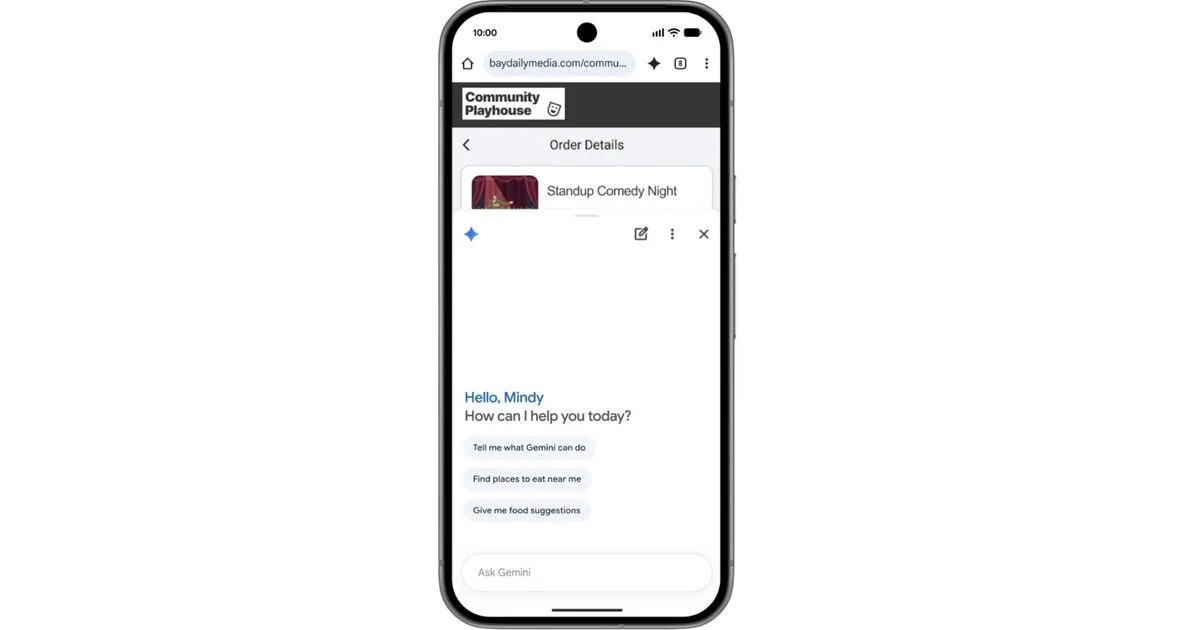
Google is fundamentally changing how users interact with the web on mobile devices by deeply integrating its Gemini AI directly into Chrome for Android. Starting in June, the browser will transition from a simple webpage viewer into an active, context-aware assistant capable of executing tasks across the Google ecosystem. This shift aims to eliminate the friction of jumping between apps to process information.
At the core of this Chrome Android Gemini update is a contextual assistant that reads and understands the active webpage. Instead of juggling tabs or copying text into a separate app, users can tap a dedicated Gemini icon to ask specific questions about the current page. The AI can break down lengthy articles and simplify complex topics without forcing the user to leave the site.
Beyond summaries, Gemini connects directly to Google's broader productivity suite. Users can extract event details to add to Google Calendar, save recipe ingredients to Google Keep, or pull relevant data from Gmail directly from the browsing interface. It is designed to handle tedious micro-tasks in context rather than functioning as a traditional search bar.
Key AI Features Coming to Chrome
- Contextual Page Analysis: Summarize and query active webpages directly via the Gemini icon without losing your browsing flow.
- Nano Banana: A creative tool that generates personalized visuals and turns dense text into visual summaries based on online content.
- Auto-browse: An automated background agent that handles repetitive tasks, such as gathering parking details for an upcoming event.
To secure these capabilities, Google is implementing built-in protections against emerging threats like prompt injection attacks. The rollout begins in June for users in the US running Android 12 or newer. Notably, the advanced auto-browse feature will be paywalled, restricted exclusively to AI Pro and Ultra subscribers on supported devices.
The Freemium Browser Era
Locking the auto-browse feature behind the AI Pro and Ultra subscription tiers signals a massive shift in Google's monetization strategy. Historically, Chrome has been a free gateway to Google's ad network. Now, by introducing agentic automation that handles tedious background tasks, Google is testing the waters for a freemium browser model.
This move positions Chrome directly against emerging AI-first browsers like Arc. If auto-browse proves reliable at eliminating everyday digital friction, users may finally be willing to pay for a premium browsing experience. This could fundamentally alter the economics of mobile web usage, transitioning browsers from free utilities into paid productivity platforms.