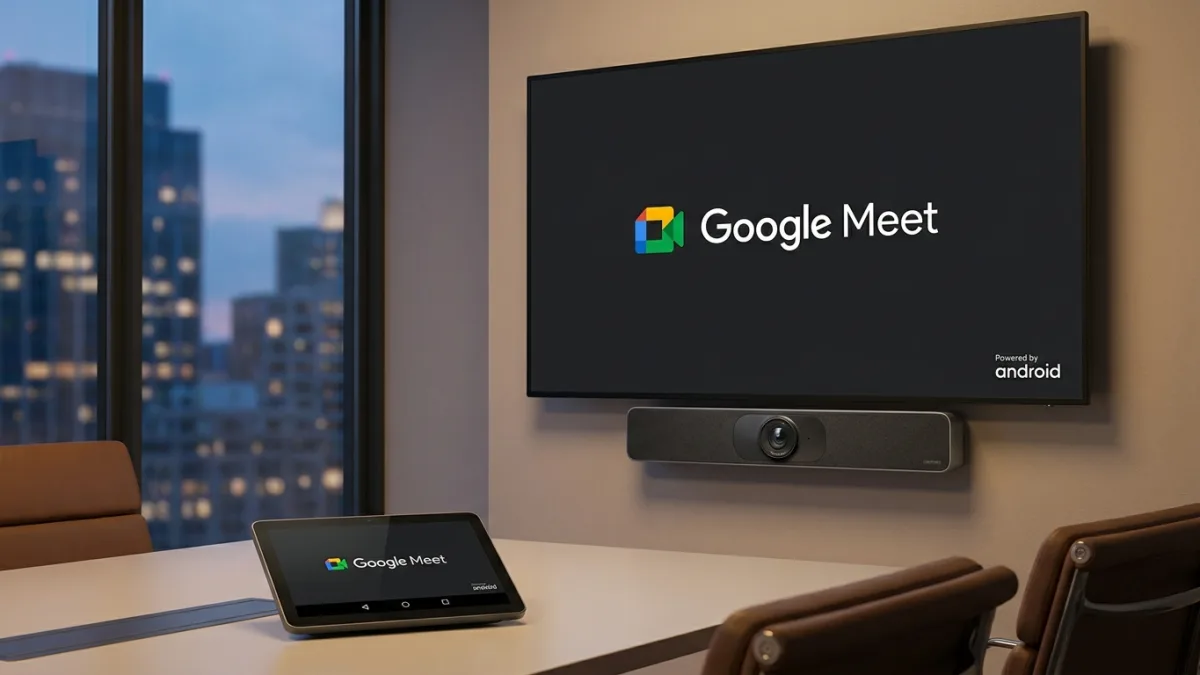
Google is officially transitioning its entire Google Meet hardware portfolio from ChromeOS to Android. The strategic shift marks a significant change for enterprise video conferencing, replacing the traditional Chromebox-driven setups with Android-based systems to offer greater hardware flexibility and device variety.
Existing Google Meet hardware - which includes touchscreen controllers, cameras, microphones, and compute systems - will continue to function normally. Google confirmed that current investments are protected, promising full software support, security patches, and stability updates. Recent models will remain supported until 2030, ensuring businesses do not face immediate obsolescence.
Hardware partners will gradually phase out the production of ChromeOS-based systems. The manufacturing and sales end dates are set as follows:
- Logitech and CTL Google Meet Compute System: February 2027
- ASUS Google Meet Compute System: April 2027
Google outlined several key benefits driving the transition to Android for Google Meet hardware:
- Device variety: Android enables a broader range of form factors, including compact all-in-one units and integrated video bars suitable for huddle spaces or boardrooms.
- Enterprise stability: The new Android-based devices are designed to match the performance and responsiveness previously relied upon with ChromeOS.
- Hardware flexibility: Certified AOSP (Android Open Source Project) devices can run multiple video conferencing platforms, allowing companies to repurpose rooms without replacing expensive equipment.
- Long lifecycles: Devices certified for Google Meet will maintain predictable software support and long-term reliability.
The Hidden Strategy Behind the Android Shift
ChromeOS has been the backbone of Google's enterprise hardware for years, but the transition to Android - specifically AOSP - reveals a pragmatic shift in strategy. By moving to an open-source Android foundation, hardware makers can build a single device capable of running Microsoft Teams, Zoom, and Google Meet natively. Google is conceding that modern boardrooms demand multi-platform support, and locking hardware exclusively to a ChromeOS ecosystem is no longer viable.
Furthermore, Google is already teasing new Android devices intended for "large-format spaces" planned for 2027. This indicates that the company is preparing to compete directly with high-end, complex boardroom systems from industry giants like Cisco and Poly. By leveraging Android's vast hardware ecosystem, Google can offer enterprises a more versatile, future-proof investment that adapts to whatever software a client prefers to use.
This article was written by AI from reporting by 9to5google.com.