Google is gearing up for one of its most ambitious developer conferences in years, with the Google I/O 2026 keynote officially scheduled for May 19 at 10 AM PT (1 PM ET). Following last year's heavy emphasis on artificial intelligence, the upcoming event is expected to push deeper into cross-device experiences, entirely new form factors, and next-generation AI integration. For those unable to attend in person, the keynote will be broadcast live on Google's official YouTube channel.
The Android Show and Android 17 Timeline
Google is adopting a split-schedule approach this year by hosting a separate Android Show I/O Edition to detail upcoming mobile features. This pre-recorded presentation will air on YouTube a week before the main keynote on May 12 at 10 AM PT. The company has already promised that this will be a landmark year for the mobile operating system.
During the showcase, Google is expected to highlight upcoming features for Android 17. While a full stable rollout is not anticipated during the event, developers are currently testing Android 17 Beta 4, which Google describes as a "near-final environment." Based on the historical release timeline of Android 16, the final stable build of Android 17 is projected to launch to the public in June 2026.
Gemini 4.0 and Agentic AI Capabilities
A major overhaul of Google's AI ecosystem is anticipated, potentially debuting as Gemini 4.0 or a significant 3.x update. The company has been aggressively expanding the model's reach, recently integrating Gemini into automotive platforms and enhancing productivity with features like Gemini notebooks. Because the AI is now foundational to nearly every Google service, it will likely dominate the keynote stage.
Beyond a new language model, Google is expected to reveal advanced agentic capabilities for Android devices. Early hints of these autonomous AI features have been surfacing in recent months, with initial capabilities already rolling out in the March Pixel update. The I/O keynote or the dedicated Android Show will likely clarify how these AI agents will evolve to handle complex, multi-step tasks on mobile devices.
Aluminium OS and Android XR Glasses
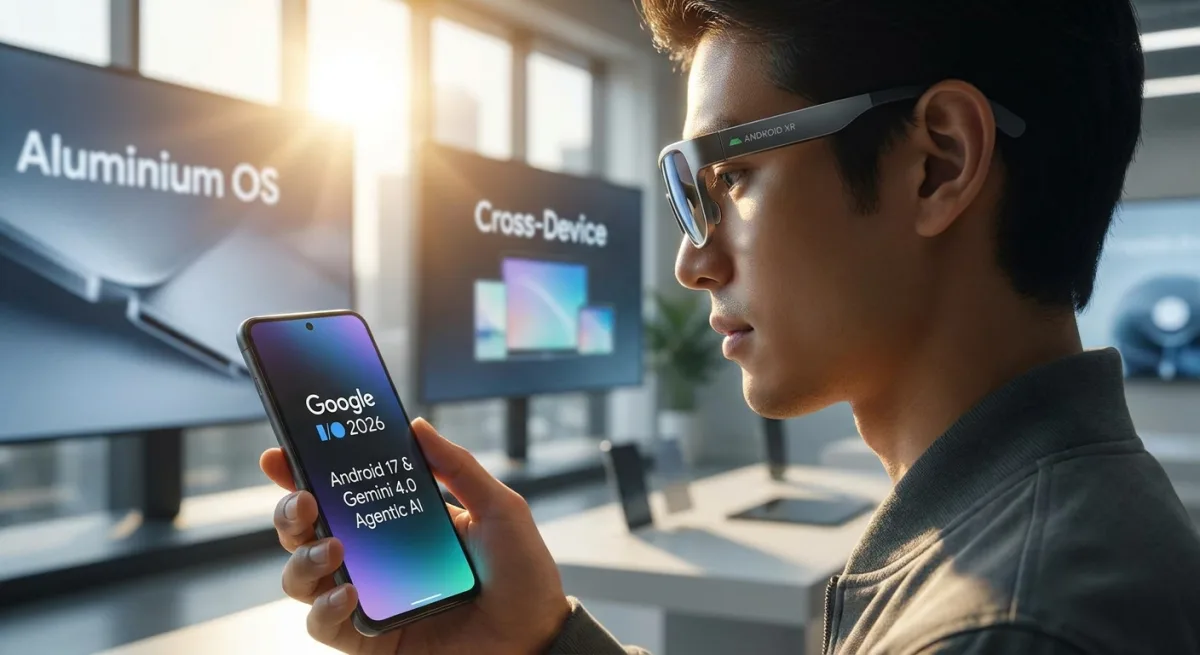
The hardware and platform segment of the event is expected to introduce Aluminium OS. While it remains unclear if Google will unveil first-party hardware running the new platform, the company is highly likely to announce strategic partnerships and development updates for Aluminium OS during the conference.
In the mixed reality space, Google is preparing to showcase consumer-ready products built on the Android XR platform. Following Samsung's development of the Galaxy XR headset, industry watchers anticipate the reveal of the highly rumored Galaxy Glasses. Google's expanding roster of Android XR partnerships - which explicitly includes Warby Parker, Gentle Monster, and XREAL - suggests consumers will soon see a diverse lineup of smart glasses across various price points and capability tiers.
The Shift Toward Autonomous Ecosystems
The anticipated announcements for Google I/O 2026 signal a definitive pivot from passive AI assistants to active, agentic ecosystems. By embedding autonomous Gemini capabilities directly into the Android framework, Google is positioning its mobile OS to execute complex workflows rather than just answering queries. This transition is critical as the company faces mounting pressure from competitors integrating similar on-device AI agents.
Furthermore, the simultaneous push into Aluminium OS and Android XR indicates that Google is laying the groundwork for a post-smartphone interface. Partnering with established eyewear brands like Warby Parker and Gentle Monster proves that Google learned from past hardware missteps; they are prioritizing fashion and wearability to ensure Android XR glasses achieve mainstream consumer adoption where previous iterations failed.