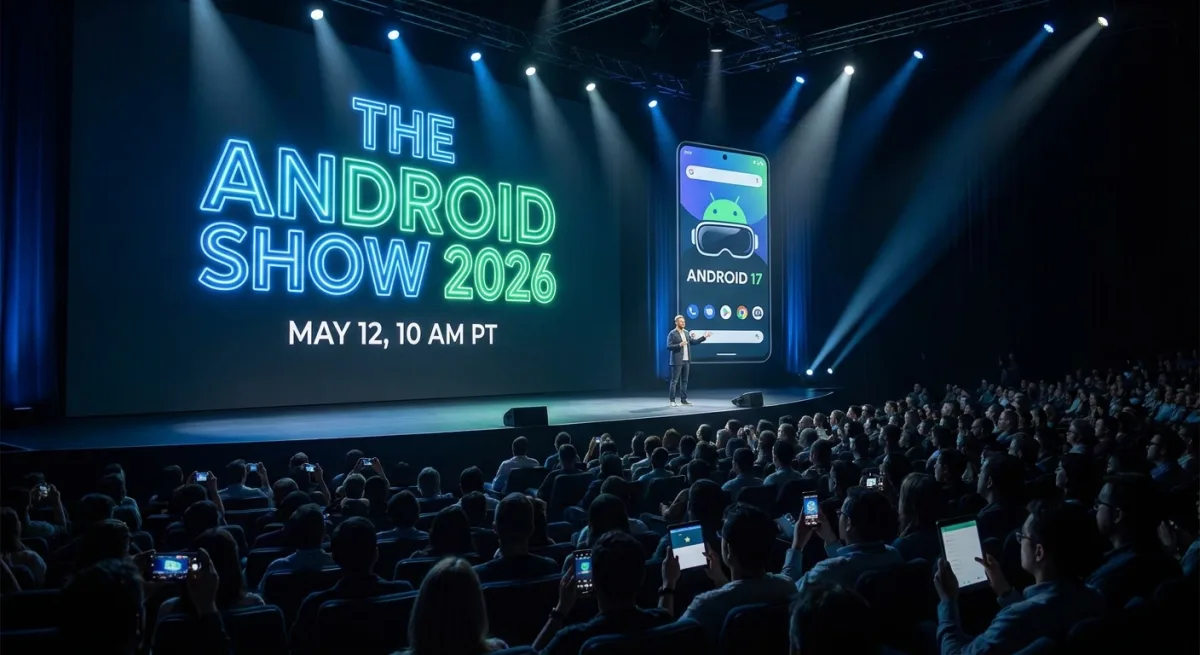
The Android Show 2026 is officially set to take place on May 12, giving Google's mobile operating system its own dedicated spotlight a week before the main I/O developer conference. By separating the mobile announcements for the second consecutive year, Google is signaling a massive shift in its keynote strategy, likely clearing the main stage for an overwhelming focus on artificial intelligence and Gemini.
For developers and mobile enthusiasts, this dedicated broadcast promises a deep dive into the future of the ecosystem. Google has already teased that this will be "one of the biggest years for Android yet," setting high expectations for the upcoming software generation.
What to Expect from Android 17 and XR
The spotlight will undoubtedly fall on Android 17, which has been quietly moving through its beta testing phases. While the current beta builds have seemed relatively modest, they introduce highly requested features like minimizable "bubble" windows for multitasking and advanced controller remapping options for mobile gamers.
Beyond traditional smartphones, the event could also serve as a launchpad for new Android XR developments. First introduced last year, this platform integrates Android UI elements directly into the heads-up displays of smart glasses, and keeping it within the Android-specific broadcast makes logical sense.
How to Watch the Keynote
The dedicated presentation will air on May 12 at 10 a.m. PT (1 p.m. ET), exactly one week prior to the primary Google I/O 2026 event. Viewers can stream the event live from Google's official YouTube link here.
The AI Takeover of Mainstage I/O
Sequestering the mobile OS into its own pre-show is a brilliant, albeit telling, strategic move by Google. It confirms that the main Google I/O 2026 keynote will be almost entirely consumed by AI advancements, specifically the expansion of Gemini across the company's broader services.
By giving Android its own breathing room, Google avoids rushing through critical developer updates just to get back to talking about machine learning. This dual-event structure ensures that core mobile developers get the technical depth they need, while the main I/O stage can focus on the broader, consumer-facing AI narrative that Wall Street and the tech industry are currently demanding.