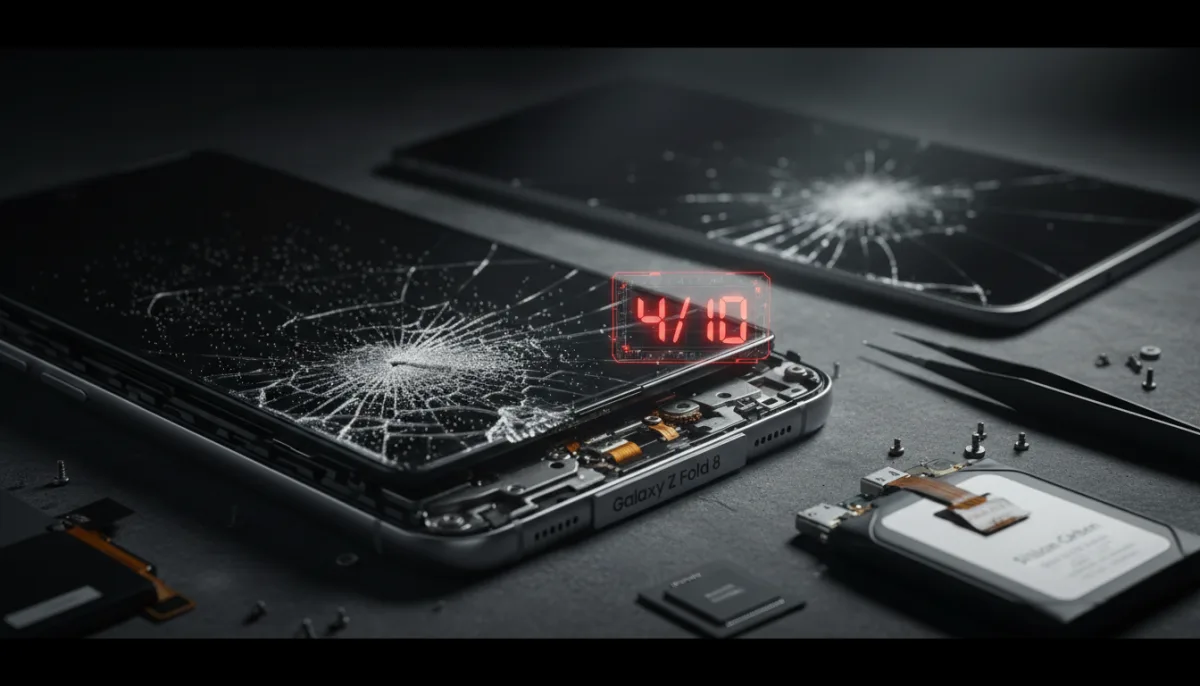
Samsung’s sleek new foldable is hiding a costly secret under its polished exterior. A recent Galaxy Z Fold 8 teardown by iFixit reveals severe repairability flaws, earning the flagship a dismal 4/10 provisional score. For users planning to keep the device long-term, the extreme fragility of the inner screen and an intricate hinge mechanism present major roadblocks to DIY or third-party repairs.
The core issue lies in the paired inner display and hinge assembly. During the teardown process, the plastic bezel surrounding the inner screen chipped and broke apart, ultimately destroying the delicate foldable OLED panel. Because Samsung typically bundles the inner screen and hinge into a single replacement unit, servicing either component requires completely gutting the phone. Furthermore, the device's IP4X dust-resistance rating proved impractical against fine debris; microscopic testing with dirt and sand left the hinge sounding like it was grinding gravel.
The teardown did highlight a few engineering wins. The device utilizes standard Phillips/JIS screws and features a modular USB-C port that is not soldered directly to the main board. It also introduces new silicon-carbon battery technology, delivering an 8.8% capacity boost over the previous generation, complete with Samsung’s excellent pull-jacket removal system. However, this silver lining is clouded by a significant design flaw: accessing one of the two batteries requires removing the fragile outer display, putting an expensive component at high risk just to replace a consumable part.
The True Cost of Ultra-Thin Engineering
The Galaxy Z Fold 8 highlights a growing crisis in the foldable market: the relentless push for thinner, sleeker hardware is actively killing device longevity. While the 8.8% battery boost is a welcome upgrade, the fact that a routine battery swap threatens the outer display makes the phone a ticking time bomb for out-of-warranty users.
Compounding this risk is the historical scarcity of official replacement parts, a lingering issue from last year's Fold 7 that shows no signs of improving. Buyers drawn to the ultra-thin form factor must factor in the reality that a single hardware failure could easily force a total device replacement rather than a simple repair, drastically inflating the true cost of ownership.