As surging load growth and grid instability threaten Europe's power sector, nations are rapidly accelerating their renewable energy storage projects. From massive pumped storage facilities in Ukraine and Portugal to hybridized solar and battery systems in Italy and the UK, the continent is treating long-duration storage as essential national infrastructure. This shift enables grid operators to balance intermittent renewable generation and secure long-term energy independence.
Ukraine and Portugal Prioritize Pumped Storage
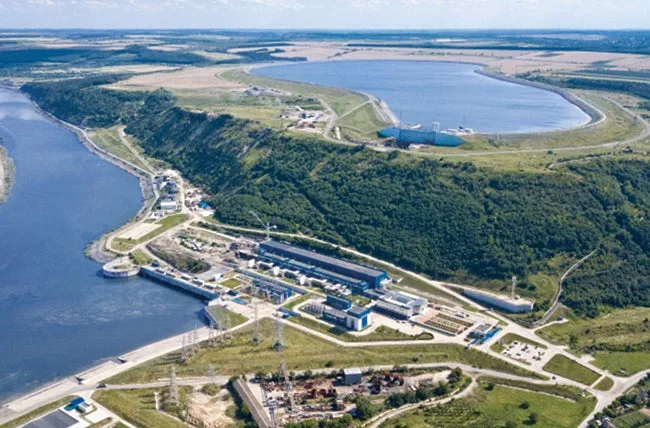
Ukraine's energy infrastructure remains under severe threat, prompting a strategic pivot toward resilient grid solutions. Ukrhydroproject (UHP), a Ukrainian engineering firm founded in 1927, recently joined the International Hydropower Association (IHA) to share its century of expertise. UHP is the general designer behind the Dniester pumped storage plant, built by Ukrhydroenergo. The massive facility features seven hydroelectric units delivering a total capacity of 2,268 MW in generator mode and 2,947 MW in pumped storage mode.
Sustainable hydropower is more than clean energy. It is the backbone of a resilient and secure energy system.
- Vadym Kraynyk, Chairman of the Board, Ukrhydroproject
Meanwhile, Portugal has unveiled a National Energy Storage Strategy that explicitly targets pumped storage expansion. The government aims to reach at least 5 GW of pumped storage generation capacity by 2040, with an interim target of 3.9 GW by 2030, up from the current 3.6 GW. Because Portugal already generates about 80% of its electricity from renewable resources, long-duration storage is critical for grid stability. The country's existing assets include the Iberdrola-developed Tamega hydroelectric complex, which combines the Gouvaes, Daivoes, and Alto Tamega installations for a total generation capacity of 1,158 MW.
Hybrid Solar and Battery Expansion in Italy
In the private sector, independent power producer BNZ has partnered with Sungrow to deploy a 240 MWh battery energy storage system (BESS) across its Viterbo projects in Italy. This agreement hybridizes the Rinaldone (45 MW) and Camposcala (53 MW) solar plants in Lazio, which came online last year with a combined capacity of 98 MW. BNZ CEO Luis Selva noted that integrating batteries enhances grid stability and maximizes the value of produced renewable energy.
The Sungrow contract covers BESS equipment, power conversion systems, medium-voltage hardware, and a third-party energy management system. BNZ is currently developing 530 MW of battery capacity as part of an 850 MW European pipeline, having already deployed over 2.7 GW of solar, wind, and storage globally. Before the end of the year, BNZ plans to initiate installations targeting 1 GWh of storage across eight projects in Lazio, Sicily, and Puglia.
Financing the UK's Co-Located Storage Clusters
In the UK, the NORD/LB consortium - alongside Santander, Rabobank, and ING - has closed financing for Cero Generation’s 190-MW Larks Green solar and BESS portfolio in South Gloucestershire. This financial backing supports both operational assets and future construction phases. Cero Generation's portfolio has achieved European Union Taxonomy Alignment, confirming its environmental sustainability under the European Green Deal.
The Larks Green cluster development timeline includes:
- Larks Green Solar: A 70-MW facility that entered commercial operation in 2023.
- Larks Green BESS: A 50-MW battery site that has been operational since 2024.
- Lower Larks BESS: A 70-MW installation currently under construction, expected to launch in 2027.
NORD/LB previously financed Cero’s 115-MW Bramley and 198-MW Bumble Bee projects. Once all current projects are live, Cero Generation’s total UK portfolio is expected to reach 207 MW of solar and 345 MW of BESS capacity.
The Baseload Replacement Reality
The aggressive expansion of both pumped hydro and BESS across Europe signals a fundamental transition in grid management. Renewable generation has successfully scaled, but the intermittency of solar and wind has left grids vulnerable to demand spikes and geopolitical supply shocks. By mandating long-duration storage as essential infrastructure, countries like Portugal are effectively building a decentralized baseload replacement.
Furthermore, the financial structuring of projects like the Larks Green cluster demonstrates that co-located solar and storage is now highly bankable. Utilizing existing grid infrastructure at single substations reduces permitting friction and interconnection delays. As battery costs stabilize and pumped storage proves its strategic value in conflict zones like Ukraine, energy storage is no longer just a supplementary grid service - it is the primary vehicle for national energy security.
This article was written by AI from reporting by powermag.com.