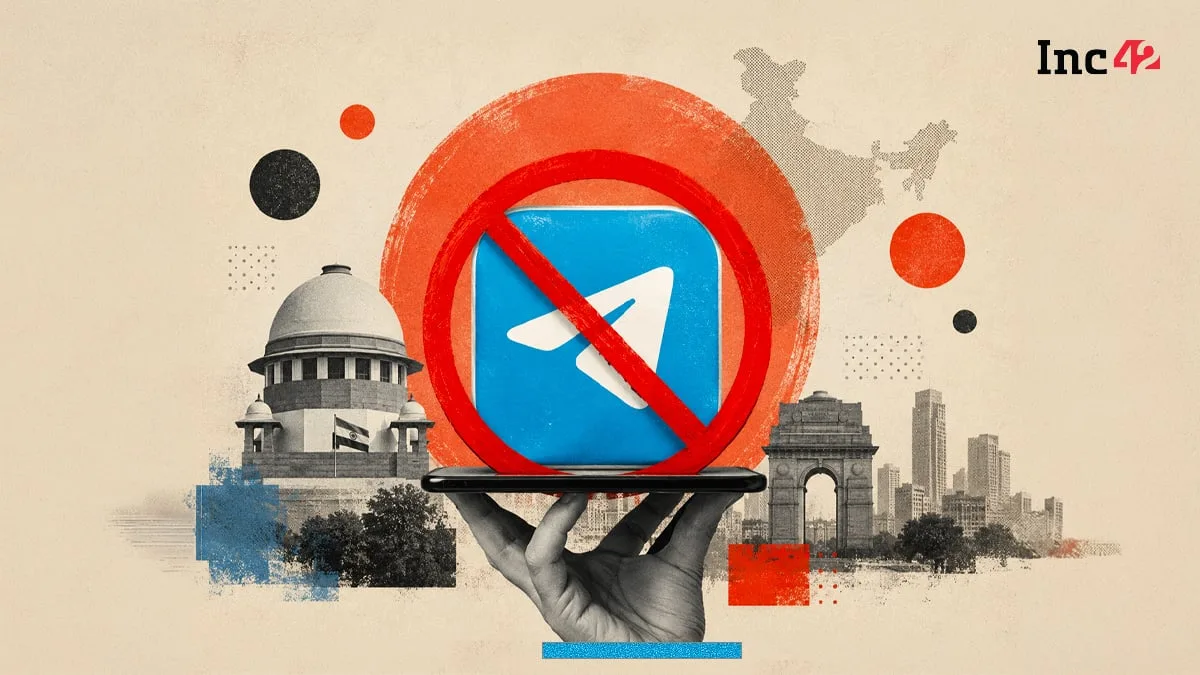
The Delhi High Court has officially upheld the Indian government's temporary restriction on Telegram, keeping the messaging platform partially blocked until June 22. The ruling validates the Centre's aggressive use of Section 69A of the Information Technology Act, following allegations that the app's architecture has turned it into a "new dark web" for orchestrating the massive NEET-UG 2026 exam paper leaks. Justice Tejas Karia dismissed Telegram's petition, stating the government's actions met the test of proportionality given the emergent circumstances.
In a counter-affidavit, the Centre argued that criminals are exploiting Telegram's cloud-based infrastructure, large public groups, and bots to conceal their identities. Authorities specifically pointed to a channel named "NEET Mafia," which amassed 18,617 subscribers to distribute leaked examination materials, advance booking arrangements, and payment collection mechanisms. The government claims this architecture facilitates activities ranging from cyber fraud to drug trafficking.
Telegram has become the new dark web, linking threat actors. Criminals have rapidly adopted Telegram to post links on channels that connect to dark web forums through deep web links, making it hard for authorities to track and attribute criminals.
- Central Government Affidavit, Delhi High Court
Beyond the general access restriction, the Ministry of Electronics and Information Technology (MeitY) ordered Telegram to disable its message-editing feature for existing posts until June 30. The government alleged bad actors were manipulating edited timestamps to create the illusion that question papers were leaked long before the actual exam. This specific functional restriction highlights a shift in how authorities are handling digital evidence and platform manipulation.
Telegram pushed back during the hearings, arguing it was being unfairly singled out among social media platforms and that the blocking order reflected a non-application of mind. The company claimed it had actively cooperated with authorities, taking down over 900 links related to unlawful NEET content within an hour of receiving official URLs. Despite these arguments, the Court maintained that there was no reason under the IT Act to exclude Telegram from the ambit of restricted information.
The Dangerous Precedent of Feature-Level Bans
The most significant takeaway from this ruling isn't the temporary access restriction - it is the government's targeted mandate to disable Telegram's message-editing feature until June 30. By dictating specific UI and functional changes rather than just demanding content takedowns, the Indian government is crossing a new regulatory threshold. This moves beyond traditional censorship and into the realm of forced architectural modification.
If courts continue to uphold Section 69A as a valid tool for forcing feature-level changes on global platforms, other messaging apps like WhatsApp and Signal could soon face similar demands to alter their core functionalities during national crises. Furthermore, legally labeling a mainstream messaging app as the "new dark web" sets a hostile baseline that could be weaponized against any platform offering robust privacy features or large-scale public broadcasting capabilities.