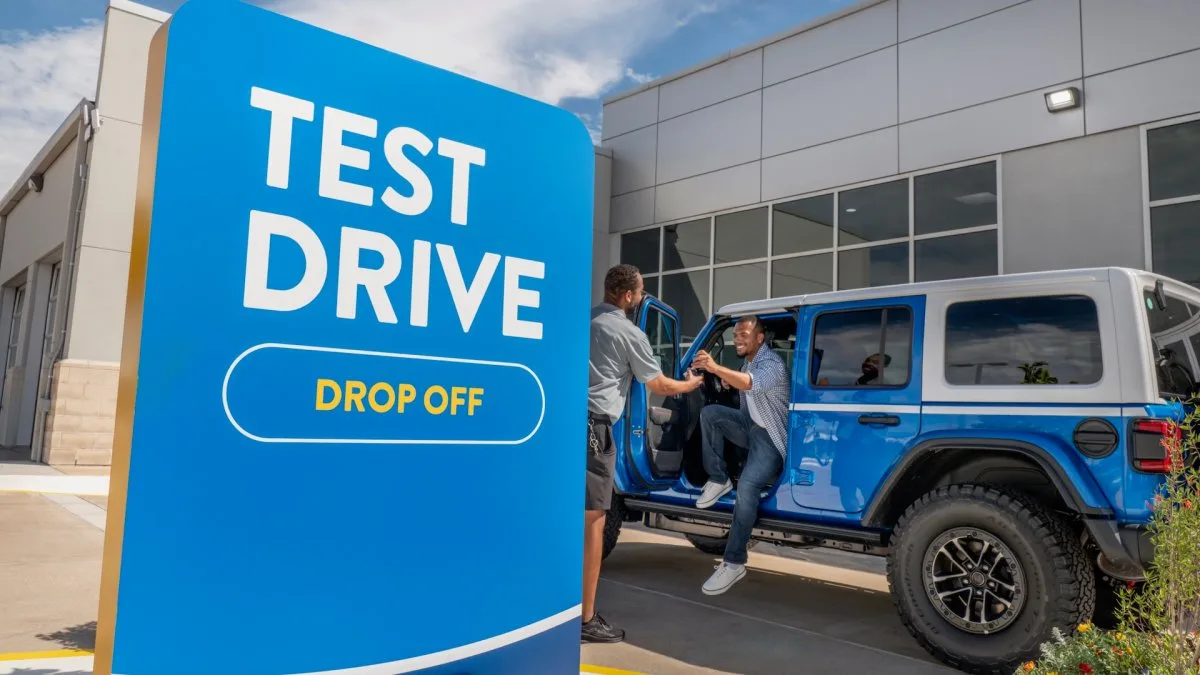
Carvana is bridging the gap between online convenience and traditional car buying by launching its first dedicated Carvana Test Drive Center in Texas. The online retailer now allows customers to test drive new vehicles at its physical Stellantis showroom without the pressure of hovering salespeople or on-the-spot negotiations. This hybrid approach targets buyers who want the hands-on experience of a traditional dealership but despise high-pressure sales tactics, allowing them to evaluate a vehicle in person before completing the transaction entirely online.
The move marks a significant pivot for a company that built its brand entirely on remote, vending-machine-style car sales. Carvana experienced massive growth during the COVID-19 pandemic as the used-car market surged, but faced severe operational hurdles when the market cooled. Paperwork bottlenecks led to lapsed customer registrations, resulting in the loss of its dealer license in Michigan and a lawsuit settlement in Connecticut. To stabilize its business model and counter pushback from franchised-dealer lobbies against pure online sales, Carvana purchased two brick-and-mortar Stellantis dealerships in 2025, located in Texas and Arizona.
How the Carvana Test Drive Center Works
By integrating physical inventory with its digital infrastructure, Carvana has redesigned the showroom floor to be entirely self-guided. Staff members are present on-site, but their roles are strictly limited to answering questions and moving vehicles, rather than earning commissions through sales.
- Interactive Browsing: Customers are greeted by a four-sided digital screen where they can browse the current Chrysler, Dodge, Jeep, and Ram lineups, compare trim levels, and configure their ideal vehicle.
- Virtual Tours: Display models feature QR codes that instantly pull up virtual tours, detailed specifications, and available configurations on the user's smartphone.
- Valet Test Drives: The system locates the closest on-site match to the shopper's configured spec from a fleet of test vehicles. Staff then bring the car to a designated valet lane for the test drive.
- Online Checkout: The actual buying process remains digital. Customers log onto the Carvana website to complete the purchase with the company's standard no-haggle pricing, either from the dealership lounge or from home.
The Dealership Model Is Finally Evolving
By acquiring traditional Chrysler-Dodge-Jeep-Ram franchises and stripping out the commission-based sales floor, Carvana is essentially applying the Tesla and Rivian direct-to-consumer showroom model to legacy automaker brands. This is a brilliant strategic loophole. Traditional dealer lobbies have spent years fighting pure online sales models in state legislatures, but by purchasing actual franchise locations, Carvana is playing by the legacy rules while completely subverting the legacy experience.
This hybrid approach solves the biggest historical barrier to Carvana's growth: the hesitation of buying a car sight unseen. If this Texas pilot proves successful and expands to the Arizona location and beyond, it could force traditional franchise networks to fundamentally rethink their aggressive sales tactics. Consumers have clearly signaled a preference for transparent, no-haggle pricing, and proving that this model works for legacy brands - not just EV startups - could permanently alter the landscape of automotive retail.