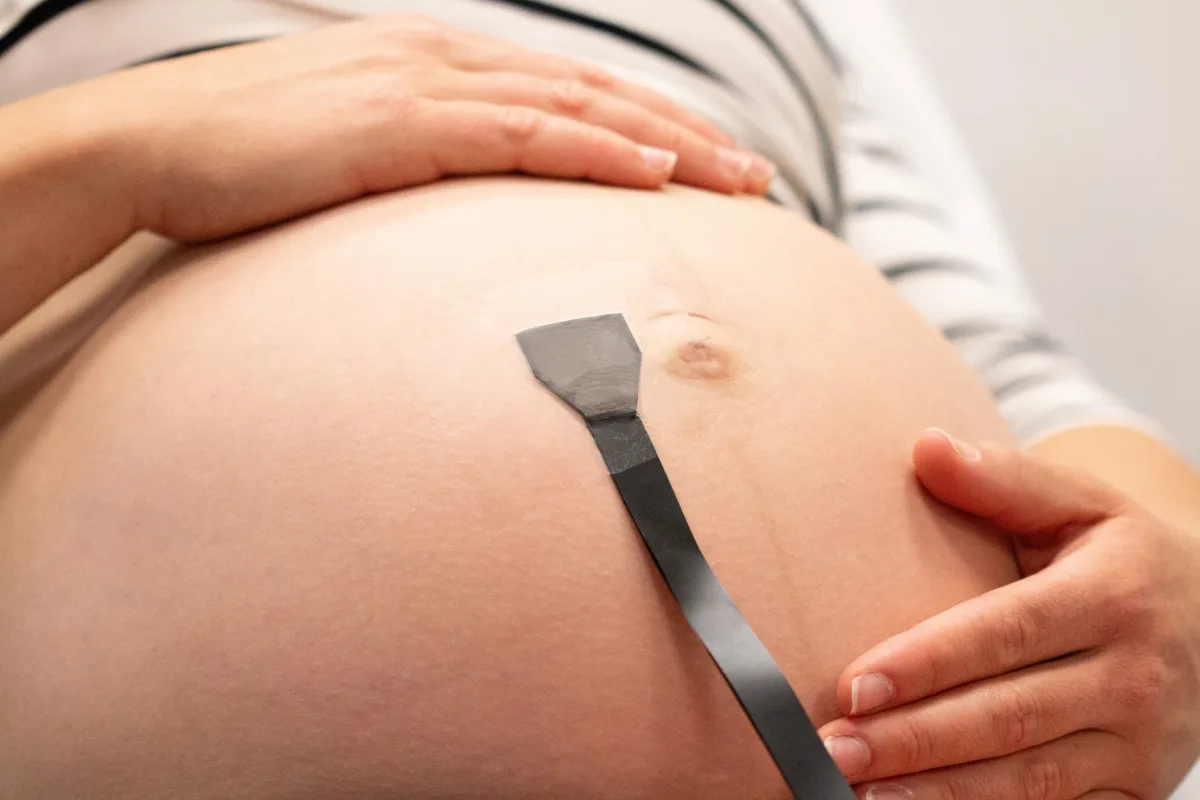
A new wearable ultrasound patch is transforming how doctors monitor high-risk pregnancies by providing continuous, hands-free tracking of fetal health. Developed by engineers at the University of California, San Diego, this soft device adheres to the skin to monitor a baby's anatomy and blood flow in real time, eliminating the need for manual ultrasound probes.
Designed for expectant mothers and healthcare providers, this technology enables the early detection of life-threatening complications like preeclampsia. By automating the tracking process, it also offers a critical lifeline for low-resource regions where trained sonographers and continuous monitoring equipment are often unavailable.
Wearable ultrasound technology has the potential to enable continuous prenatal monitoring and improve pregnancy outcomes in ways that were previously not possible.
- Geonho (Tom) Park, PhD student, UC San Diego Jacobs School of Engineering
One of the primary challenges in long-term fetal monitoring is the constant movement of both the fetus and the umbilical cord. To overcome this obstacle, the research team integrated autonomous tracking algorithms that automatically locate and follow the umbilical cord as it shifts. This allows the patch to collect consistent, reliable measurements even when the mother or fetus changes position.
Yizhou Bian, a co-first author of the study, explained that catching complications requires a system that can operate independently. "To comprehensively monitor mothers and babies over the amount of time needed to catch complications like preeclampsia, you need a system that can work continuously and largely on its own," Bian noted.
Clinical Trials and Life-Saving Interventions
During extensive clinical trials involving 62 pregnancies, the system proved its life-saving potential. The test group included both healthy pregnancies and those affected by gestational diabetes, high blood pressure, preeclampsia, and abnormal fetal growth. The patch produced measurements that closely matched those collected using standard handheld ultrasound devices.
In one specific case, the continuous monitoring capabilities detected prolonged abnormal fetal signals that conventional, brief ultrasound exams might have missed. This critical data prompted an early Cesarean delivery at 29 weeks, an intervention that researchers believe helped save the baby's life.
The findings, published in Nature Biotechnology (DOI: 10.1038/s41587-026-03140-1), build on more than a decade of wearable ultrasound research led by professor Sheng Xu at UC San Diego. His laboratory has previously pioneered wearable systems for noninvasive central blood pressure and mobile heart monitoring.
The Paradigm Shift in Remote Prenatal Care
The transition from episodic clinic visits to continuous, autonomous monitoring represents a fundamental shift in prenatal healthcare. Currently, ultrasound diagnostics rely heavily on a snapshot approach - capturing a brief window of fetal activity that may completely miss dynamic fluctuations in blood flow or sudden distress signals.
By integrating autonomous tracking algorithms into a flexible wearable, this patch effectively democratizes high-tier medical observation. If the research team succeeds in their next goal of integrating the patch into a fully wireless, compact electronic platform, it could drastically reduce hospital admission costs for high-risk observation. More importantly, it provides a scalable solution for rural or underfunded clinics globally, where the lack of specialized sonographers often leads to preventable stillbirths and maternal complications.