The Asus ProArt PX13 GoPro Edition shatters the conventional limits of a 13-inch convertible, packing an unprecedented 128GB of RAM and desktop-class AMD silicon into a chassis built for the wild. Priced at $2,999, this co-branded workstation targets on-location creators and developers who need massive local processing power without the bulk of a traditional gaming rig. Engineering a compact laptop without functional compromises is notoriously difficult, but Asus has gone all-in to challenge Apple's dominance in the creative professional space.
Whether you are tackling heavy video editing, bulk image creation, or running local AI models, this machine is designed to handle extreme workloads without crashing down to a sloth pace. It is a device of bizarre paradoxes - offering more memory than most desktop workstations while fitting comfortably into a sling bag.
An astonishingly good laptop that's also a pricey Mac anti-dote.
- Nadeem Sarwar, Digital Trends
Tactical Design Meets Convertible Utility
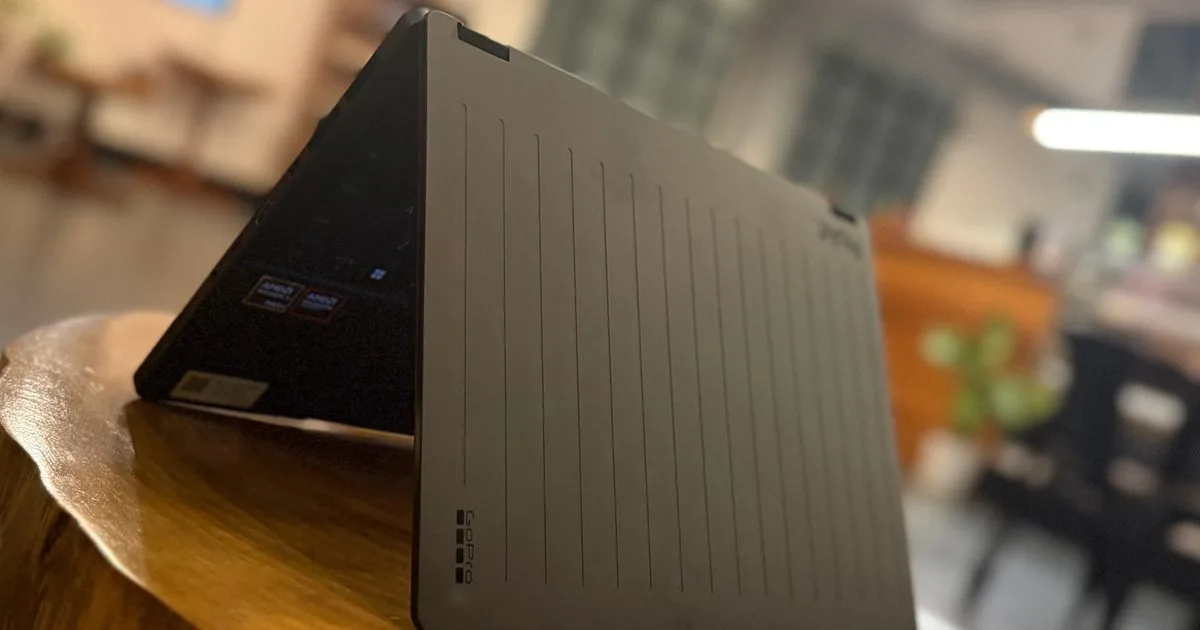
Most creator-focused laptops prioritize sleek aesthetics over practical durability, often feeling like a single bumped corner away from a warranty claim. The Asus ProArt PX13 GoPro Edition takes the opposite approach. Instead of a smooth, fingerprint-magnet finish, Asus opted for a ribbed metal lid that mimics the textured front of a GoPro action camera. It is bold, matte black, and unapologetically tactical, though the grooves can attract grime from oily fingers over time.
Weighing in at 3.06 lbs (1.39kg), it is slightly heavier than a standard ultraportable, but it makes up for the extra ounces with exceptional build quality. The chassis exhibits zero flex; the keyboard deck remains rigid under pressure, and the lid does not ripple when grabbed. Asus secured a MIL-STD-810H certification for the device, ensuring it can brush off drops and scuffs far better than an average laptop.
The 360-degree hinge is stiff and predictably smooth, allowing for a rock-solid tent mode on tray tables. In tablet mode, the 13-inch form factor truly shines, making it one of the few hybrid workstations you can comfortably use for digital drawing without arm fatigue. Subtle GoPro branding, an electric blue keyboard backlight, and a dedicated F8 hotkey that summons the GoPro Player complete the specialized aesthetic.
The 3K OLED Display: Brilliant Colors, Frustrating Speed
The 13.3-inch 3K OLED panel (2880 x 1800) is simultaneously this laptop's greatest strength and its most infuriating flaw. For color-critical work, the display is mesmerizing. It delivers perfect blacks, 100% DCI-P3 color gamut coverage, and Pantone validation right out of the box. The touch response is snappy, and the included Asus Pen 3.0 stylus offers 4,096 levels of pressure detection with almost no perceivable lag.
However, for a $2,999 machine in 2026, locking this beautiful OLED screen at a 60Hz refresh rate is a glaring misstep. Once you are accustomed to 120Hz panels on modern Windows machines or Apple's ProMotion displays, 60Hz feels visibly slow. Pixel-level stutters become apparent when dragging windows or scrolling through long documents.
This limitation is especially baffling for a laptop co-branded with GoPro - a camera company whose users routinely shoot footage at 120fps, 240fps, or even 400fps. You cannot natively preview high-framerate footage at full speed on this screen without plugging into a faster external monitor. Additionally, the brightness maxes out at a paltry 400 nits, falling significantly short of the 1,000 nits sustained brightness found on competing mini-LED displays.
Unprecedented Performance: 128GB RAM in a 13-Inch Chassis
Raw performance is where the Asus ProArt PX13 GoPro Edition evolves from a cutesy convertible into a legitimate threat to desktop PCs. The system is powered by the AMD Ryzen AI Max+ 395, a 16-core processor from the high-end Strix Halo portfolio. But the real headline is the 128GB of LPDDR5X unified memory, up to 96GB of which can be allocated to the Radeon 8060S integrated graphics as VRAM.
In a market where competitors still sell "Pro" laptops with 16GB of baseline memory, this configuration is charmingly ridiculous. In CPU benchmarks, it rivals Intel's Core Ultra 9 and surpasses the base Apple M5 in multi-core synthetic runs. In graphics capabilities, it leaps into discrete Nvidia GPU territory. Real-world testing showed it matching an RTX 4070 mobile GPU in memory-bound tasks. Games like Cyberpunk 2077 and Elden Ring easily managed over 60 FPS at FHD resolution.
For creators, the massive memory pool is transformative. Scrubbing through a 10-minute 4K timeline in Premiere Pro with multiple effects layers yielded no sustained stutters. More impressively, the laptop can run local Large Language Models (LLMs) entirely on-device with firepower to spare. However, this performance comes at an acoustic cost. To keep the Strix Halo chip cool, the fans spin up aggressively in Performance mode, producing a high-pitched whir that practically requires noise-canceling headphones.
Connectivity, Battery Life, and Everyday Usability
Despite its compact size, Asus avoided the dreaded "Port Apocalypse." The left side features a dedicated DC jack, a full-size HDMI 2.1 port, a USB-4 Type-C port (40Gbps), and a 3.5mm audio jack. The right side houses another USB-4 Type-C port, a USB 3.2 Gen 2 Type-A port, and a microSD card reader. While traditional photographers might miss a full-size SD slot, the microSD choice aligns perfectly with the GoPro target audience.
The keyboard offers crisp tactile feedback with deep key travel, and the trackpad is generous and well-engineered. The 1080p IR webcam provides usable image quality and fast Windows Hello facial recognition, though low-light performance is merely average. Audio quality is sufficiently loud but lacks the refined bass found in thicker chassis designs.
Battery life is sharply divided by workload. The 73Wh battery delivers a solid 12 hours of light office work and web browsing. However, fire up a 3D workload, render a 4K video, or run a local LLM, and that number plummets to 2.5 to 3 hours. The included 200W charging brick is required for fast top-ups, though the laptop thankfully supports standard 100W USB-C PD charging for slower, lighter travel.
Top Alternatives to Consider
If the PX13's specific compromises do not align with your workflow, the market offers several compelling alternatives in the same price bracket:
- HP ZBook Ultra G1a 14 (roughly $3,000): Packs the same AMD Ryzen AI Max+ 395 silicon into a traditional clamshell design. It trades the touchscreen and rugged convertible hinge for enterprise manageability and ISV certifications.
- MacBook Pro 14 (M5 Pro) (approximately $2,800): Offers 5 to 7 more hours of real-world battery life under load, a vastly superior 120Hz ProMotion Mini-LED display, and near-silent operation. However, you sacrifice Windows compatibility, the convertible form factor, and the massive 128GB memory ceiling.
- Razer Blade 14 (2026) (currently at $2,900): Approaches the premium 14-inch space with a discrete Nvidia RTX 50-series GPU and a crisp 240Hz QHD+ OLED display. It is a better fit for pure gamers, though it lacks the rugged build and tablet functionality.
The 60Hz Bottleneck on an AI Developer's Dream Machine
The Asus ProArt PX13 GoPro Edition is a masterclass in extreme engineering, but its market positioning is fundamentally conflicted. By branding this as a "GoPro Edition" and targeting video creators, Asus highlights the laptop's single greatest weakness: the 60Hz display. Video professionals shooting high-framerate action footage need a screen that can natively display their work. Forcing a creator to downsample their 120fps footage on a $3,000 machine is a bitter pill to swallow, especially when Apple's ProMotion displays have made high refresh rates the industry standard for creative work.
However, if you look past the GoPro marketing, this laptop is actually a holy grail for a completely different demographic: field-deployed AI engineers and data scientists. The ability to allocate up to 96GB of VRAM to the integrated Radeon graphics makes this 13-inch convertible a portable powerhouse for running massive local LLMs and complex data models - tasks that would normally require a bulky desktop or expensive cloud computing instances. For these users, the 60Hz screen is irrelevant, and the rugged MIL-STD-810H chassis is a massive asset for working outside a traditional office.
Ultimately, Asus has built a highly specialized tool that demands a multi-year commitment. It is not a mainstream MacBook killer, nor is it trying to be. If your workflow is bottlenecked by memory limits rather than screen refresh rates, the PX13 stands alone in the ultraportable space. But for the average video editor, the visual compromises make it a tough sell against the current crop of Apple Silicon.