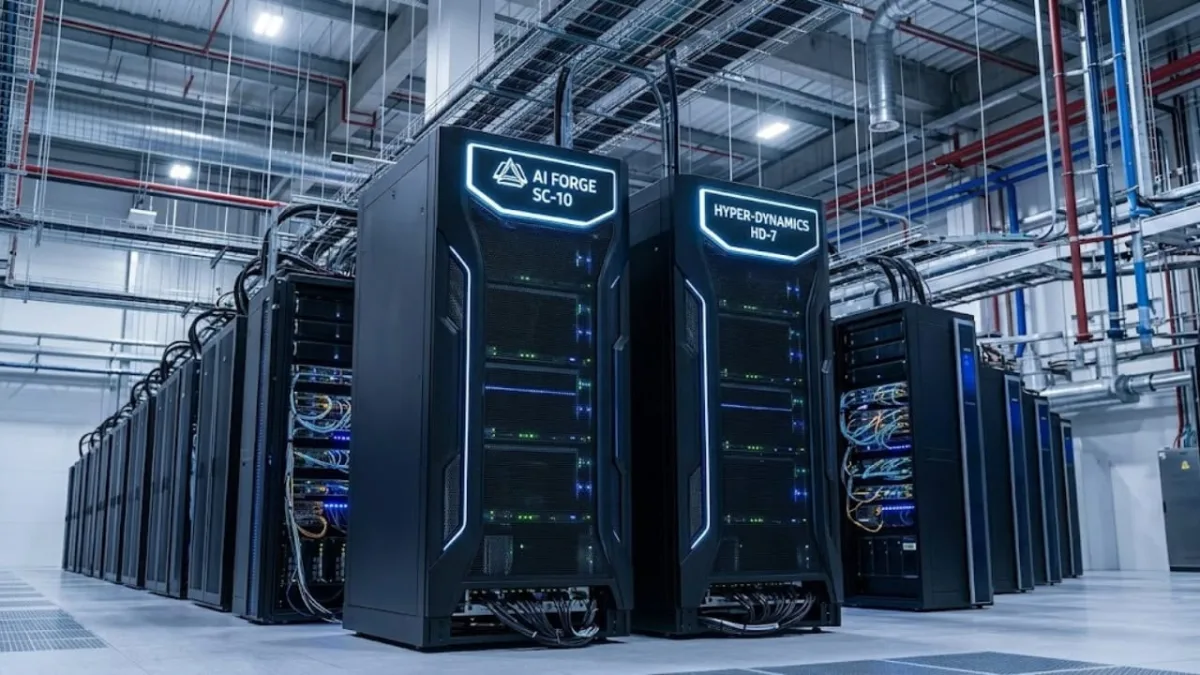
The newly formed Optical Compute Interconnect consortium is set to revolutionize AI data centers by replacing traditional copper wiring with high-speed optical connections. Spearheaded by AMD alongside industry heavyweights like Broadcom, Meta, Microsoft, NVIDIA, and OpenAI, this initiative aims to establish open standards for chip-to-chip communication. The move addresses the critical bandwidth bottlenecks currently limiting the training of massive artificial intelligence models.
For cloud architects, AI hardware engineers, and data center operators, this development signals a fundamental shift in infrastructure design. By standardizing optical interconnects, cloud providers will soon be able to mix and match GPUs, custom silicon, and networking gear from multiple vendors. This interoperability breaks the lock-in of proprietary stacks, enabling more flexible and power-efficient computing clusters.
As AI workloads continue to scale exponentially, the physical connections between processors and accelerators have become a severe limitation. Traditional copper links suffer from strict bandwidth and distance constraints that hinder the performance of massive computing clusters. Optical connections overcome these physical barriers, offering the necessary scalability and power efficiency required to run next-generation AI models.
For AMD, co-authoring this standard represents a calculated strategic maneuver to position its hardware within a multi-vendor framework. The company is betting that open interoperability will accelerate the adoption of its Instinct GPU accelerators and EPYC server processors among major hyperscalers. By collaborating directly with NVIDIA and cloud giants, AMD gains crucial early visibility into the future architectural plans of its largest potential customers.
My Take
The formation of the Optical Compute Interconnect consortium proves that the next major battleground in AI is system-level architecture, not just raw compute power. While open standards risk commoditizing optical interconnects and introducing pricing pressure for vendors like AMD, the sheer capital intensity of building AI clusters demands interoperability. I expect that within the next three years, proprietary copper-based interconnects will be entirely phased out of top-tier AI data centers, forcing all hardware vendors to compete purely on the efficiency and performance of their optical integrations.
Frequently Asked Questions
What is the Optical Compute Interconnect consortium?
It is an industry group founded by AMD, Broadcom, Meta, Microsoft, NVIDIA, and OpenAI to create open standards for optical chip-to-chip communication in AI data centers.
Why are tech giants replacing copper wiring?
Copper links have severe bandwidth and distance limitations that create bottlenecks when scaling massive AI computing clusters, whereas optical connections offer superior speed and power efficiency.
How does this impact AMD's hardware strategy?
By championing open standards, AMD aims to make it easier for cloud providers to integrate its Instinct GPUs and EPYC processors alongside competing hardware without being locked into a single proprietary ecosystem.