The NVIDIA Shield TV has dominated the premium streaming device market for over a decade, with the original 2015 model and its 2019 refresh still outperforming many modern competitors. However, with no hardware updates in seven years, the aging ecosystem is beginning to show its limitations. For users who rely on the device for everything from high-end emulation to local media hosting, the lack of modern connectivity and software support is becoming a bottleneck.
While the current hardware remains highly capable, long-term users and reviewers at Android Authority have identified several critical pain points. If NVIDIA decides to resurrect its beloved streaming box for a 2026 release, it must address these specific hardware and software shortcomings to justify a premium price tag.
Here are the five essential upgrades required for a next-generation NVIDIA Shield TV:
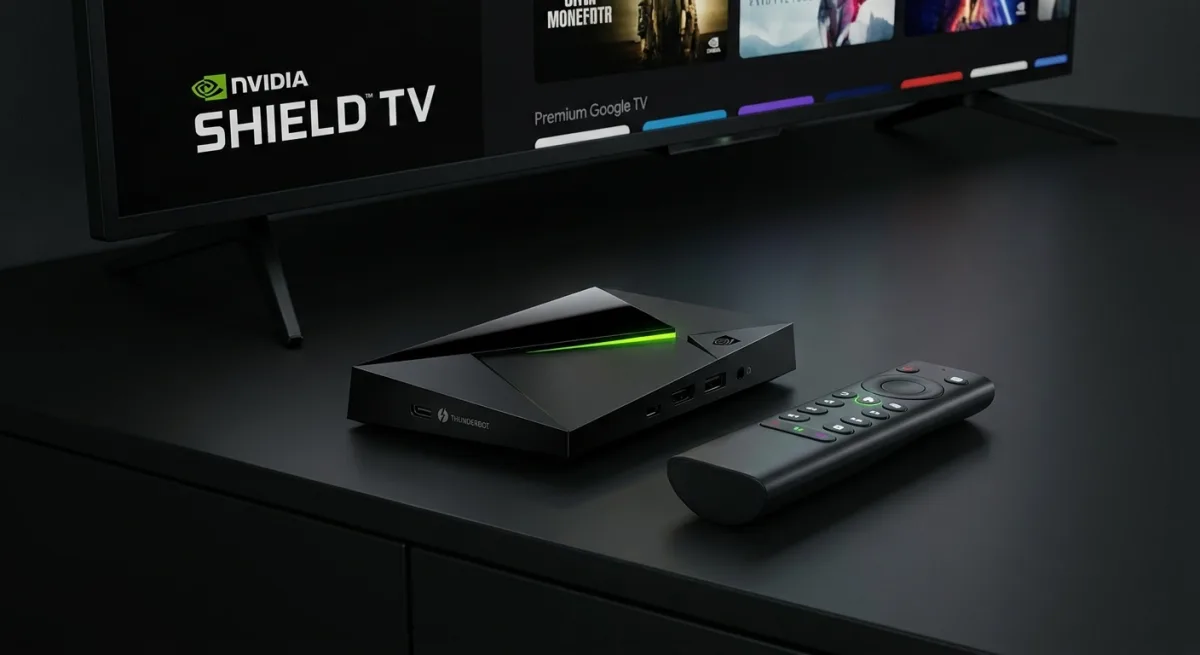
- A Revised Remote Control: While the original 2015 remote was widely criticized, the triangular 2019 version remains fantastic, featuring backlit buttons and an internal speaker for easy locating. However, a new iteration must drop the hardcoded Netflix button - which is frustrating for non-subscribers - in favor of customizable shortcut keys. Additionally, the notoriously loose battery cover needs a more secure locking mechanism to withstand years of daily use.
- Standardized Power Supply: With the exception of the cylindrical 2019 base model, Shield TVs rely on a proprietary power port. Failing power supplies are a common culprit for sporadic reboots and boot loops, and official replacements currently cost upwards of £40 on secondary markets like eBay. Transitioning to a standard power connector, or at least officially selling replacement cables, is vital for device longevity.
- Class-Leading Performance: The original Tegra X1 processor delivered twice the graphics performance of an Xbox 360 and was paired with 3GB of RAM and 16GB of storage. To future-proof a new model, NVIDIA should target 8GB to 12GB of RAM and 128GB of internal storage. This would enable flawless performance for demanding Android ports like Knights Of The Old Republic 1 and 2, and open the door for a potential Xbox Game Pass streaming partnership.
- Transition to Google TV: The legacy Android TV interface is steadily degrading. Users have already lost the dedicated Google Play Movies app, forcing them to rely on convoluted workarounds or the notoriously buggy YouTube app for purchased content. Furthermore, the Google Assistant experience has been practically non-functional for over a year. Upgrading to the modern Google TV OS would restore seamless library access and potentially introduce Gemini AI features.
- Thunderbolt Ports for Media Servers: A massive portion of the user base relies on the Shield TV as a dedicated Plex server. While older models featured two USB-A 3.0 ports for external hard drives, the 2019 Pro model controversially dropped the MicroSD slot. Replacing the aging USB-A connections with high-speed Thunderbolt ports would drastically improve data transfer rates, cementing the device as the ultimate home media hub.
The AI Pivot Leaves the Living Room Behind
NVIDIA's current multi-trillion-dollar valuation is entirely driven by enterprise AI and data center GPUs, making a niche consumer streaming box a low financial priority. The company has largely pivoted away from consumer hardware outside of its core PC graphics cards, leaving the premium living room ecosystem vulnerable to aggressive expansion by Apple and Roku. However, abandoning the Shield TV entirely is a missed strategic opportunity to bring its AI dominance directly into the home.
By integrating a modern on-device LLM or leveraging its GeForce NOW cloud gaming infrastructure, NVIDIA could easily position a new Shield as the ultimate AI-powered smart home hub and cloud console. Until the company decides to bridge the gap between its enterprise AI ambitions and consumer hardware, the 2019 Shield TV remains a testament to the longevity of over-engineered hardware, even as its software slowly deprecates.