Constant market shifts and rapidly evolving cyber threats are forcing technology executives to rethink enterprise survival. Achieving DevOps business resilience is no longer just an operational goal; it is the fundamental architecture keeping companies alive when systems fail or markets pivot. By unifying software development and operations, organizations are abandoning the fragile, siloed workflows of the past in favor of systems designed to adapt instantly.
For cybersecurity leaders and enterprise architects, this shift means moving away from reactive firefighting. Implementing a microservices approach allows applications to be broken down into smaller, API-connected services maintained by dedicated teams. This structural change enabled tech giants like Amazon, Netflix, and Google to overcome the innovation bottlenecks caused by adversarial, slow-release cycles.
Accelerating Deployments with CI/CD and Cloud-Native Tools
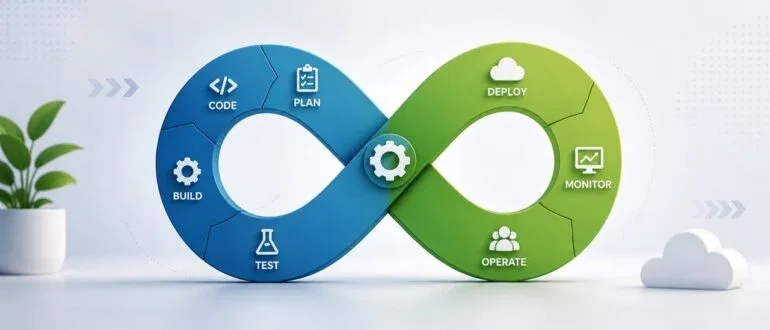
Continuous integration (CI) and continuous delivery/deployment (CD) serve as the technical engines driving this transformation. Developers automatically integrate code into shared repositories to resolve conflicts instantly, allowing code to reach production with minimal human intervention. This automated pipeline empowers companies like Amazon to execute hundreds of mini-releases daily.
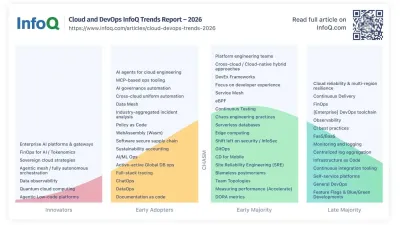
Cloud-native infrastructure amplifies these capabilities. Tools such as Kubernetes, Docker, and Prometheus allow engineering teams to maximize the benefits of microservice architectures. These platforms automatically manage containers across clusters and self-heal failed application components, ensuring greater scalability.
Resilience isn’t just about surviving outages; it’s about designing systems that adapt and recover faster than your customers notice.
- Segun Onibalusi, CEO, Detutu Media
DevSecOps: Embedding Security into the Pipeline
As cyber threats become more sophisticated, treating security as an afterthought puts the entire business at risk. DevSecOps fundamentally changes this dynamic by embedding security directly into every stage of the software development life cycle. When security becomes a shared responsibility rather than a final roadblock, vulnerabilities are caught early when they are exponentially cheaper and faster to fix.
To build a robust DevSecOps pipeline, teams must integrate specific automated safeguards:
- Deploy automated static and dynamic security testing during the code commit phase.
- Implement continuous dependency checking to identify vulnerable third-party libraries.
- Utilize Infrastructure as Code (IaC) to standardize and secure deployment environments.
Observability and Active-Active Architectures
System complexity demands real-time visibility. A unified observability solution that integrates metrics, logs, and traces provides a holistic view of system performance, allowing teams to identify issues before users are impacted. The integration of AI and machine learning takes this further; AI/ML observability pinpoints root causes with high precision, while MLOps extends these practices to data science teams.
Beyond monitoring, architectural choices dictate true reliability. Relying on a passive failover strategy for single-site applications is increasingly dangerous. Transitioning to active-active architectures - where the same application runs simultaneously across multiple data centers or cloud regions - eliminates single points of failure. Traffic is routed to the closest active instance, drastically reducing disaster recovery response times.
The Human Element of Business Continuity
Technological upgrades fail without a corresponding shift in workplace psychology. Leaders must cultivate an environment of psychological safety where engineers feel comfortable reporting failures, turning retrospectives into actionable improvements. Culture represents about 80% of the effort, according to industry DevSecOps guides, which warn that tools alone will never overcome silos and build trust.
Documenting processes and automating tedious tasks ensures continuity during unexpected disruptions. As noted by the Finnish DevOps consultancy Eficode, the COVID-19 pandemic proved that well-documented, cloud-based software development is critical for adjusting to sudden market shocks.
The Hidden Financial Risk of Passive Failover
The transition toward active-active architectures highlights a critical blind spot for many legacy enterprises: the hidden cost of data synchronization. While running simultaneous cloud regions provides unmatched disaster recovery, treating all data as requiring real-time replication creates unsustainable cloud infrastructure costs.
Organizations must categorize their data streams, applying real-time sync only to mission-critical transactional data while allowing eventual consistency for secondary metrics. As AI-driven observability becomes the standard, companies that fail to balance this resilience with cost efficiency will find themselves surviving outages but bleeding capital in the process.
This article was written by AI from reporting by devops.com.