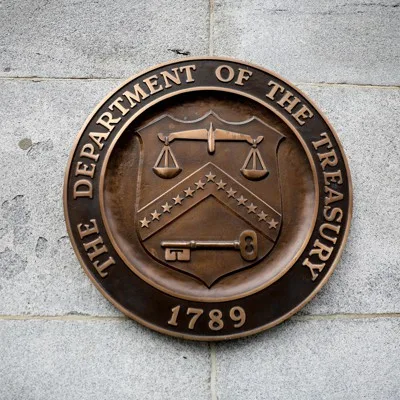
The U.S. Treasury cyber threat intelligence sharing initiative now officially includes cryptocurrency firms, aiming to halt devastating state-sponsored financial breaches. Announced by the Office of Cybersecurity and Critical Infrastructure Protection, this policy shift provides eligible U.S. digital asset platforms with cost-free access to the exact same government-grade threat data previously reserved for traditional banks. For cybersecurity professionals and exchange operators, this integration enables a proactive defense posture against highly sophisticated network intrusions.
By folding digital assets into existing cyber threat-sharing channels, the government is explicitly recognizing these platforms as part of the nation's core financial infrastructure. Cory Wilson, deputy assistant secretary for cybersecurity at the Treasury Department, emphasized that cyber threats targeting digital asset platforms are rapidly growing in both frequency and sophistication. This new initiative is designed to deliver timely, actionable data to help organizations identify vulnerabilities, reduce systemic risk, and respond effectively to active incidents.
The Drift Protocol Breach and State-Sponsored Threats
The urgency behind this Treasury cyber threat intelligence expansion stems directly from the escalating scale of recent attacks, particularly those orchestrated by state-sponsored actors. North Korea has established a notorious reputation for infiltrating global firms with shadow workers, systematically siphoning cryptocurrency to fund its regime and missile programs. These bad actors increasingly rely on digital assets not just as primary targets, but as untraceable payment methods for exchanging stolen data.
The devastating potential of these vulnerabilities was highlighted earlier this month when hackers aligned with the Democratic People's Republic of Korea (DPRK) executed a massive breach. The attackers stole approximately $285 million from the decentralized derivatives exchange known as Drift Protocol. Operating on the Solana network, the platform saw more than half of its total system value wiped out in a single coordinated strike, underscoring the critical need for federal intervention.
My Take: A Maturing Crypto Infrastructure
The Treasury's decision to share actionable intelligence with digital asset firms marks a pivotal turning point in U.S. financial regulation. By treating cryptocurrency exchanges as critical infrastructure rather than fringe financial experiments, the government is shifting its stance from purely adversarial enforcement to active, protective collaboration. This move acknowledges a stark reality: the financial bleeding caused by state-sponsored hackers like those from North Korea is a national security issue, not just a private sector problem.
Looking forward, this initiative will likely serve as a forcing function for industry-wide security standards. To qualify for this free intelligence, smaller exchanges and decentralized finance (DeFi) platforms will be compelled to mature their internal DevSecOps pipelines and meet strict agency criteria. Ultimately, platforms that successfully integrate this federal threat data will gain a significant competitive advantage in consumer trust, while those that fail to meet the eligibility requirements may find themselves increasingly isolated and vulnerable.
This article was written by AI from reporting by nextgov.com.