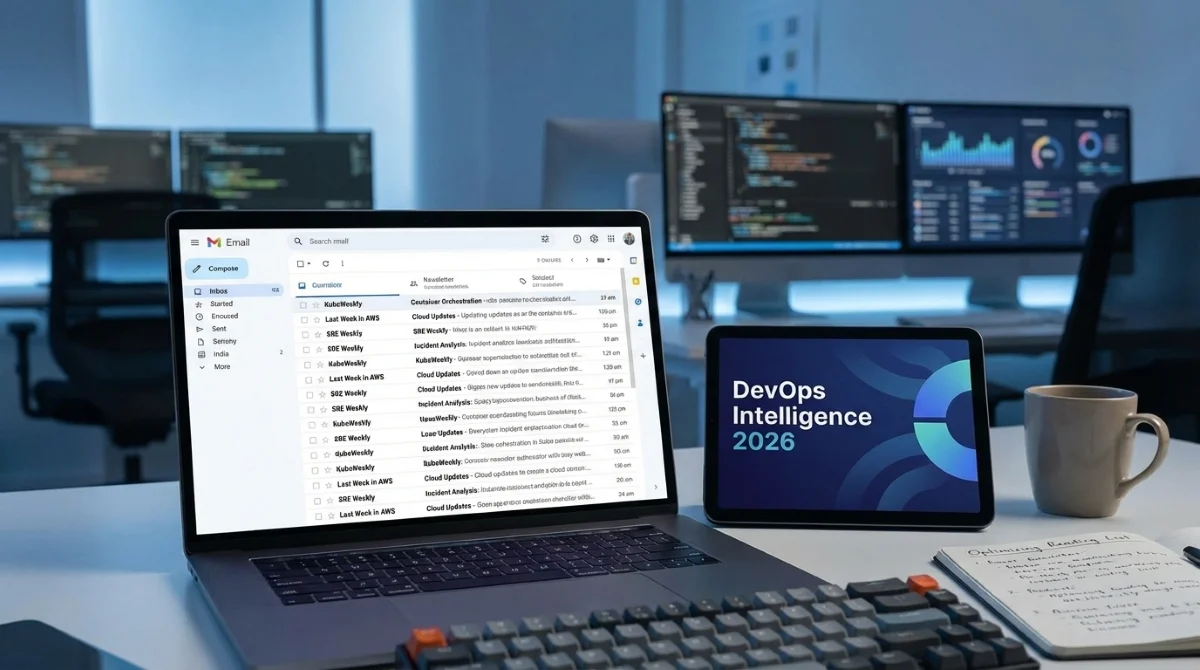
Finding the best DevOps newsletters in 2026 is critical for engineers who need to spot breaking changes before they crash a production stack. With tools and platforms evolving rapidly, relying on a curated inbox prevents the fatigue of managing endless changelogs and documentation tabs. Site reliability engineers (SREs), cloud architects, and platform managers face constant updates across container orchestration, automation frameworks, and cloud providers. Subscribing to targeted industry updates cuts down research time and delivers expert insights directly to your daily workflow.
How to Optimize Your DevOps Reading List
A highly effective engineering inbox should match your specific operational role rather than just covering broad industry topics. Curating the right mix of resources ensures you receive actionable intelligence without suffering from information overload.
- Assess your role: SREs and platform teams require incident analysis and reliability lessons, while cloud engineers extract more value from provider-specific updates.
- Evaluate the depth: Prioritize newsletters that offer real commentary, architectural context, and tradeoff analysis rather than simple link roundups.
- Manage the cadence: Stick to weekly updates to avoid inbox fatigue, unless a specific niche moves fast enough to warrant daily operational alerts.
- Limit overlap: Combine one broad DevOps roundup, one stack-specific source, and one niche topic to maintain a high signal-to-noise ratio.
Top 8 DevOps Newsletters for 2026
- KubeWeekly serves as the official Kubernetes newsletter, offering a community-driven treasure trove of tutorials, tools, and container-orchestration news. For professionals managing clusters, missing an issue can mean missing a critical update in the ecosystem.
- Last Week in AWS, curated by Corey Quinn, delivers a weekly roundup that provides critical, and often humorous, insights into the Amazon Web Services cloud ecosystem. It goes beyond standard release notes to offer deep opinions on how AWS changes impact real-world deployments.
- DevOps Weekly remains one of the most senior and staple resources in the community, covering a broad spectrum of topics. It consistently highlights the latest uptime monitoring tools and provokes thought on evolving industry best practices.
- SRE Weekly is a niche publication dedicated entirely to the art and science of site reliability engineering. It compiles vital incident reports and availability strategies for professionals tasked with maintaining digital operations at scale.
- Faun.dev’s DevOpsLinks: A hybrid resource offering industry-specific newsletters alongside an active social community for tech professionals to engage in peer discussions.
- DevOps.com: A multimedia platform that mixes traditional articles with editorial picks, webinars, videos, and trending topics for a varied content diet.
- Bytes: A weekly deep dive into the devtool sector and the JavaScript ecosystem, focusing on the strategies and stories behind successful technology companies.
- DevTools Brew: Authored by Morgan Perry, co-founder of Qovery.com, this newsletter shares frontline stories, startup challenges, and innovative solutions directly from the devtools industry.
The Shift Toward Curated Engineering Intelligence
The heavy reliance on specialized publications like Last Week in AWS and KubeWeekly highlights a broader industry shift away from generalized IT news toward highly fragmented, stack-specific intelligence. As cloud environments become increasingly complex, engineers simply no longer have the bandwidth to parse raw release notes or generic tech blogs. Curated newsletters that provide immediate context and tradeoff analysis have transitioned from casual reading material into essential operational tools.
Furthermore, the inclusion of community-driven platforms like Faun.dev and founder-led insights from DevTools Brew indicates that DevOps professionals are prioritizing peer experiences over corporate documentation. By limiting overlap and focusing on high-signal weekly updates, engineering teams can proactively address reliability issues and tooling changes before they impact production uptime. This targeted approach to continuous learning is now a fundamental requirement for maintaining resilient infrastructure in 2026.