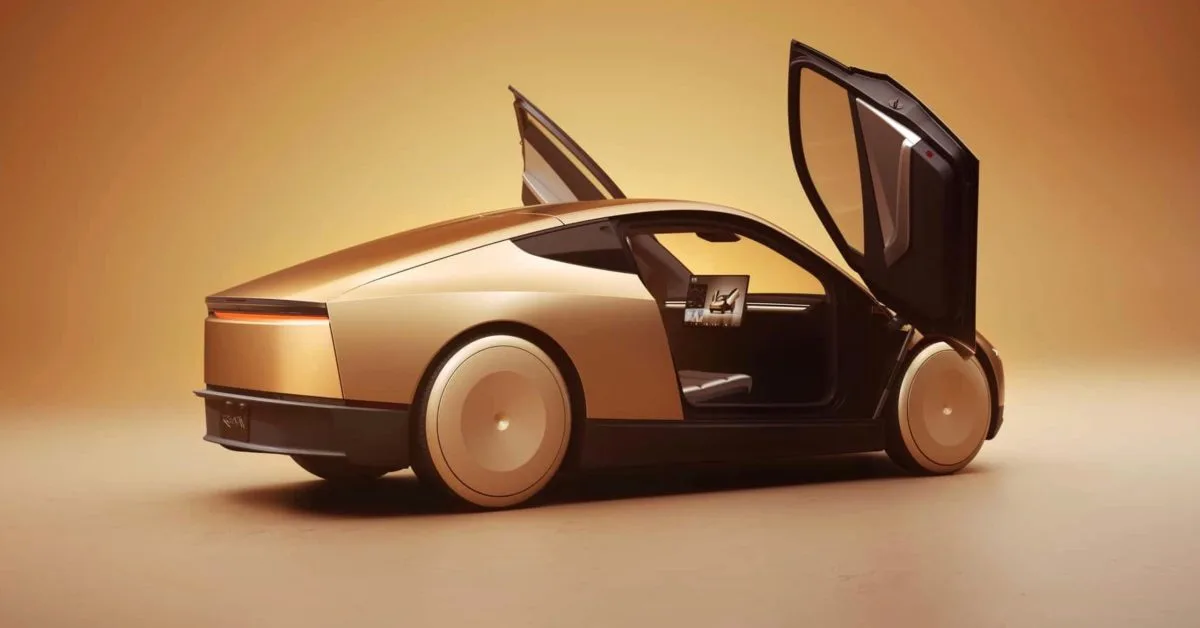
Tesla’s Cybercab has officially achieved a certified efficiency rating of 165 Wh/mi, making it the most efficient electric vehicle ever produced. Confirmed by Tesla VP of Vehicle Engineering Lars Moravy, this figure gives the two-seat robotaxi a massive 28% energy advantage over the closest competitor, the Lucid Air Pure. For ride-hailing fleet operators and EV enthusiasts tracking powertrain advancements, this metric fundamentally alters the economics of autonomous transport by drastically lowering the cost per mile.
The Cybercab achieves this record by stripping away traditional passenger car components. It is a purpose-built autonomous pod featuring no steering column, no pedal assembly, and only two seats. Tesla utilized a teardrop-shaped body that narrows significantly at the rear, prioritizing aerodynamics over rear passenger comfort or cargo space. This extreme weight reduction allows the vehicle to deliver close to 300 miles of range from a sub-50 kWh battery pack.
How the Cybercab Compares to the Market
To put the 165 Wh/mi rating into context, the gap between the Cybercab and traditional passenger EVs is substantial. Here is how it stacks up against the most efficient EVs currently rated by the EPA:
- Tesla Cybercab: 165 Wh/mi
- Lucid Air Pure RWD (19″): 230 Wh/mi - 28% less efficient
- Tesla Model 3 RWD (18″): 240 Wh/mi - 31% less efficient
- Tesla Model Y RWD (18″): 240 Wh/mi - 31% less efficient
- Hyundai Ioniq 6 SE RWD (18″): 241 Wh/mi - 32% less efficient
- Toyota bZ3X XLE FWD: 260 Wh/mi - 37% less efficient
- Tesla Model S AWD (19″): 270 Wh/mi - 39% less efficient
The Economics of a $30,000 Robotaxi
The primary driver behind this engineering strategy is fleet economics. At average US electricity rates of roughly $0.16/kWh, the Cybercab costs approximately $0.026 per mile in energy. In comparison, a Model 3 costs roughly $0.038 per mile, and a Hyundai Ioniq 5 sits at $0.048. Over hundreds of thousands of miles in fleet service, these fractions of a cent create a massive structural cost advantage.
Furthermore, the smaller battery pack enables faster charging times and lowers per-vehicle manufacturing costs, which is critical for Tesla to hit its stated $30,000 price target. Production of the Cybercab officially started at Giga Texas in April, though the initial ramp-up is expected to be slow. The first unit without a steering wheel rolled off the assembly line in February.
However, the program faces significant hurdles. Tesla's supervised robotaxi fleet currently crashes at roughly four times the rate of human drivers. Additionally, the project has been hit by a leadership exodus, with three senior leaders departing since February.
The Autonomy Gamble Behind the Efficiency Record
Getting close to 300 miles of range from a sub-50 kWh battery pack proves that Tesla’s powertrain team still knows how to push industry boundaries. However, comparing a stripped-down, two-seat pod to fully equipped passenger sedans like the Model 3 or Lucid Air is an apples-to-oranges scenario. The Cybercab is optimized purely for cost-per-mile utility, sacrificing all traditional crash structures and occupant flexibility to achieve its 165 Wh/mi rating.
Ultimately, this hardware efficiency record is entirely dependent on software execution. Tesla has yet to solve unsupervised autonomous driving, meaning the hardware is currently waiting on the software to catch up. If the Full Self-Driving (FSD) system cannot scale to operate safely without human intervention, the Cybercab is simply a highly efficient two-seat car that no one can legally drive. The vehicle's success hinges entirely on delivering the autonomy promise that justifies its radical design.