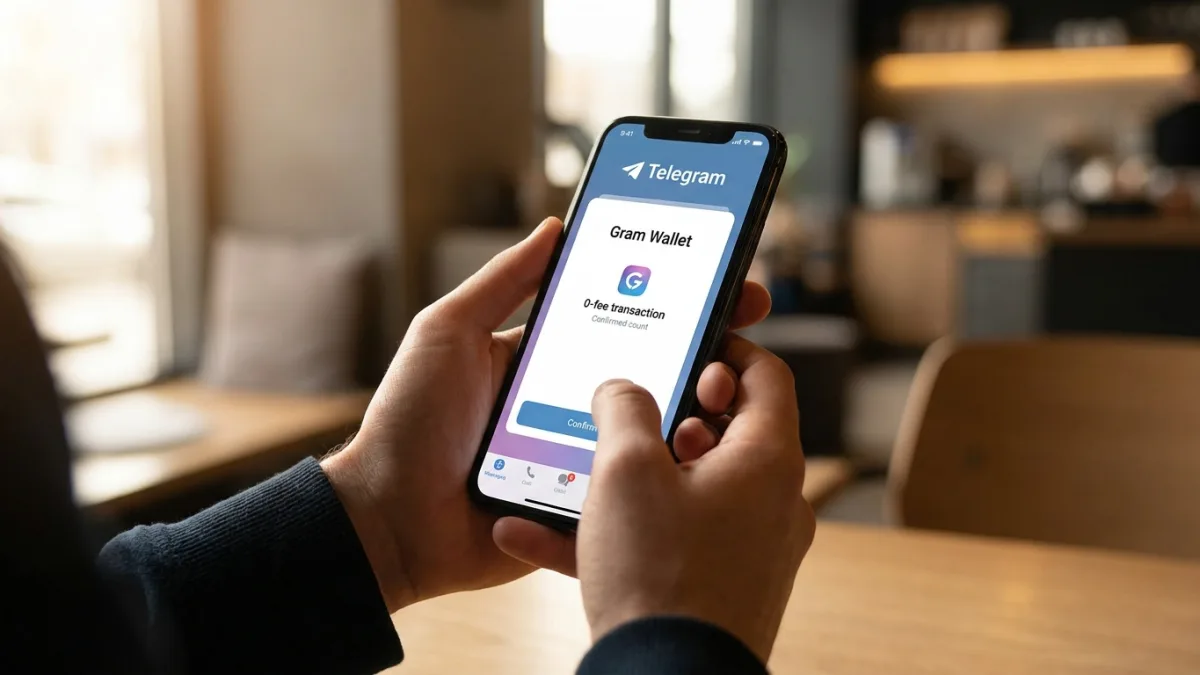
Telegram has officially initiated the live rollout of its native Gram Wallet, bringing non-custodial cryptocurrency features directly into the messaging app for a select group of users. CEO Pavel Durov confirmed the launch on August 31, marking a critical transition from the company's summer promises to a tangible Web3 product. While the platform boasts over one billion users, the current deployment is deliberately restricted as the company tests the infrastructure.
The core proposition of the Gram Wallet is self-custody. Rather than operating as a conventional centralized exchange account where a third party holds the assets, the wallet is designed as a native, non-custodial solution. This means users retain full control over their private keys while operating within an application they already use daily. Durov previously described the initiative as the largest rollout of a non-custodial crypto wallet in human history.
What to Expect from the Gram Wallet Rollout
Because the wallet is currently available only to a select testing group, users who do not yet see the feature should not assume there is an issue with their accounts. Based on Durov's announcements, here is what the rollout entails:
- Zero-Fee Transactions: The wallet is being promoted around the capability for instant, zero-fee cryptocurrency transactions, though a comprehensive fee schedule for all potential wallet functions has not yet been published.
- Gradual Expansion: Access is expanding gradually over the coming weeks. Telegram has not disclosed the exact size of the initial testing group or the specific criteria for inclusion.
- Seamless Upgrades: Validators have officially approved the smart contract powering the wallet. According to Durov, this technical architecture ensures that future wallet upgrades can be executed without forcing users through complicated or painful migrations.
The Web3 Distribution Test
The launch of the Gram Wallet represents a massive structural advantage for Telegram, but it also highlights the difference between potential distribution and actual adoption. By embedding a non-custodial wallet directly into a platform with over a billion users, Telegram bypasses the traditional, high-friction onboarding process that has historically bottlenecked Web3 growth. Users no longer need to download separate specialist apps or navigate complex seed-phrase setups just to get started.
However, availability does not automatically equal active usage. The true metric of success for this rollout will not be how many apps receive the update, but how many users actually fund their wallets and execute transactions. If Telegram can convert even a single-digit percentage of its massive audience into active self-custody users, it will instantly dwarf established crypto platforms in sheer volume. The next critical milestone will be the release of concrete adoption figures once the wallet moves beyond this initial, restricted testing phase.
This article was written by AI from reporting by financefeeds.com.