T-Mobile is brushing off SpaceX’s aggressive push into the mobile carrier market, but the telecom giant might be underestimating Elon Musk’s multi-billion dollar ambitions. Despite SpaceX's recent proposal to transform existing Starlink dishes into urban cellular base stations, T-Mobile leadership remains unconvinced that the satellite company can solve real-world consumer connectivity issues.
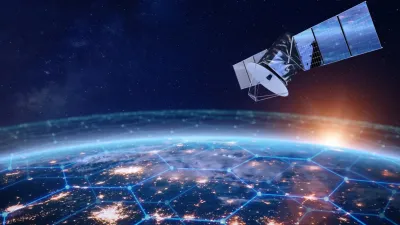
The tension follows SpaceX's first earnings call as a public company, where it revealed plans to bypass the massive upfront costs of building traditional cell towers. Instead, the company wants to use its widespread Starlink hardware as low-power femtocell-type base stations. However, T-Mobile's chief executive quickly downplayed the strategy.
"The threat posed to mobile operators from satellite companies such as Starlink has been exaggerated and I struggle to see which consumer problems they would solve by entering the market."
- CEO, T-Mobile
The core hurdle for SpaceX is its lack of usable terrestrial spectrum. While the company recently spent $19.6 billion to acquire 65 MHz of nationwide, exclusive-use spectrum, the compatibility with current consumer hardware remains a massive bottleneck. The spectrum is divided into three distinct bands:
- Around 15 MHz of unpaired nationwide Advanced Wireless Services-3 (AWS-3) spectrum, which is already utilized by major carriers like AT&T and Verizon for LTE and 5G networks, and is supported by most modern smartphones.
- Around 40 MHz of nationwide AWS-4 spectrum, which features ideal propagation physics for space-to-ground communication but lacks widespread support from existing cellphones.
- Around 10 MHz of nationwide H-Block spectrum, offering up to 20 times the data throughput compared to SpaceX's previously leased low-band frequencies, though it also remains unsupported by most current mobile devices.
Because the bulk of SpaceX's new spectrum (AWS-4 and H-Block) cannot connect to the average smartphone, and satellite-geared frequencies struggle to penetrate urban walls, the company is cornered. With AT&T, Verizon, and T-Mobile refusing to sign Mobile Virtual Network Operator (MVNO) agreements with SpaceX, Musk faces two expensive paths: acquire an existing carrier or aggressively bid in the FCC's upcoming auction for 160 MHz of upper C-band spectrum.
The Hidden Cost of Underestimating Musk
While T-Mobile's skepticism regarding Starlink's immediate urban viability is technically accurate, dismissing SpaceX entirely is a dangerous game for legacy carriers. The $19.6 billion spectrum purchase proves Musk is not just experimenting; he is laying the groundwork for a parallel infrastructure. If SpaceX successfully deploys femtocells via millions of existing Starlink dishes, it effectively crowdsources a national cell grid without the bureaucratic nightmare of zoning and building traditional towers.
Furthermore, the mounting speculation about SpaceX potentially acquiring a major carrier - perhaps even T-Mobile itself - suggests a brutal reality for the telecom industry. If Musk cannot beat the Big Three on spectrum compatibility today, he has the capital and the relentless drive to simply buy his way into the oligopoly tomorrow. Ignoring a competitor with a vast satellite constellation and endless funding is a risk T-Mobile may eventually regret.