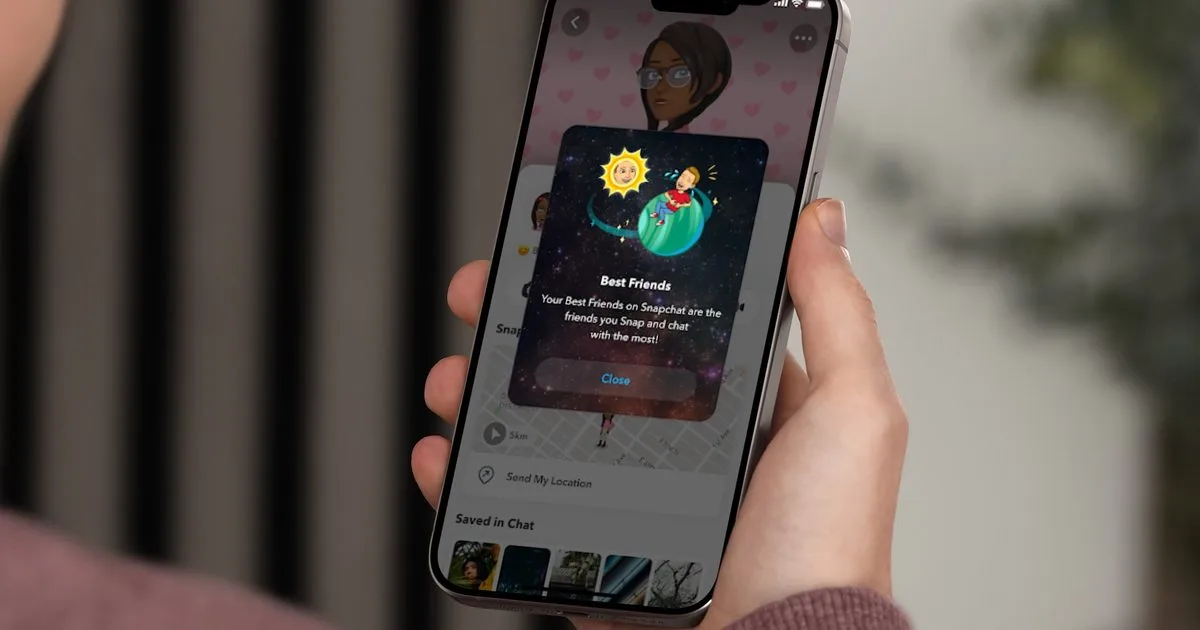
With Snapchat Planets, you no longer have to guess where you stand in your friends' digital orbits. This feature transforms the traditional Best Friends list into a literal solar system, assigning your top eight contacts a celestial body based on interaction frequency. Available exclusively to Snapchat+ subscribers, the Friend Solar System replaces numerical rankings with a visual hierarchy that offers a quick snapshot of your daily interactions.
The system operates on a simple premise: the closer the planet is to the sun, the higher that person ranks in your Best Friends list. However, these rankings are not permanent. As your activity changes through snaps, chats, and shared media, the planetary assignments update dynamically to reflect your current communication habits. Snapchat has not disclosed the exact algorithmic criteria behind the system, meaning the only guaranteed way to move up in someone's orbit is to interact with them more frequently.
The Complete Snapchat Planets Order
Each planet represents a specific position in your Best Friends ranking rather than a different type of friendship. Mercury is reserved for your absolute closest connection, while Neptune sits at the edge of your top eight. And yes, just like in real life, Pluto is left out of the equation.
| Planet | Best Friends Rank | What it means |
|---|---|---|
| Mercury | #1 | You are their closest Snapchat friend based on interactions. |
| Venus | #2 | You are their second closest Snapchat friend. |
| Earth | #3 | You are their third closest Snapchat friend. |
| Mars | #4 | You are their fourth closest Snapchat friend. |
| Jupiter | #5 | You are their fifth closest Snapchat friend. |
| Saturn | #6 | You are their sixth closest Snapchat friend. |
| Uranus | #7 | You are their seventh closest Snapchat friend. |
| Neptune | #8 | You are their eighth closest Snapchat friend. |
It is important to distinguish between the Best Friends badge and the standard Friends badge. A Best Friends badge indicates a mutual top-tier connection, meaning you are both among each other's closest contacts. A standard Friends badge simply denotes an active friendship, meaning someone could be your Mercury without you holding the same rank in their solar system.
How to View Your Snapchat Planet
If you want to see where you rank in a friend's solar system, you must have an active Snapchat+ subscription. Once subscribed, finding your planetary status takes just a few taps.
- Open the Snapchat app.
- Navigate to a friend's Friendship Profile.
- Look for a Best Friends or Friends badge featuring a gold ring around it.
- Tap the badge.
- Snapchat will reveal which planet you represent in that friend's Solar System.
If you do not see a badge, it typically means you do not have Snapchat+, the Friend Solar System feature is disabled, or you simply are not in that person's top eight visible friend ranking.
How to Enable the Friend Solar System
Even with a Snapchat+ subscription, you may need to manually activate the feature before you can see the planetary rankings. Pricing and plan availability for Snapchat+ vary by region, so check the subscription page within the app for current details.
- Open Snapchat and go to your profile.
- Tap your Snapchat+ membership card or banner.
- Open the Snapchat+ feature management page.
- Locate the Solar System or Friend Solar System option.
- Toggle the switch to turn it on.
The Gamification of Digital Friendships
The introduction of the Friend Solar System is a masterclass in social gamification. By turning passive chat statistics into a highly visual, status-driven ranking system, Snapchat has successfully monetized social curiosity. Users are naturally driven by a desire to know where they stand within their social circles, and locking this insight behind a paywall is a primary driver for Snapchat+ subscriptions.
However, this feature also introduces a new layer of social pressure. Because the rankings are dynamic and update based on daily interactions, maintaining a "Mercury" status requires constant engagement. This creates a subtle but effective retention loop for the platform, ensuring that users keep snapping to protect their planetary rank. While Snapchat explicitly states the planets are not meant to measure the true strength of a friendship, the psychological impact of dropping from Venus to Jupiter is a powerful engagement tool for the app's core demographic.