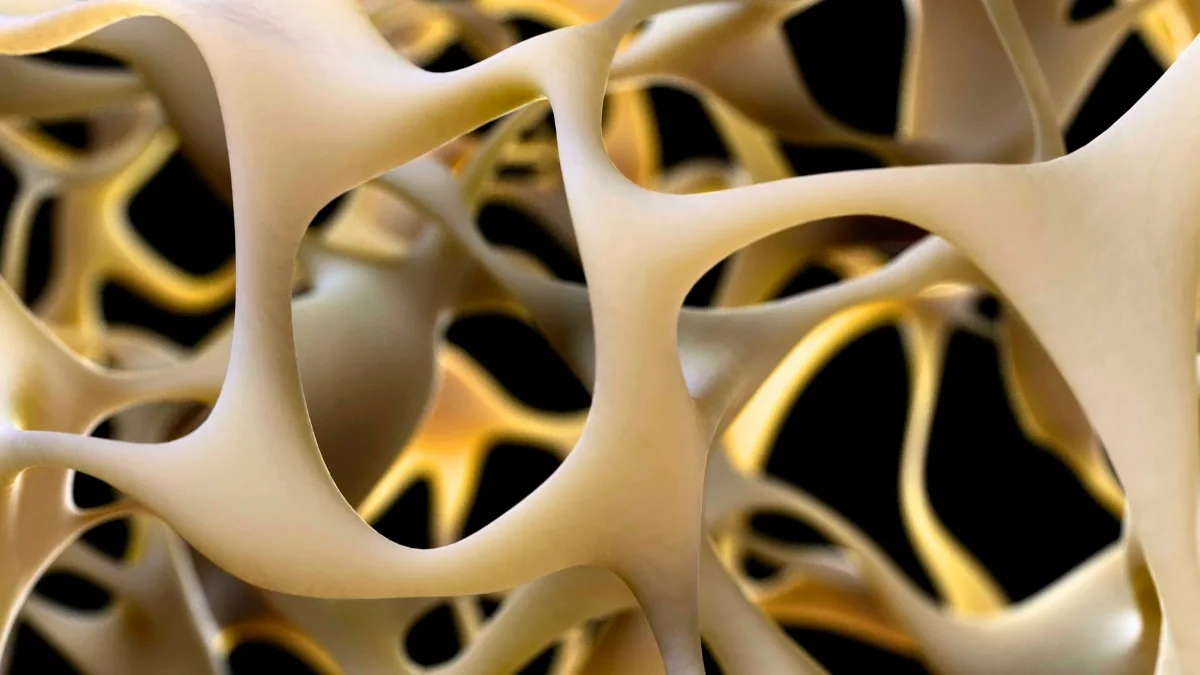
Scientists from the University of Leipzig in Germany and Shandong University in China have identified the GPR133 cell receptor as a critical mechanism for reversing osteoporosis. By activating this specific receptor with a newly discovered chemical called AP503, researchers successfully increased bone strength and density in osteoporotic mice. This discovery provides a highly targeted approach to treating bone-weakening diseases that currently have no permanent cure.
Osteoporosis is a severe condition affecting millions of people worldwide, particularly aging populations and women going through menopause. Current treatments primarily focus on slowing the progression of bone loss, but they often come with risky side effects or lose their effectiveness over time. By shifting the focus toward actively rebuilding degraded bone mass, this new therapeutic pathway could drastically improve the quality of life for older adults and prevent debilitating fractures.
The joint study, published in Signal Transduction and Targeted Therapy, focused on the GPR133 gene, which is also known as ADGRD1. Researchers observed that mice lacking this specific gene grew up with weak bones that closely resembled human osteoporosis. To counter this, the team utilized AP503, a substance recently identified via a computer-assisted screen as a direct stimulator of the GPR133 receptor.
When AP503 was introduced, it acted as a biological button that forced osteoblasts - the body's bone-building cells - to work significantly harder. University of Leipzig biochemist Ines Liebscher noted that the substance significantly increased bone strength in both healthy and osteoporotic mice. Furthermore, the researchers demonstrated that this chemical activation could work in tandem with physical exercise to compound the bone-strengthening effects.
Other Notable Bone Regeneration Discoveries
The scientific community has seen a surge in bone-healing breakthroughs recently, expanding the scope of regenerative medicine. Scientists are increasingly looking to harness and supercharge the body's natural repair processes. Recent notable developments include:
- Biocooperative Regenerative Implants: In 2024, an international team including researchers from the University of Nottingham developed a 3D-printed, blood-based implant. This gel-like substance uses synthetic peptides to improve the natural clotting barrier, effectively repairing severe bone damage in rat models.
- Maternal Brain Hormone (MBH): A 2024 study led by the University of California, San Francisco identified a hormone that naturally boosts bone density, mass, and strength. Stem cell biologist Thomas Ambrosi highlighted that the mineralization achieved with MBH in mice surpassed any previously tested strategy.
My Take
The identification of AP503 as a biological trigger for the GPR133 receptor represents a fundamental paradigm shift in skeletal medicine. Instead of merely preserving degrading bone mass, future therapies could actively rebuild it from the cellular level up. Given the compounding successes of the MBH hormone discovery and biocooperative blood implants, the next decade of osteoporosis treatment will likely pivot entirely from symptom mitigation to full structural regeneration. If these animal-model successes translate effectively to human clinical trials, we are looking at the potential eradication of age-related bone fragility.
Frequently Asked Questions
What is the GPR133 receptor?
The GPR133 receptor (encoded by the ADGRD1 gene) is a cell receptor crucial for maintaining bone density. When activated, it stimulates osteoblasts, which are the cells responsible for building new bone tissue.
How does the AP503 chemical work?
AP503 acts as a biological stimulator that binds to the GPR133 receptor. This activation forces bone-building cells to work harder, significantly increasing bone strength and reversing density loss in osteoporotic models.
Are these osteoporosis treatments available for humans yet?
Currently, these breakthroughs have only been successfully demonstrated in animal models, such as mice and rats. Extensive human clinical trials will be required before these targeted therapies and implants become available to the public.