For decades, the scientific community believed they fully understood the quantum behavior in superconductors, but a groundbreaking new experiment has just shattered those assumptions. By cooling a specially prepared gas to near absolute zero, researchers have directly visualized particles pairing up in a coordinated "dance" that defies the 70-year-old, Nobel-prize-winning BCS theory. This discovery could be the missing key to unlocking room-temperature superconductors, a holy grail of physics that would revolutionize global energy grids and computing.
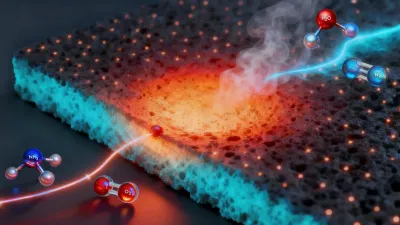
Superconductivity occurs when certain materials are cooled to extreme temperatures, causing their electrical resistance to completely vanish. This phenomenon allows electricity to flow without any energy loss, driven by electrons that form pairs and move together through the material. However, observing exactly how these pairs interact in real-time has historically been impossible due to the extreme conditions required.
The Limits of the Classic BCS Theory
Since the 1950s, physicists have relied on the BCS theory - named after John Bardeen, Leon Cooper, and John Robert Schrieffer - to explain this zero-resistance state. The theory posits that superconductivity arises because electrons have a natural tendency to pair up. However, it assumes that these pairs act entirely independently, meaning the position of one pair should not influence the others around it.
According to Shiwei Zhang, a senior research scientist at the Simons Foundation's Flatiron Institute, the BCS framework is fundamentally a rough approximation. It successfully explains the basic mechanism but fails to capture the complex interactions between the pairs themselves. Scientists have long suspected that the theory was missing critical details, especially when trying to explain newer, more complex superconducting materials.
Visualizing the Quantum Ballroom
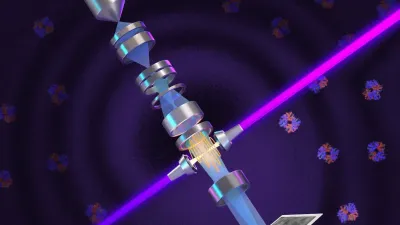
To uncover these missing details, experimental physicists at the French National Centre for Scientific Research (CNRS) collaborated with theorists to create a highly controlled environment. They utilized a Fermi gas made of lithium atoms, cooling it to just a few billionths of a degree above absolute zero. Because these atoms behave as fermions - the same category of particles as electrons - they served as perfect, observable stand-ins for studying superconductivity.
Using a newly developed imaging technique, the team captured detailed snapshots of the paired atoms and discovered they were not randomly distributed. Instead, the pairs maintained specific distances from one another, actively coordinating their positions to avoid collisions. Tarik Yefsah, the experimental research lead at CNRS, compared the previous BCS theory to hearing music from outside a ballroom, while this new imaging approach is like taking a wide-angle camera inside to watch the dancers actively avoid bumping into each other.
The Path to Room-Temperature Power Grids
This newly discovered spatial correlation fundamentally changes how we approach the engineering of quantum materials. In the 1980s, the discovery of high-temperature superconductors - which operate at liquid nitrogen temperatures of minus 196 degrees Celsius - proved that zero-resistance flow could exist outside of near-absolute-zero extremes. Yet, the exact mechanics of why those specific materials worked at higher temperatures remained a frustrating mystery, largely because our foundational models lacked the interaction data this new experiment just provided.
By proving that fermion pairs actively coordinate rather than move blindly, researchers now have a more accurate blueprint for running quantum simulations. This is not just an academic victory; it is a practical stepping stone. If scientists can fine-tune these interactions in more complex systems, we are significantly closer to synthesizing materials that superconduct at everyday room temperatures. Achieving that would mean the end of energy loss in power transmission, the creation of hyper-efficient electric vehicles, and a massive leap forward in the stability of quantum computers.