The dream of a high-speed quantum internet just cleared its biggest bandwidth hurdle, as physicists have successfully executed quantum teleportation across 100 simultaneous channels. For researchers building future quantum communication networks, the inability to send large amounts of quantum information at once has been a critical bottleneck.
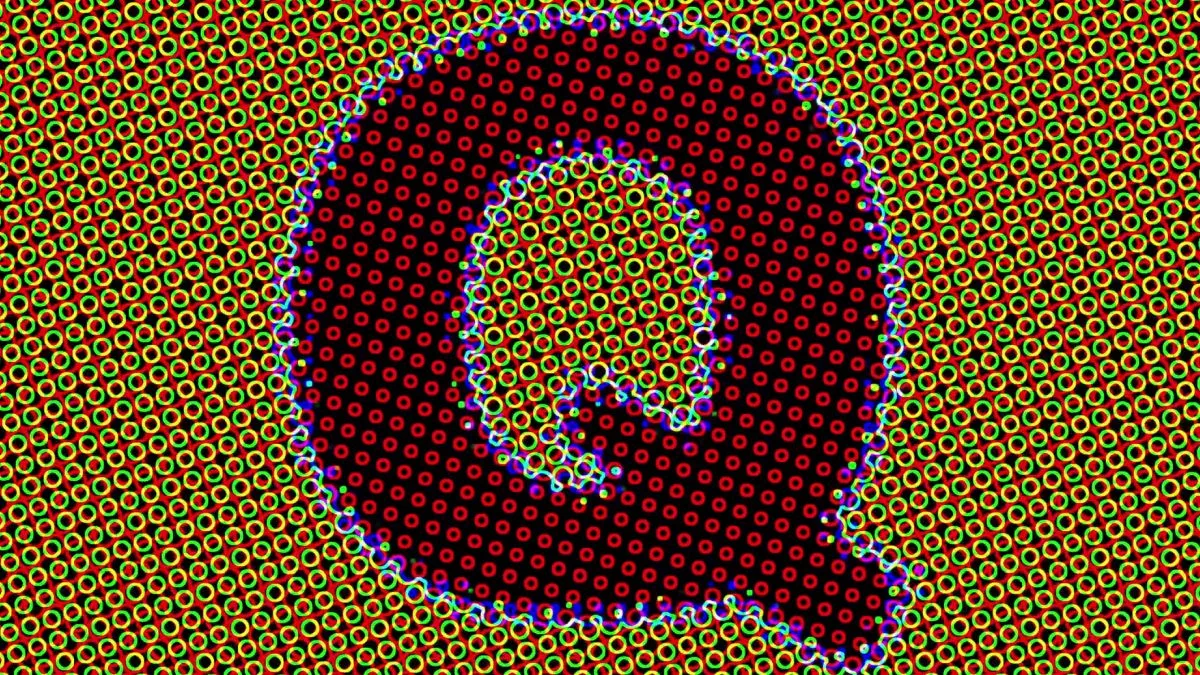
A team led by Jietai Jing at East China Normal University bypassed this limitation by teleporting the continuous-variable quantum state of an optical field encoded into a 100-pixel image. The intensity pattern formed by these modes collectively represented the letter "Q".
Most previous quantum teleportation experiments relied on a single channel or a small number of multiplexed channels. Scaling up traditionally required separate detection, electronic processing, and modulation for every single channel, creating an impossibly complex apparatus.
Instead of implementing a separate teleportation system for each channel, our architecture enables parallel operation across the entire array of spatial optical modes.
- Jietai Jing, East China Normal University
The Mechanics of Parallel Quantum Teleportation
- 10x10 Spatial Grid: The team arranged 100 spatially separated modes of light into a grid, where each mode acted as an independent pixel carrying part of the information.
- All-Optical Processing: They developed a matching grid of entangled light and an all-optical system that processed all 100 channels in parallel, eliminating the need for separate electronic feedforward mechanisms.
- Fidelity Measurement: The reconstructed pattern achieved an average fidelity of 0.60 across the image, successfully beating the classical limit of 0.52 that is possible without quantum entanglement.
The Broadband Era of Quantum Computing
The leap from single-channel quantum teleportation to a 100-channel parallel array is the quantum equivalent of upgrading from a 56k dial-up modem to early broadband. While an average fidelity of 0.60 might seem low in classical computing terms, proving that quantum entanglement can beat classical limits across a massive parallel array without exponential hardware bloat is a foundational victory.
The immediate physical limitation is no longer the theoretical architecture, but raw power; the current 10-by-10 array was constrained by a one-watt laser. As researchers integrate more powerful lasers, this all-optical parallel processing model provides the exact scalable blueprint needed to handle the massive data loads of a future global quantum internet.