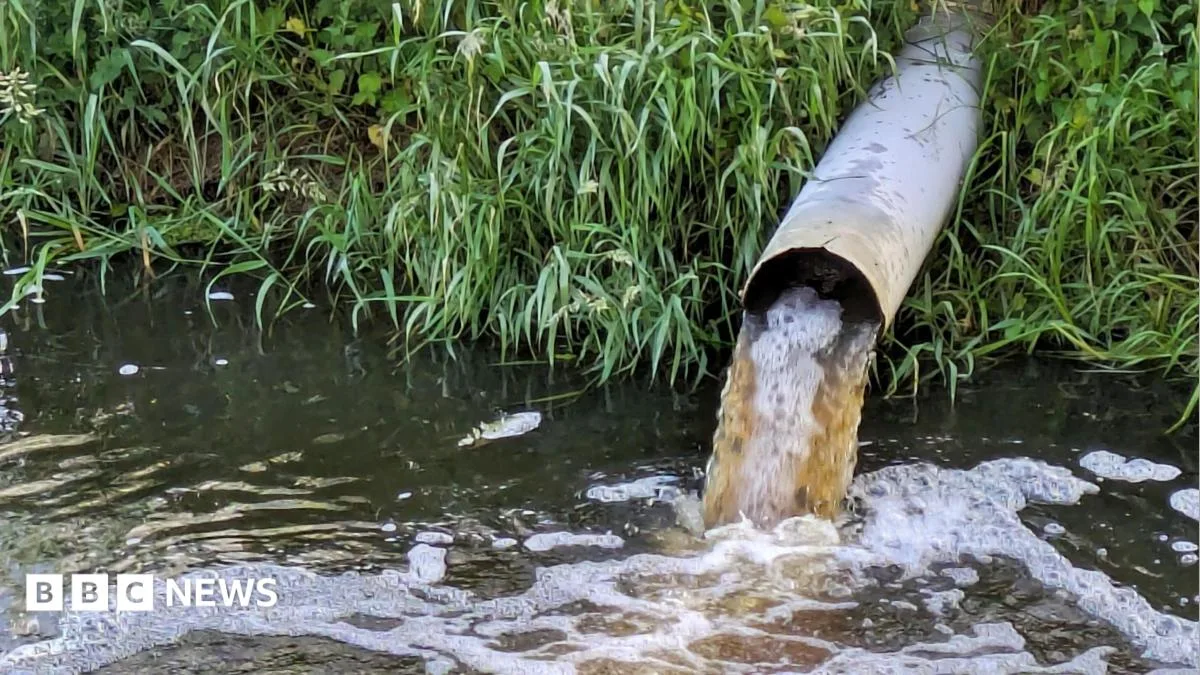
Over 80% of raw sewage discharges into England's waterways over the past two years occurred during "normal" weather conditions, suggesting a massive scale of potentially illegal sewage spills in England that have gone unpunished. A new data analysis, triggered by leaked secret court documents, exposes how water companies may be routinely exploiting vague regulatory definitions to dump waste without consequence.
The UK's sewage infrastructure combines household waste and rainfall in the same pipe network. When capacity is exceeded, systems overflow to prevent sewage from backing up into homes. However, UK law dictates that raw sewage should only be released during exceptional weather. Until recently, the Environment Agency (EA) had not publicly quantified the exact threshold for what constitutes "heavy rain."
Leaked Court Documents Expose Spill Thresholds
Earlier this year, an EA source leaked undisclosed documents from a 2021 court case against Southern Water. These files contained a specific, previously hidden definition of "heavy rain" conditions that permit legal dumping. Using this baseline, retired academic and environmental campaigner Prof Peter Hammond analyzed data from more than 350 storm overflow outlets across England.
The dataset included the largest sewage treatment works and a representative sample of smaller facilities across all nine English water companies, which collectively serve over 30 million people. Hammond's analysis revealed that approximately 86% of the hours where raw sewage was spilled occurred without heavy rain. Even the best-performing water companies exhibited a potential illegality rate exceeding 70% over the last two years.
It's totally outrageous, both from the point of the water companies who are exploiting the weak regulation but also from the Environment Agency's point of view, where they've not been doing their job properly.
- Prof Peter Hammond, Campaigner
The Environment Agency's Defense
The EA contested the findings, stating that the leaked "heavy rain" definition applied exclusively to Southern Water sites and that regional rainfall variations require different thresholds. However, Hammond noted that adjusting the analysis for regional rainfall did not significantly alter the illegality rates, as the vast majority of spills happened during relatively low levels of rain.
This is not the first time the EA's enforcement has faced severe scrutiny. In 2024, the Office for Environmental Protection (OEP) ruled that the agency was misapplying legislation by allowing spills in normal weather rather than strictly in "exceptional circumstances." While Water UK, representing the water companies, claims the industry is working to end all discharges, the lack of transparent enforcement data continues to shield operators from accountability.
The Data Transparency Crisis in Environmental Regulation
The reliance on leaked court documents to define a basic environmental metric highlights a severe transparency crisis within the UK's water regulation. When a retired academic must reverse-engineer spill data to uncover an 86% potential illegality rate, it signals that the regulatory framework is currently designed to protect operators rather than waterways.
Moving forward, the integration of real-time, open-source telemetry data at all storm overflow outlets is essential. Until the Environment Agency mandates public, automated reporting of both spill volumes and localized rainfall thresholds, water companies will continue to operate in a gray area. Without strict data transparency, environmental fines will remain a mere cost of doing business rather than a genuine deterrent against pollution.
This article was written by AI from reporting by bbc.co.uk.