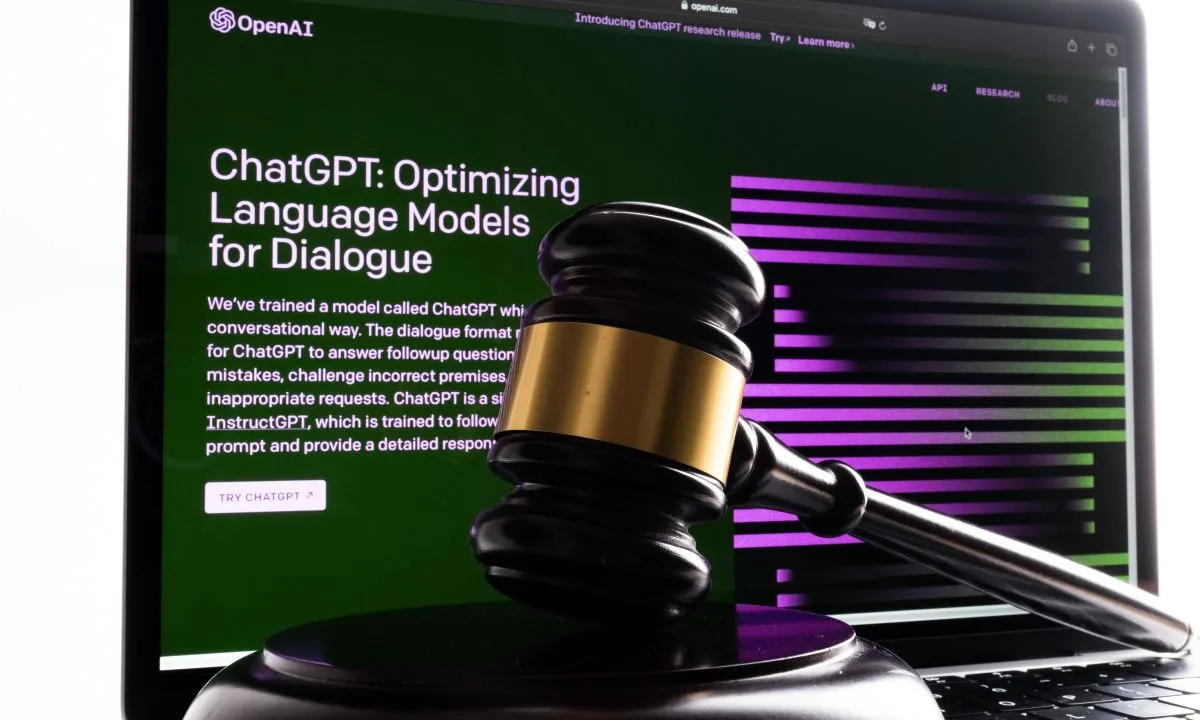
The ongoing Elon Musk OpenAI lawsuit faced a critical juncture on Friday, March 13, when a federal judge openly scrutinized the billionaire's massive damage claim. Judge Yvonne Gonzalez Rogers suggested that the $134 billion Musk is seeking appears to be based on "numbers out of air." Despite her skepticism, the judge ruled that Musk can continue to press his case to jurors, keeping the high-stakes legal battle alive.
This article is for tech industry professionals, investors, and legal observers tracking the governance and financial structures of major AI laboratories. Understanding this pretrial ruling provides critical insight into how early philanthropic contributions to AI startups are valued in court, potentially setting a precedent for future disputes among tech founders.
During the pretrial hearing in California’s Northern District, lawyers for OpenAI sought to dismiss evidence from an expert witness intended to support Musk’s financial claims. Musk, who helped co-found the organization, accuses the startup and CEO Sam Altman of defrauding him by abandoning its nonprofit origins after he made substantial charitable donations. "A jury is going to understand that [Musk’s expert] is pulling these numbers out of the air," Judge Rogers stated during the proceedings.
The judge further elaborated on her doubts regarding the financial calculations. "Do I find it convincing? Not really. Based on what I’ve seen, do I find it particularly persuasive? Not really," she added. However, she noted she was not prepared to dismiss the expert testimony based merely on a five-page motion, opting instead to let the jury hear the evidence when the trial begins in April.
The $134 Billion Valuation Argument
Judge Rogers acknowledged the precarious nature of the plaintiff's position, noting that if she did exclude Musk’s expert, the trial would effectively be over due to a lack of evidence regarding damages. The expert in question is C. Paul Wazzan, an economist for the consulting firm Berkeley Research Group and a venture capitalist. His calculations form the entire foundation of the astronomical damage request.
Wazzan concluded that Musk’s early donation of $38 million, combined with his nonmonetary contributions to the organization, accounted for 50% to 75% of the value of OpenAI’s not-for-profit arm. This not-for-profit entity currently owns a little more than a quarter of the company’s for-profit business. To put the scale of this claim into perspective, OpenAI's for-profit business was recently valued at a staggering $730 billion.
OpenAI's Defense and X Money Expansion
OpenAI has consistently pushed back against the allegations, claiming the lawsuit is fueled entirely by commercial motives. The company points out that Musk owns xAI, a direct competitor in the artificial intelligence space, and characterizes the litigation as part of "an ongoing pattern of harassment." As the April trial approaches, both sides are preparing for a highly publicized courtroom showdown.
In related ecosystem news, Musk announced last week that X Money will launch on his social media platform in early public access starting in April. This development follows years of reporting on his vision to transform the platform into a comprehensive super app offering financial services. In April 2023, Musk told employees that his goal was to build a $250 billion payments platform, stating his belief that it could become the biggest financial institution in the world.
My Take
The skepticism from Judge Yvonne Gonzalez Rogers sets a remarkably high bar for Musk's legal team as they prepare to face a jury. By explicitly calling the $134 billion figure unpersuasive, the court has signaled that theoretical valuations of early nonprofit contributions will face intense scrutiny. The fact that OpenAI's for-profit arm is now valued at $730 billion makes this one of the most lucrative and complex tech disputes in history.
If Musk's team fails to substantiate the methodology behind C. Paul Wazzan's calculations during the trial, the damage claim could collapse entirely. This would not only be a major legal victory for Sam Altman and OpenAI, but it would also solidify the company's controversial transition to a capped-profit model without carrying historical financial obligations to its original philanthropic backers.
Frequently Asked Questions
When is the Elon Musk vs. OpenAI trial?
The trial is scheduled to begin in April 2026 in California’s Northern District.
Why is Elon Musk suing OpenAI?
Musk accuses OpenAI and CEO Sam Altman of defrauding him by abandoning the company's original nonprofit mission after he made a $38 million charitable donation to help found the organization.
Who calculated the $134 billion damage claim?
The figure was calculated by expert witness C. Paul Wazzan, an economist at Berkeley Research Group, who estimated that Musk's contributions accounted for up to 75% of the value of OpenAI's not-for-profit arm.