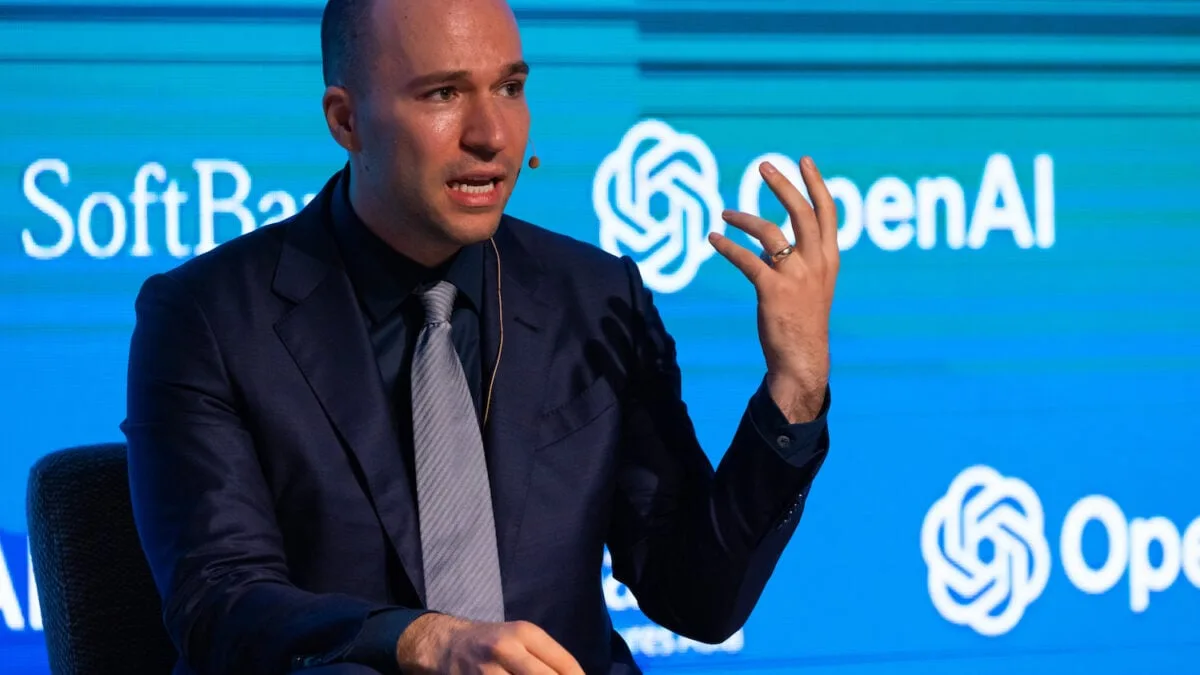
OpenAI political donations are under intense scrutiny, prompting the ChatGPT maker to formally distance itself from its own leadership's financial activities. The company issued a definitive statement clarifying that multi-million dollar contributions made by co-founder Greg Brockman to pro-AI and political action committees do not reflect OpenAI's corporate stance. The clarification arrives as the battle over federal and state AI guardrails reaches a boiling point.
The controversy centers around $25 million in donations made by Brockman and his wife in 2025 to Leading the Future, a PAC affiliated with the nonprofit Build American AI, alongside an identical $25 million contribution to MAGA Inc. OpenAI explicitly stated that employees participate in politics in their personal capacities, noting the company itself does not fund any super PACs and lacks visibility into Leading the Future's operations.
Brockman’s massive financial footprint dwarfs the political spending of other executives at the company. CEO Sam Altman’s recent contributions were limited to smaller Democratic donations, though he notably contributed $1 million to the 2024 Presidential inauguration fund. These financial disclosures arrive at a critical juncture for AI regulation, as tech giants aggressively lobby to shape the rules governing next-generation technologies.
The nonprofit Build American AI recently criticized an Illinois state bill requiring third-party audits of frontier AI models. The group argued that while audits are important, they risk becoming politicized or ineffective due to being run through bureaucracies that lack sufficient AI expertise, according to a post on X. This state-level pushback mirrors a broader federal battle over how closely the government should monitor AI development.
President Donald Trump recently signed a scaled-down AI executive order after an earlier draft was scrapped following intense industry pushback. The revised order establishes a voluntary framework for companies to grant the government access to frontier models 30 days before release - a significant reduction from the originally proposed 90-day window.
Nothing in this section shall be construed to authorize the creation of a mandatory governmental licensing, preclearance, or permitting requirement for the development, publication, release, or distribution of new AI models, including frontier models.
- Executive Order Draft
The Invisible Hand Shaping AI Policy
The rapid revision of the AI executive order - shrinking the review window from 90 to 30 days and cementing its voluntary nature - demonstrates the unprecedented leverage AI executives now hold over federal policy. When industry figures can successfully argue that stringent reviews might give geopolitical rivals an edge, it becomes clear that national security narratives are being effectively weaponized to maintain corporate autonomy.
OpenAI’s attempt to separate its corporate identity from executive political donations is a standard public relations maneuver, but it ignores the reality of modern tech lobbying. Whether the money flows from a corporate treasury or a co-founder's personal bank account, the resulting political influence directly shapes the regulatory environment in which the company operates. As AI legislation fragments state by state, these massive personal war chests will likely dictate the guardrails of tomorrow's frontier models.
This article was written by AI from reporting by gizmodo.com.