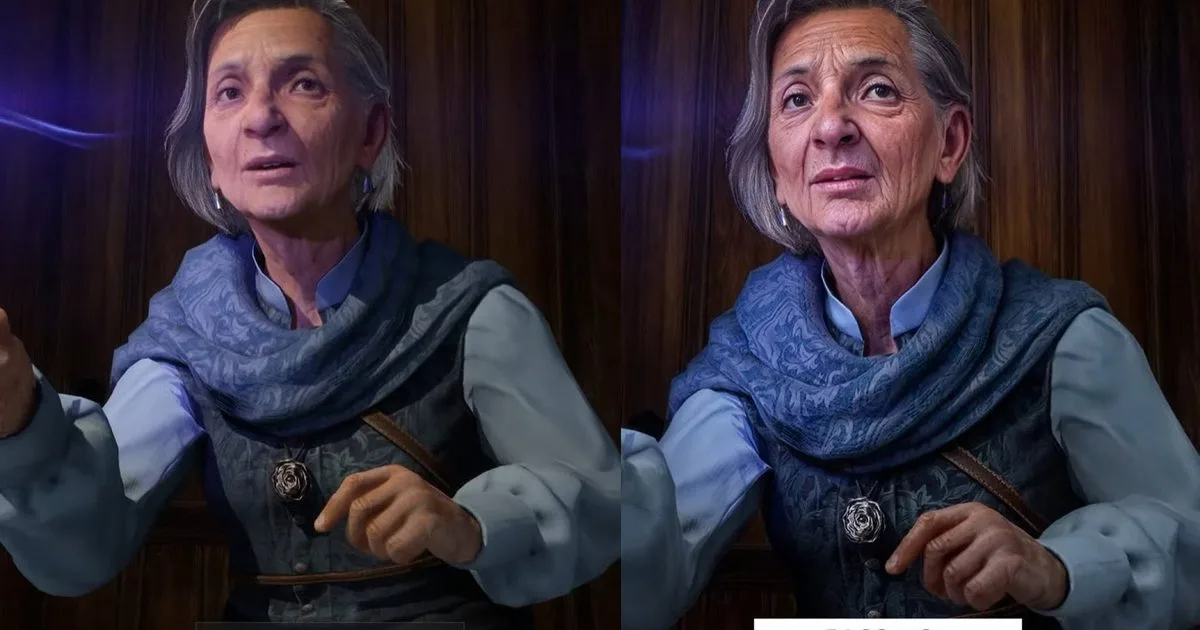
NVIDIA DLSS 5 has sparked intense debate across the gaming industry, transforming from a highly anticipated "GPT moment for graphics" into a controversial AI filter. Announced at GTC 2026, the new generative upscaling technology is facing severe backlash from both players and developers for altering the artistic intent of major titles. CEO Jensen Huang initially introduced the tech with massive promises, claiming that artificial intelligence would now handle the heavy lifting of visual realism, including complex lighting, fabric sheen, and skin textures.
This development directly impacts PC gamers and 3D artists who must navigate the fine line between performance gains and preserving a game's original visual identity. Understanding how this 2D post-processing filter operates allows users to anticipate future graphical settings and helps developers prepare for the incoming wave of AI-driven rendering tools. The controversy highlights a growing tension between hardware manufacturers pushing automated enhancements and creators fighting to maintain control over their digital environments.
The initial hype surrounding the announcement collapsed within hours as side-by-side comparisons in games like Resident Evil Requiem and Starfield flooded the internet. Players quickly criticized the results as "AI slop," noting that the technology smoothed out gritty textures and applied an unintended, overly polished look to characters. Instead of enhancing realism, the generative AI was accused of "Yassifying" models, making them resemble heavily filtered social media influencers from 2022 rather than battle-hardened survivors or space explorers.
Major game developers were reportedly caught completely off guard by the visual overhaul. Artists at Ubisoft and Capcom discovered the NVIDIA DLSS 5 demos simultaneously with the public, exposing a disconnect between corporate marketing agreements and actual creative teams. The situation escalated when an email interview between YouTuber Daniel Owen and NVIDIA's Jacob Freeman revealed a critical technical limitation. Instead of tapping into deep 3D geometry, the current iteration functions essentially as a high-end 2D post-processing filter laid over the screen.
Video games rely heavily on intentional art direction, such as moody lighting, claustrophobic shadows, or atmospheric fog. The AI's tendency to brighten dark corners and scrub away fog is seen as correcting perceived "errors" rather than respecting the carefully crafted atmosphere. Furthermore, the push for generative AI raises severe data sovereignty concerns among creators. Handing over raw character designs and lighting maps to train an AI model creates fears that the technology might eventually bypass human artists entirely, using their hard work to automate future game design.
Despite the rocky launch, the underlying technology shows immense potential when properly guided. While competitors like AMD and Intel offer their own traditional upscaling solutions, NVIDIA's generative approach is breaking new ground. As demonstrated by user Veedrac on Reddit, applying manual tone-mapping to the upscaled footage yields stunning results, proving the tech works when a human steers the ship. To address the criticism, NVIDIA is scrambling to release a "Full Creative Control" SDK equipped with intensity sliders, aiming to give developers the tools needed to rein in the aggressive AI overhauls.
My Take: The Inevitable AI Standard
While the current iteration of this generative upscaling feels like an intrusive 2D filter, history dictates that we are merely in the awkward early adoption phase. When NVIDIA launched Ray Tracing in 2018 and Frame Generation in 2022, both faced initial skepticism and performance complaints before becoming industry gold standards. Considering NVIDIA commands a staggering 95% market share according to Jon Peddie Research, this technology will inevitably become the foundational blueprint for the future. Within a few years, competitors will likely follow suit with tools like AMD's hypothetical FSR 5, making AI-reconstructed graphics the inescapable norm for PC gaming. The industry simply needs time to build the bridge between raw pixel generation and preserving artistic soul.
Frequently Asked Questions
What exactly is NVIDIA DLSS 5?
It is the latest iteration of NVIDIA's Deep Learning Super Sampling, which uses generative AI to reconstruct and reimagine in-game pixels, textures, and lighting in real time.
Why are gamers and developers upset about the new update?
The technology currently acts as an aggressive 2D post-processing filter that alters artistic intent, smoothing out gritty textures and removing atmospheric lighting without developer input.
Will developers have control over how the AI alters their games?
NVIDIA has promised to release a "Full Creative Control" SDK featuring intensity sliders, allowing studios to adjust or limit the AI's impact on their original 3D models.
This article was written by AI from reporting by digitaltrends.com.