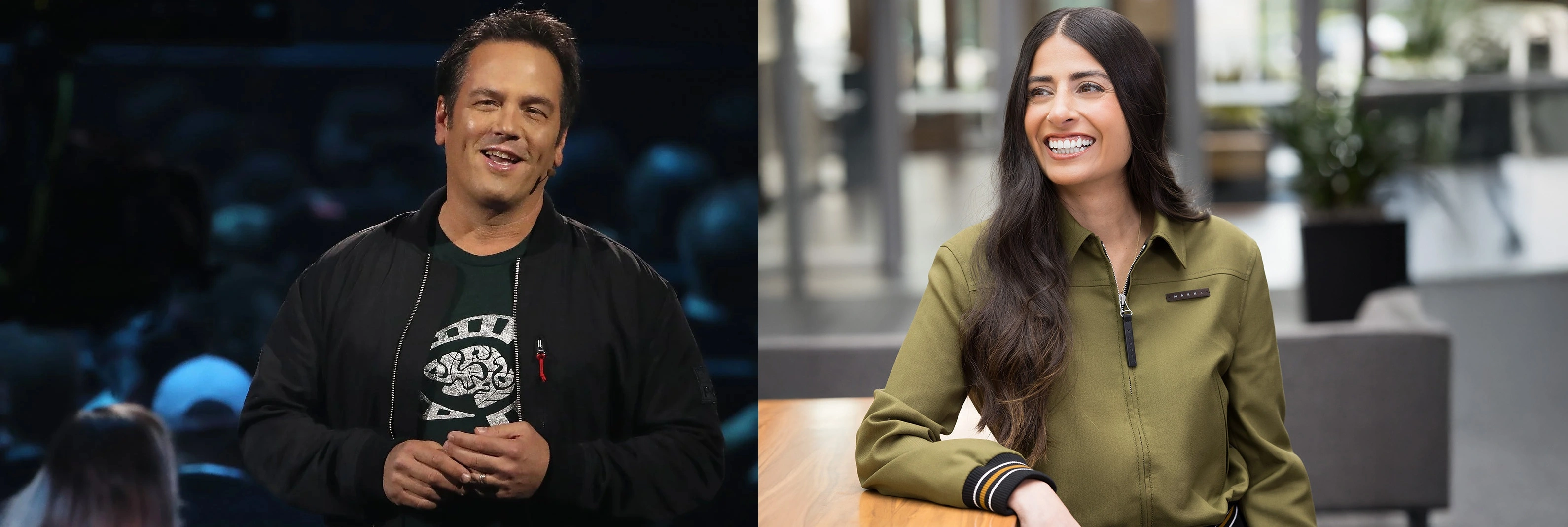
The landscape of the video game industry has shifted dramatically overnight with the announcement that Phil Spencer, the long-time architect of the modern Xbox brand, and Sarah Bond, the President of Xbox, have resigned from their positions at Microsoft Gaming. This leadership overhaul marks the end of a decade-long era defined by player-centric policies and massive acquisitions, replacing it with a new strategic directive focused intensely on artificial intelligence. Taking the helm is Asha Sharma, the former President of CoreAI, a move that explicitly signals Satya Nadella’s intention to integrate generative AI into the core of Microsoft’s gaming hardware and software ecosystems.
This transition is not merely a personnel change but a fundamental restructuring of Microsoft's gaming philosophy. For over ten years, Spencer championed the "gaming for everyone" mantra, expanding the ecosystem through Xbox Game Pass and cross-platform play. However, the appointment of Sharma suggests that the future of Xbox will no longer be defined solely by content libraries or hardware teraflops, but by how deeply AI agents and procedural generation can be woven into the player experience. Industry analysts view this as a decisive pivot, aligning the gaming division more closely with Microsoft's broader corporate identity as an AI infrastructure company.
The End of the Spencer Era
Phil Spencer's departure resonates deeply because he is widely credited with saving the Xbox brand following the disastrous launch of the Xbox One. Under his leadership, the division moved away from being a confused media hub to a powerhouse of gaming services. He oversaw the acquisition of ZeniMax Media and Activision Blizzard, expanding Microsoft's first-party studios to an unprecedented scale. His tenure was characterized by a pro-consumer approach, including the push for backward compatibility and the democratization of access via cloud gaming. His resignation, alongside Sarah Bondwho was instrumental in ecosystem growth and developer relationsleaves a vacuum of traditional gaming leadership at the very top of the division.
The simultaneous exit of Bond suggests a complete clearing of the deck, likely driven by a divergence in vision regarding the speed and scale of AI implementation. While Spencer and Bond focused on nurturing creative studios and hardware cycles, the corporate mandate has evidently shifted toward leveraging gaming data to train large language models and creating AI-driven game mechanics. This departure raises immediate questions about the autonomy of the newly acquired studios and whether the creative culture Spencer fostered can survive under a leadership structure prioritized for technological synergy over artistic intent.
Asha Sharma and the AI Mandate
Asha Sharma enters the role of CEO with a background rooted in scaling high-tech platforms rather than traditional game development. As the former President of CoreAI, her expertise lies in the practical application of artificial intelligence to consumer products. Her appointment indicates that the next generation of Xbox hardware and services will likely feature native AI processing capabilities designed to revolutionize game development costs and player interactivity. We can anticipate a push toward "living" NPCs powered by LLMs, real-time asset generation, and personalized content curation driven by machine learning algorithms.
This strategic pivot aims to solve the ballooning costs of AAA game development, a problem that has plagued the industry in recent years. By placing an AI specialist in charge, Microsoft is betting that the solution to sustainable growth lies in automation and intelligent tools. Sharma’s challenge will be to implement these technologies without alienating a core gamer base that remains skeptical of AI's role in art and storytelling. The integration will likely start with developer tools in the Azure cloud stack before trickling down to consumer-facing features in the next Xbox console iteration.
Strategic Comparison: The Leadership Shift
| Strategic Pillar | Spencer & Bond Era (2014-2026) | Sharma Era (2026 Onward) |
|---|---|---|
| Core Philosophy | Player-centric, Content is King | Tech-centric, AI Integration First |
| Growth Engine | Xbox Game Pass & Acquisitions | AI-Driven Development & Cloud Synergy |
| Hardware Focus | Raw Power (Teraflops) & Value (Series S) | Neural Processing & AI Upscaling |
| Developer Relations | Creative Freedom & Studio Autonomy | Tooling Efficiency & Generative Workflows |
Frequently Asked Questions
Why did Phil Spencer and Sarah Bond resign?
While official statements cite a desire for new challenges, the simultaneous departure and the appointment of an AI specialist suggest a strategic disagreement with Microsoft's aggressive push to pivot the gaming division entirely toward AI integration.
Who is Asha Sharma?
Asha Sharma is the incoming CEO of Microsoft Gaming and the former President of CoreAI. She is a tech executive known for scaling AI platforms and product innovation, marking a shift from traditional gaming leadership to tech-focused management.
How will this affect Xbox Game Pass?
Game Pass will likely remain central but may evolve to include AI-generated content or personalized experiences. The focus may shift from simply acquiring third-party titles to offering unique, tech-driven experiences that competitors cannot replicate.
My Take
The resignation of Phil Spencer is the end of the "Gamer's Xbox." For over a decade, Spencer served as a shield, protecting the gaming division from the colder, corporate instincts of Microsoft. By replacing him with an AI executive, Satya Nadella is making it clear that Xbox is no longer just a gaming console business; it is now a funnel for consumer AI adoption. While this may yield incredible technological advancements in how games are made and played, the soul of the platform is at risk. The industry needs innovation, but replacing creative visionaries with tech optimizers is a gamble that could alienate the very community that resurrected the brand.