Texas Instruments and NVIDIA have forged a strategic partnership to accelerate the safe, real-world deployment of humanoid robots powered by Physical AI. By integrating TI's advanced mmWave radar technology with NVIDIA's computing architecture, the collaboration aims to bridge the gap between digital simulation and autonomous operation in unpredictable environments. For robotics developers and industrial automation engineers, this hardware synergy provides a functional, safety-capable foundation that drastically reduces the latency between environmental sensing and robotic action.
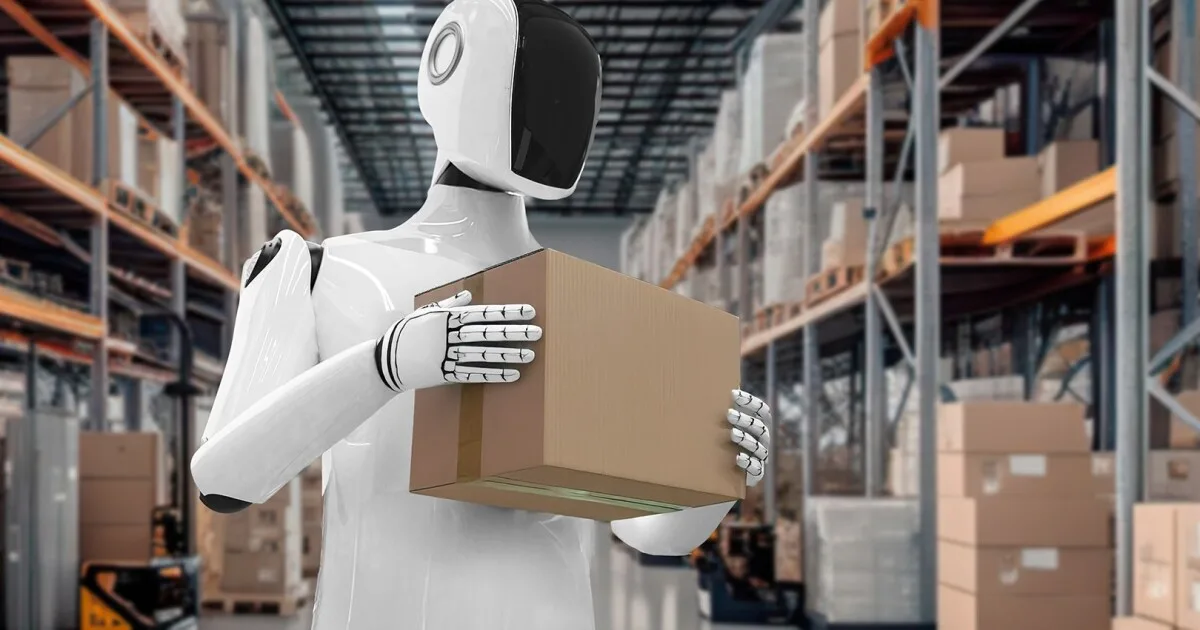
The push for Physical AI - machines that navigate autonomously and use artificial intelligence to make decisions about their physical actions - is rapidly moving from concept to reality. Until broader consumer adoption occurs, factories remain the most visible and immediate beneficiaries of this technology. To capture the broader industry momentum driving this NVIDIA and TI partnership, several other major deployments and collaborations are currently underway across the sector.
- BMW: Recently deployed Physical AI technology for the first time at one of its European manufacturing plants.
- Hyundai & Boston Dynamics: Preparing the Atlas humanoid robots to hit the factory floor, a development accelerated by a partnership with Alphabet's artificial intelligence arm, DeepMind.
- LG: Developing the CLOiD bot, which observes human behavior and mimics actions to assist with household chores.
Overcoming Visual Limitations with Sensor Fusion
Not to be left behind in the push to accelerate Physical AI, Texas Instruments is lending its mmWave radar technology to bots operating on NVIDIA's Jetson Thor, a supercomputer designed specifically to run from inside robots. By combining inputs from robot-mounted visual cameras with radar data, humanoids can make highly intelligent decisions about their surroundings. This sensor fusion solves critical edge cases that plague standard optical systems.
For example, humanoids produced through this partnership will be able to avoid walking into transparent glass doors that might seem invisible based on visual input alone. Furthermore, the radar system enables humanoids to operate safely in low-light conditions or hazardous situations involving fog or smoke. These technologies are linked via an ethernet connection using NVIDIA's Holoscan Sensor Bridge, a high-speed data transmission system explicitly designed to reduce latency from input to output.
Deepu Talla, vice president of robotics and edge AI at NVIDIA, emphasized the technical requirements of this evolution. "The safe operation of humanoid robots in unpredictable environments requires a massive leap in processing power to synchronize complex AI models with real-time sensor data and motor controls," Talla stated. Full details of the new partnership will be announced at NVIDIA GTC, an AI conference for developers held in San Jose, California, from March 16-19.
My Take: The Multi-Modal Necessity
The Texas Instruments and NVIDIA partnership highlights a critical maturation in the robotics industry: pure vision-based systems are no longer sufficient for commercial deployment. By integrating mmWave radar directly with the Jetson Thor architecture via the Holoscan Sensor Bridge, NVIDIA is effectively commoditizing high-end sensor fusion for developers. This solves the "glass door" edge case, which has historically caused catastrophic failures in autonomous navigation.
As factories become the primary testing ground for Physical AI, this multi-modal approach will be the standard that prevents costly industrial accidents. Relying on a single sensor type is a liability in dynamic environments like manufacturing floors, where smoke, poor lighting, or transparent barriers are common. This partnership ensures that the next generation of humanoids will have the robust perception required to transition safely from controlled simulations to chaotic real-world applications.
Frequently Asked Questions
What is Physical AI?
Physical AI refers to machines, such as humanoid robots, that can navigate autonomously and use artificial intelligence to make real-time decisions about their physical actions in the real world.
How does the TI and NVIDIA partnership improve robots?
It combines Texas Instruments' mmWave radar with NVIDIA's computing power, allowing robots to "see" through fog, smoke, and identify transparent obstacles like glass doors that cameras might miss.
When will more details be announced?
Further specifics regarding the partnership and technology will be revealed at the NVIDIA GTC AI developer conference in San Jose, California, from March 16-19.