The future of Molecular Solar Thermal Storage has arrived with a groundbreaking discovery that traps sunlight directly within chemical bonds, eliminating the need for traditional batteries. Researchers at UC Santa Barbara have engineered a unique molecule capable of storing solar energy and releasing it on demand as intense heat. This battery-free approach could fundamentally transform how homes and industrial facilities manage thermal energy.
For renewable energy professionals and eco-conscious homeowners, this development solves a critical inefficiency in current solar grids. Instead of converting sunlight into electricity and then back into heat, this system provides direct thermal delivery for hot water and climate control. By cutting out the photovoltaic middleman, the technology drastically reduces energy loss during conversion.
How the Pyrimidone Molecule Traps Sunlight
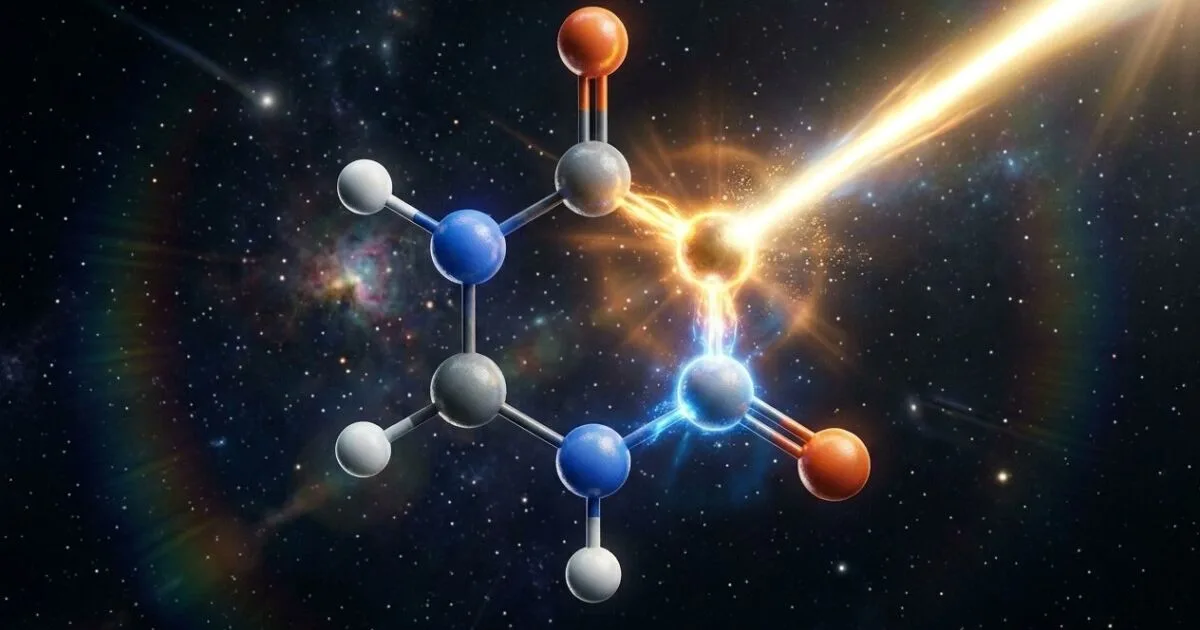
At the core of this system is Pyrimidone, a molecule derived from the building blocks of DNA. When exposed to sunlight, the molecule undergoes photoisomerization, shifting into a highly strained configuration known as the Dewar isomer. This structural switch acts as a microscopic trap, locking potential energy safely within its chemical bonds without degrading over time.
To release the stored energy, scientists apply an acid catalyst. Unlike lithium-ion batteries that discharge electricity, this reaction releases pure heat, generating enough thermal energy to boil water instantly. The system boasts an impressive energy density of 1.6 megajoules per kilogram, or roughly 444 Wh/kg, rivaling advanced electric vehicle batteries.
Overcoming Current Engineering Hurdles
While the energy density is remarkable, the technology remains in the laboratory phase with specific engineering challenges to solve. Currently, the Pyrimidone molecule primarily absorbs ultraviolet light, which represents only a fraction of the available solar spectrum. Researchers are actively tweaking the molecular structure to capture visible wavelengths, maximizing outdoor efficiency.
Additionally, the team is working to replace the single-use liquid acid catalyst with a solid, heterogeneous alternative. Embedding a solid catalyst into a flow channel would allow the system to cycle indefinitely. This shift is essential for creating a fully reusable thermal battery capable of continuous home heating.
My Take: The Future of Battery-Free Heating
The emergence of Molecular Solar Thermal Storage represents a necessary pivot in how we approach renewable infrastructure. While the industry has obsessively chased higher-density lithium-ion and solid-state batteries for electricity, we have largely ignored the fact that nearly half of global energy demand is strictly for heat. This Pyrimidone-based system offers a far more elegant solution for residential climate control and industrial manufacturing.
Comparing its 444 Wh/kg density to the experimental condensed batteries from CATL highlights just how potent chemical bond storage can be. However, commercial viability will entirely depend on the team's success in shifting the absorption spectrum to visible light and finalizing the solid catalyst flow system. If UC Santa Barbara can scale this technology, we could soon see rooftop thermal panels that store summer sunlight to heat homes through the dead of winter, drastically reducing grid dependency. This study was officially published in the journal Science.
This article was written by AI from reporting by newatlas.com.