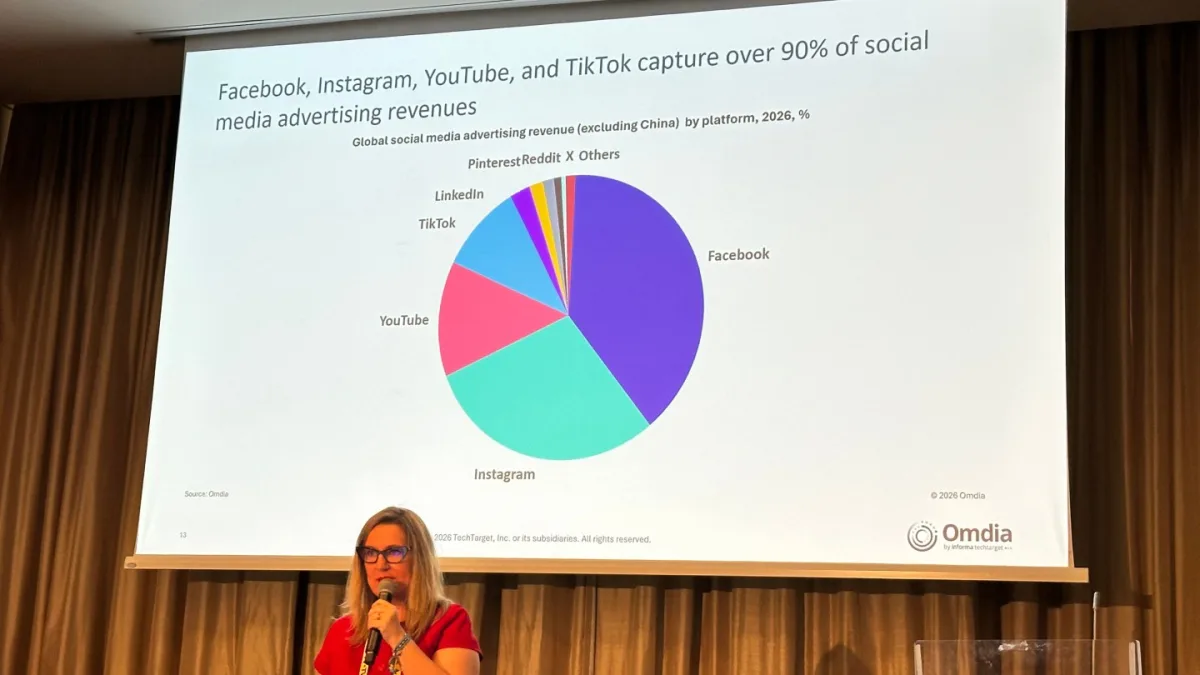
Meta ad revenue now dominates the digital landscape, with the tech giant capturing a staggering 70% of the total market according to a newly released Omdia report. The data reveals a heavily consolidated industry where Facebook, Instagram, YouTube, and TikTok collectively account for over 90% of all social media advertising revenue. For digital marketers and media investors, this concentration signals a critical shift: advertising budgets are increasingly locked into a four-platform oligopoly, leaving minimal market share for competing networks.
The findings, originally detailed by The Hollywood Reporter, highlight the immense pricing power and audience retention these platforms maintain despite broader economic fluctuations. With Meta alone controlling nearly three-quarters of the financial influx, advertisers are forced to adapt their strategies to the algorithmic demands of Mark Zuckerberg's ecosystem. This leaves alternative platforms fighting for a fraction of the remaining 10% of global social media ad spend.
Nielsen Gauge Report: NBCUniversal Dethrones YouTube
In the broader streaming and television sector, Nielsen has officially released its delayed February Gauge reports following a notable methodology dispute. The updated metrics reveal a significant shift in viewership hierarchy, with NBCUniversal-Versant dethroning YouTube to claim the largest TV viewing share. NBCUniversal and Versant represented 13% of February TV viewership, powered heavily by the Winter Olympics and the Super Bowl.
The delay in the Nielsen data release stemmed from internal disagreements over methodology changes, which NBCUniversal executives argued previously overestimated streaming viewership. The new Big Data plus Panel report provides a recalibrated look at how traditional broadcast events temporarily disrupt the dominance of digital-first streaming platforms like YouTube.
Digital Advertising and Media Consolidation
The broader advertising sector continues to show resilience alongside platform consolidation. Publicis Groupe reported a first-quarter net revenue organic growth of 4.5% year-over-year, meeting company-provided consensus and reaffirming its full-year 2026 outlook. This growth reflects sustained brand investment in digital and programmatic advertising despite ongoing global market pressures.
Simultaneously, independent digital media is experiencing its own wave of acquisitions. In a notable YouTube business deal, Gary Neville's soccer media group, The Overlap, acquired Mark Goldbridge's highly popular YouTube channels, The United Stand and That's Football. The seven-figure acquisition brings channels with 3.7 million subscribers under The Overlap's umbrella, illustrating the rising valuation of creator-led sports media properties.
My Take: The Oligopoly of Digital Attention
The Omdia data confirming that four platforms control 90% of social media ad revenue is a stark indicator of market maturity. When Meta alone commands 70% of the financial ecosystem, it transitions from being a mere participant in the ad market to acting as the foundational infrastructure for digital commerce. This level of concentration creates an almost insurmountable barrier to entry for emerging social apps, as advertisers will naturally default to the platforms offering the highest volume of guaranteed impressions.
Furthermore, the Nielsen Gauge report highlights a crucial vulnerability for digital giants like YouTube: live, high-stakes cultural events still belong to legacy media. NBCUniversal's temporary victory, fueled by the Super Bowl and Winter Olympics, proves that while YouTube dominates everyday algorithmic viewing, traditional broadcasters retain the power of appointment television. Moving forward, expect tech platforms to aggressively bid for exclusive live sports rights to close this exact gap and monopolize the remaining fragments of global attention.
This article was written by AI from reporting by mediagazer.com.