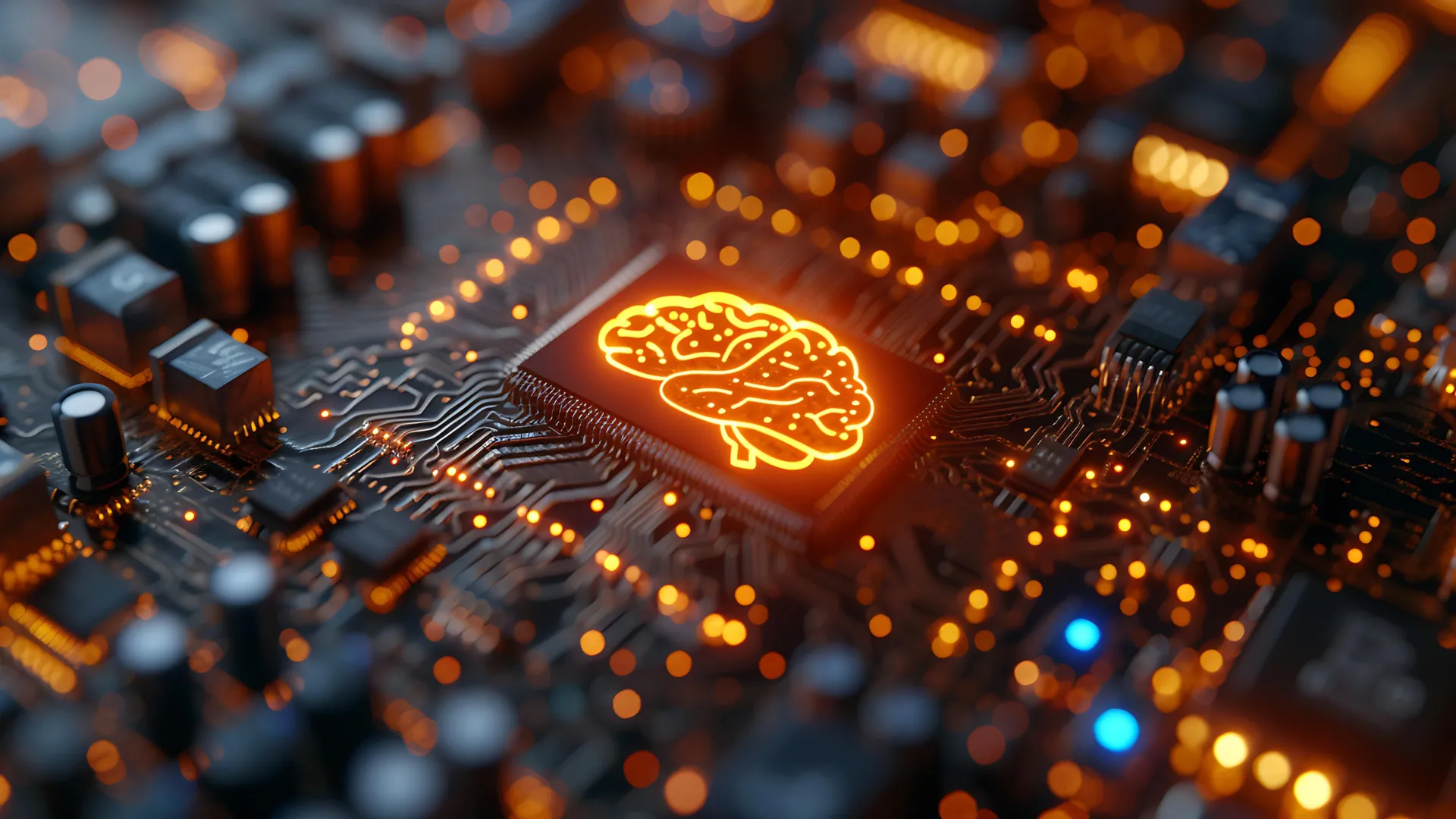
Imagine your brain casually crunching the math for fluid dynamics or nuclear simulations without breaking a sweat or guzzling gigawatts. That's the reality neuromorphic computers are delivering right now, upending expectations in computational neuroscience.
Headline
Brain-Inspired Machines Excel at Math: Neuromorphic PDE Breakthrough
Sandia National Laboratories researchers Brad Theilman and Brad Aimone have cracked a code that lets neuromorphic hardware solve partial differential equations (PDEs)the backbone of physics simulations for weather forecasting, material stress analysis, and electromagnetic fields. Published in Nature Machine Intelligence, their algorithm proves these brain-like systems don't just mimic neurons; they outperform traditional setups in efficiency.
The Breakthrough Unpacked
Neuromorphic computing flips the script on von Neumann architectures. Instead of shuttling data between separate memory and processors (the infamous bottleneck), it integrates computation and storage like the brain's synapses. Key principles include asynchronous event-driven processing, massive parallelism, and synaptic plasticity for adaptive learning.
The Sandia team's innovation? An algorithm that maps PDEs onto spiking neural networks (SNNs), the core of neuromorphic chips. Traditional solvers grind through grids iteratively; neuromorphic ones evolve solutions via neuron-like spikes, converging faster with far less power. Aimone notes: "You can solve real physics problems with brain-like computation. That’s something you wouldn’t expect."
Technical Deep-Dive: How It Works
PDEs describe phenomena like heat diffusion or wave propagation: ∂u/∂t = ∇²u (simplified heat equation). Neuromorphic hardware discretizes space into a graph where nodes are neurons, edges mimic diffusion paths. Spikes propagate based on local rules, naturally approximating the Laplacian operator ∇².
Performance edge: While conventional supercomputers chug megawatts for exascale PDEs, neuromorphic systems hit 70x speedups and 5,600x energy savings in recent benchmarks. Sandia's demo handled fluid dynamics and structural mechanics with precision rivaling GPUs but at brain-level efficiencythink exascale motor control like swinging a tennis racket.
| Metric | Conventional Supercomputer | Neuromorphic Hardware |
|---|---|---|
| Energy for PDE Solve | High (GW-scale for sims) | Ultra-low (brain-like, mW) |
| Processing Style | Sequential, synchronous | Parallel, event-driven |
| Apps Demo'd | Weather, nukes | Fluids, mechanics, fields |
| Efficiency Gain | Baseline | Up to 5,600x |
This table highlights the leap: neuromorphic isn't hype; it's measured superiority for continuous, dynamic problems.
Real-World Ripples
For national security, the National Nuclear Security Administration (NNSA) stands to gain big. Nuclear stockpile stewardship sims devour electricity; neuromorphic could slash that while certifying deterrence. Funded by DOE's Office of Science and NNSA's Advanced Simulation program, this edges us toward the world's first neuromorphic supercomputer.
Beyond nukes, insights into brain math could unlock Alzheimer's treatments by modeling neural glitches. In AI, an autonomous AI agent could deploy this for edge roboticsself-driving drones simulating physics in real-time without cloud dependency, adapting via plasticity like a human pilot.
Scaling's here: Intel's Hala Point simulates fruit fly brains at wafer-scale, real-time. Europe's BRIGHT project fuses LED neuromorphics with silicon for AI, starting April 2026. Jülich's memristor chips blend with CMOS for modular ML.
Information Gain: Beyond the Hype
- Vs. GPUs: Neuromorphics excel in sparse, continuous tasks; GPUs win dense matrix mathbut hybrids loom.
- Biological Fidelity: Simulates full small brains (e.g., fly) faster-than-real-time, enabling closed-loop brain-machine tests.
- Power Projection: If deployed, NNSA sims could cut energy by orders of magnitude, freeing grids for EVs or data centers.
The i10 Verdict
This isn't incremental; it's a paradigm pivot. Brains were never just for thinkingthey're math machines too, and we're finally harnessing that. Expect neuromorphic supercomputers by 2030, turbocharging sustainable AI while demystifying the mind. My take: Grab stock in Sandia partners; the energy crisis in compute just found its killer app. Witty upside? Your next supercomputer might daydream solutions.
This article was written by AI from reporting by sciencedaily.com.