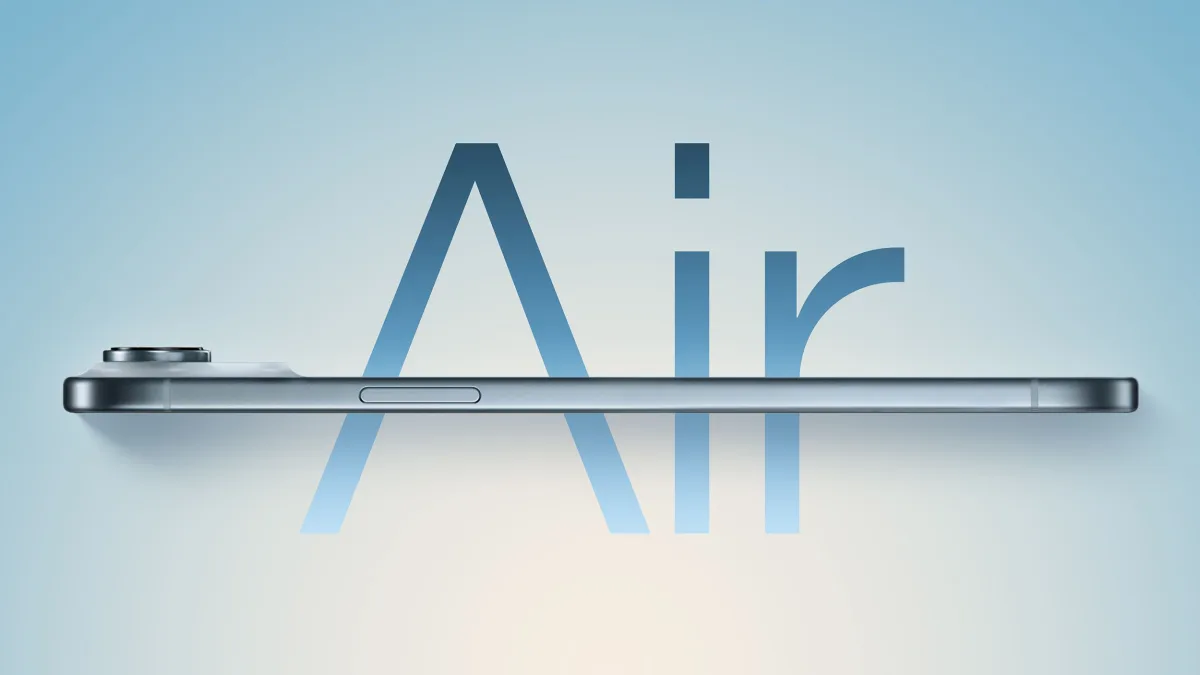
Apple's bold decision to replace the Plus model with the ultra-thin iPhone Air appears to be paying off, capturing significantly more market share than its predecessor. According to new crowdsourced Speedtest data published by Ookla, the iPhone Air has effectively doubled the adoption rate of the iPhone 16 Plus during its initial launch window, signaling a shift in consumer preferences toward design over raw processing power.
For smartphone buyers and industry analysts, these early adoption metrics confirm that Apple has finally cracked the code for its fourth iPhone tier. Consumers are actively choosing the Air's sleek form factor over the traditional Pro models, reshaping how Apple might approach future product lineups and proving that a differentiated design can succeed where previous iterations failed.
Market Share Shifts and International Adoption
The Ookla data indicates that the iPhone Air captured 6.8 percent of all iPhone 17 generation samples in the United States during the fourth quarter of 2025. This is a substantial increase from the 2.9 percent share the iPhone 16 Plus managed during the exact same launch window a year earlier. However, this growth did not occur in a vacuum; the gains appear to have directly cannibalized sales from the smaller premium tier.
The iPhone 17 Pro saw its share fall from 34.9 percent to 30.6 percent year over year, while the flagship iPhone 17 Pro Max remained essentially flat at a dominant 55.5 percent. These figures suggest that roughly 4 percent of buyers were willing to trade the superior camera system and enhanced processing power of the smaller iPhone 17 Pro for the remarkably thinner chassis of the iPhone Air.
| iPhone Model | Q4 Market Share (Launch Window) | Year-Over-Year Trend |
|---|---|---|
| iPhone Air (2025) | 6.8% | Up from 2.9% (vs 16 Plus) |
| iPhone 17 Pro | 30.6% | Down from 34.9% |
| iPhone 17 Pro Max | 55.5% | Flat / Stable |
Historically, Apple has struggled to make a differentiated fourth iPhone model resonate with consumers. The iPhone mini underperformed across two distinct iterations, while the iPhone 14, 15, and 16 Plus models - which offered larger screens without the premium features of the Pro Max - fared even worse, failing to carve out anything beyond a niche audience. In stark contrast, the iPhone Air is thriving globally. Based on the Ookla report, adoption of the ultra-thin device was even stronger in international markets, capturing an 11.2 percent share in South Korea, 8.9 percent in Japan, and 8.4 percent in Singapore.
Apple C1X vs. Qualcomm X80: The Modem Battle
Beyond external design, the iPhone Air serves as the proving ground for Apple's long-rumored custom silicon. Ookla's testing revealed that Apple's in-house C1X modem, which powers the iPhone Air, has reached effective download parity with the industry-leading Qualcomm X80 modem found in the iPhone 17 Pro Max. This marks a monumental milestone in Apple's quest for component independence.
Furthermore, the C1X modem actually outperformed the Qualcomm X80 in latency across 19 of the 22 analyzed markets, offering a snappier browsing and gaming experience. However, Qualcomm still maintains a distinct advantage in upload speeds. The X80 holds up to a 32 percent lead in certain regions, a performance gap that Ookla attributes to Qualcomm's more mature Uplink Carrier Aggregation (UL-CA) technology.
My Take
The early success of the iPhone Air proves a fundamental truth about the modern smartphone market: everyday consumers value aesthetics and physical comfort far more than benchmark scores or telephoto lenses. By capturing that crucial 4 percent of users who downgraded from the Pro tier, Apple has successfully segmented its lineup based on lifestyle rather than just screen size, succeeding exactly where the iPhone mini and Plus models failed.
Equally important is the quiet triumph of the C1X modem. Achieving download parity and beating Qualcomm on latency in its first major commercial deployment is a staggering engineering achievement for Apple. While the 32 percent deficit in upload speeds due to less mature UL-CA shows there is still room for improvement, the C1X's performance guarantees that Apple will aggressively expand its in-house modems across the entire iPhone 18 lineup next year, permanently altering its relationship with Qualcomm.
This article was written by AI from reporting by macrumors.com.