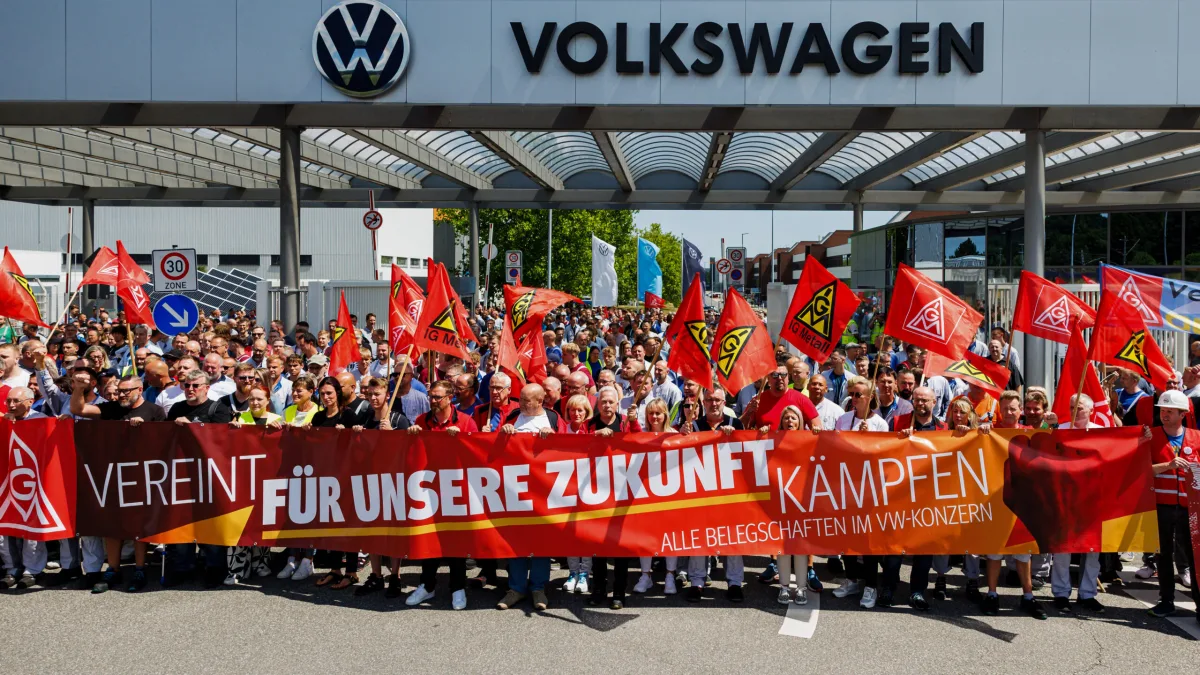
Volkswagen is facing a historic crisis, with a massive restructuring plan aiming to align its 10 million-vehicle production capacity with a global demand of just 9 million. To survive, the automaker is drastically altering its manufacturing strategy, potentially cutting up to 100,000 jobs by 2030 - up from an initial estimate of 50,000 in March - and closing four German factories for the first time in its history.
While the official public statement avoids directly mentioning factory closures, the underlying strategy is clear. CEO Oliver Blume and the VW Group are implementing a radical simplification process to reduce labor-intensive manufacturing. The company explicitly stated that future vehicles will be "concentrated on the most attractive market segments," signaling a heavy pivot toward highly profitable crossovers.
How to Navigate Volkswagen's Upcoming Lineup Changes
- Understanding the global market shift
- Tracking production and capacity metrics
- Expect a 50 percent reduction in available vehicle models across all VW Group brands.
This ensures the company concentrates its resources on the most attractive market segments, primarily highly profitable crossovers. - Prepare for a massive 75 percent cut in available equipment and trim options when configuring a new car.
This enables factories to drastically reduce offering complexity, streamlining the assembly process and lowering labor requirements. - Monitor the potential closure of up to four German manufacturing plants and the loss of 100,000 jobs by 2030.
This achieves a necessary balance between VW's current 10 million-vehicle annual capacity and the actual global demand of 9 million vehicles. - Track ongoing negotiations between CEO Oliver Blume, the board, and labor unions regarding these unprecedented cuts.
This determines whether the automaker can successfully implement its less labor-intensive production model or if union pushback will force a strategic pivot.
The Hidden Cost of Simplification
The math behind the Volkswagen restructuring plan is unforgiving. Even after reducing capacity by 2 million units since the COVID-19 pandemic, the 1 million-vehicle gap between what VW can build and what the market actually wants is bleeding the company dry. By slashing equipment options by 75 percent, VW is taking a page directly out of the EV startup playbook: build fewer variations, build them faster, and force consumers to accept standardized packages.
However, the human and political cost of this transition is staggering. Closing four domestic factories is an unprecedented move that strikes at the heart of Germany's industrial identity. If Reuters' sources are correct and union resistance blocks these closures, Blume's entire strategy of building fewer cars with less differentiation will fail to deliver the necessary financial relief, leaving the automaker stranded with excess capacity.
This article was written by AI from reporting by arstechnica.com.