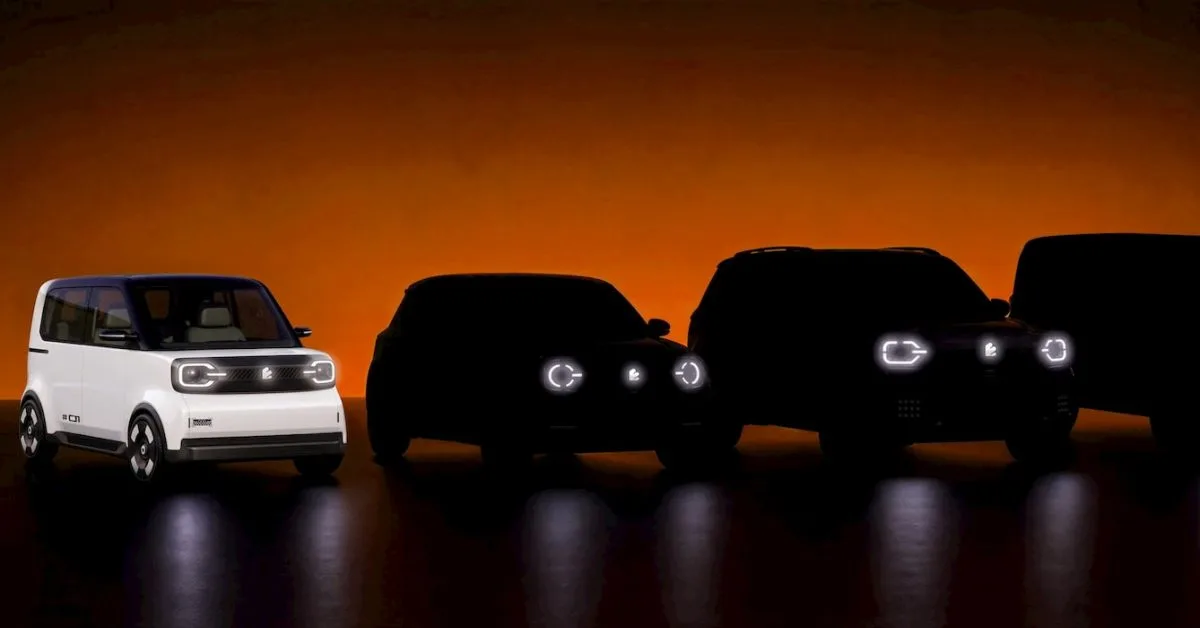
A new Sino-Japanese automotive alliance is preparing to challenge the traditional dominance of gas-powered mini vehicles in Japan. Five companies, including China's Chery Automotive and Japanese automotive parts retail giant Autobacs Seven, have officially established a joint venture company named EMT Co. The venture has launched a dedicated electric vehicle brand called EMTA, which stands for "Easy, Made To All," aiming to deliver affordable, high-tech electric options tailored specifically for Japan's unique driving landscape.
This strategic move directly impacts urban drivers and daily commuters in Japan who have long been restricted to gas-powered micro-cars due to the high cost of existing electric alternatives. By leveraging efficient Chinese manufacturing and localized Japanese market expertise, EMTA enables cost-conscious buyers to transition to zero-emission driving without paying a premium. The brand's arrival signals an aggressive shift in the competitive landscape, threatening the long-standing market dominance of established domestic models like the Honda N-Box.
The kei car segment represents a massive opportunity, accounting for approximately one in every three new vehicles sold throughout Japan. Urban environments with narrow streets make these ultra-compact vehicles incredibly popular, yet the segment has been slow to fully electrify. EMTA plans to bridge this gap by introducing its first electric kei car in 2027, with official pricing structures designed to achieve parity with traditional internal combustion engine models.
To ensure high technical performance within strict vehicle dimensions, EMTA is building its lineup around four core proprietary technologies. At the foundation is Magic SDV, a full-stack Software-Defined Vehicle platform engineered to support seamless over-the-air updates that continuously improve vehicle performance and safety parameters over time. Mobile integration is handled by Magic Sync, an in-car connectivity suite that allows owners to manage vehicle configurations and comfort settings directly through their smartphones.
Hardware capabilities are driven by Magic EV, a custom-engineered platform featuring an advanced e-axle powertrain designed to maximize interior space while delivering instant torque and low cabin noise. The vehicle will feature rapid charging capabilities alongside a battery range optimized for daily driving routines, though specific battery capacity statistics remain undisclosed. Additionally, the vehicles will feature Magic Drive, an end-to-end Level 2 advanced driver assistance system tuned to meet rigorous regulatory standards.
The Battle for Japan's Micro-Mobility Future
The establishment of EMTA marks a significant escalation in the race to electrify East Asia's compact car market, positioning the new brand as a direct competitor to BYD's recently announced "Racco" electric kei car. Following the initial 2027 micro-car launch, EMT Co CEO He Xiaoqing - a veteran with over 40 years of automotive experience at Ford, SAIC Motor, and Chery - confirmed plans to rapidly expand the vehicle lineup. The company intends to field a total of four distinct electric models across multiple lifestyle segments by 2029.
This collaborative business model offers a logical path forward for international tech integration, combining China’s dominant EV supply chain infrastructure with established Japanese distribution networks like Autobacs Seven. For everyday consumers, this cross-border integration provides a practical solution to traditional range anxiety and high upfront EV acquisition costs. It establishes a viable blueprint for how next-generation software platforms can be successfully scaled into highly specialized, regional automotive markets.
This article was written by AI from reporting by electrek.co.