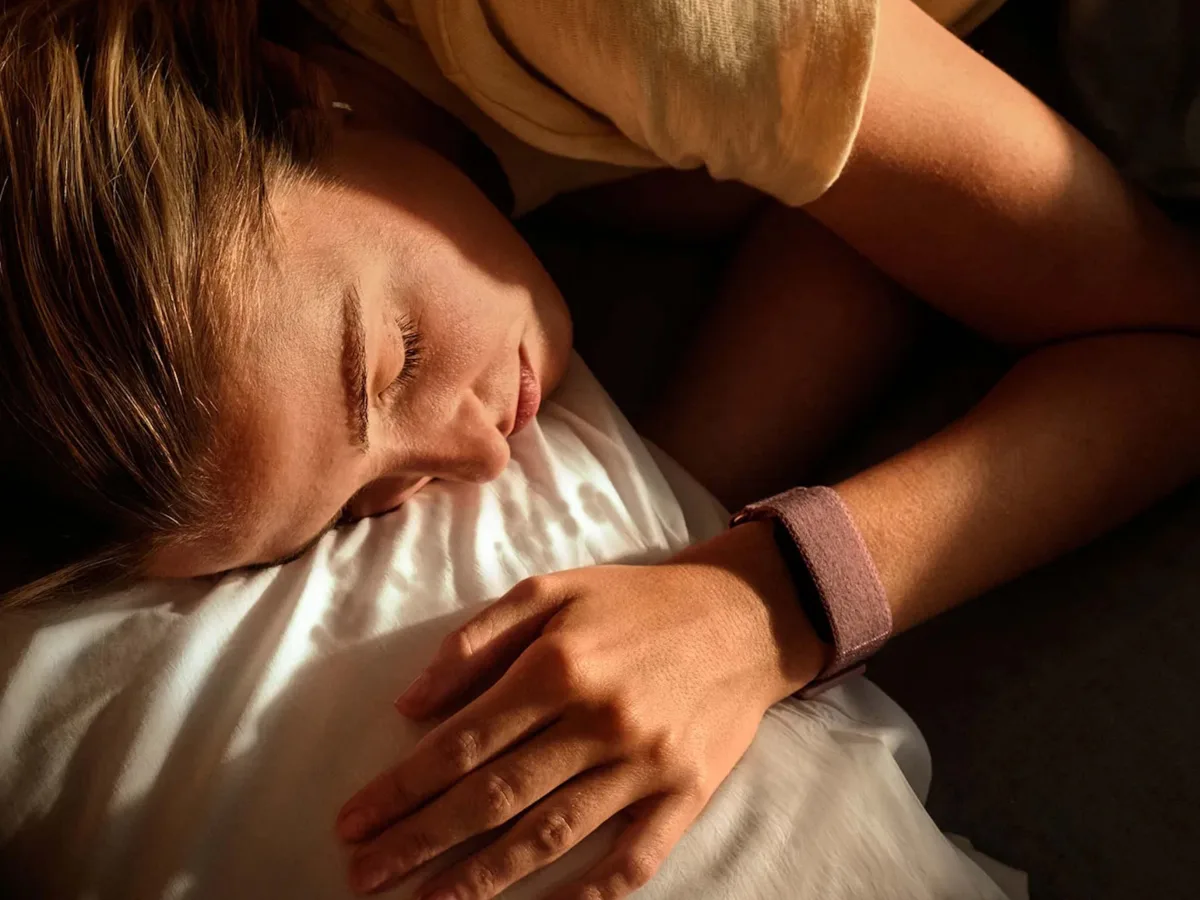
Ten days after its launch, the Garmin CIRQA smart band is facing its first rigorous scientific scrutiny, revealing a mix of impressive heart-rate accuracy and inconsistent sleep tracking. For health enthusiasts debating whether to upgrade, preliminary data from wearable researcher Rob ter Horst highlights exactly where the device excels and where it falls short.
Known online as The Quantified Scientist, the Dutch post-doctoral researcher evaluates fitness trackers using strict biological data analysis. To test the new Garmin CIRQA, he compared its biometric readings against highly accurate reference devices, including an EEG-based sleep monitoring system and a Polar H10 ECG chest strap.
Sleep Tracking: Strong on Deep Sleep, Weak on REM
When it comes to nighttime recovery, the Garmin CIRQA delivers mixed results. Deep sleep detection emerged as one of the device's strongest features, achieving a 76.5% overlap with the EEG reference data. Light sleep accuracy was deemed average, but the tracker struggled significantly with REM sleep.
Across multiple nights of testing, the smart band frequently failed to detect REM sleep during the first half of the night, though its accuracy improved later in the sleep cycle. While Horst cautions that this is a small sample size and further testing is required, the current data suggests the CIRQA's sleep tracking is solid but falls short of Garmin's top-tier wearables.
Exercise Performance and Heart-Rate Accuracy
The device performed much better during active workouts. Heart-rate measurements during indoor cycling closely matched the reference readings from the chest strap. Outdoor cycling also demonstrated high accuracy, even if the readings occasionally skewed slightly low.
Running performance was particularly impressive during steady-paced workouts. However, the optical sensor struggled during interval sessions, where rapid pace changes caused occasional inaccuracies in heart-rate logging.
How to Improve Tracking for Weightlifting
Like many wrist-based optical sensors, the Garmin CIRQA struggles with weightlifting due to wrist tension interfering with the sensor's signal. To bypass this hardware limitation, users can adopt the following strategies:
- Avoid wrist placement during heavy lifts: Move the band higher up the arm if possible to reduce signal interference from flexing wrist muscles.
- Switch to a bicep band: Horst plans to test 5 different bicep-worn straps, noting that moving the optical sensor to the bicep significantly improves accuracy during strength training.
- Pair with a chest strap: For interval training and heavy lifting, connecting the Garmin ecosystem to a dedicated ECG chest strap remains the most reliable method.
The Persistent Limits of Optical Sensors
The preliminary data from the Garmin CIRQA highlights a persistent, industry-wide hurdle: wrist-based optical sensors are still fundamentally limited by human anatomy. While a 76.5% accuracy rate for deep sleep is commendable for a compact smart band, the REM tracking inconsistencies suggest that users relying on precise recovery metrics might need to wait for future firmware optimizations to smooth out the algorithms.
Ultimately, the CIRQA proves to be a highly capable daily driver for steady-state runners and cyclists. However, the fact that a data scientist must order 5 separate bicep bands just to accurately track weightlifting proves that wrist wearables cannot yet replace dedicated chest or arm straps for serious strength athletes. Garmin has built a solid tracker, but it hasn't broken the laws of physics.