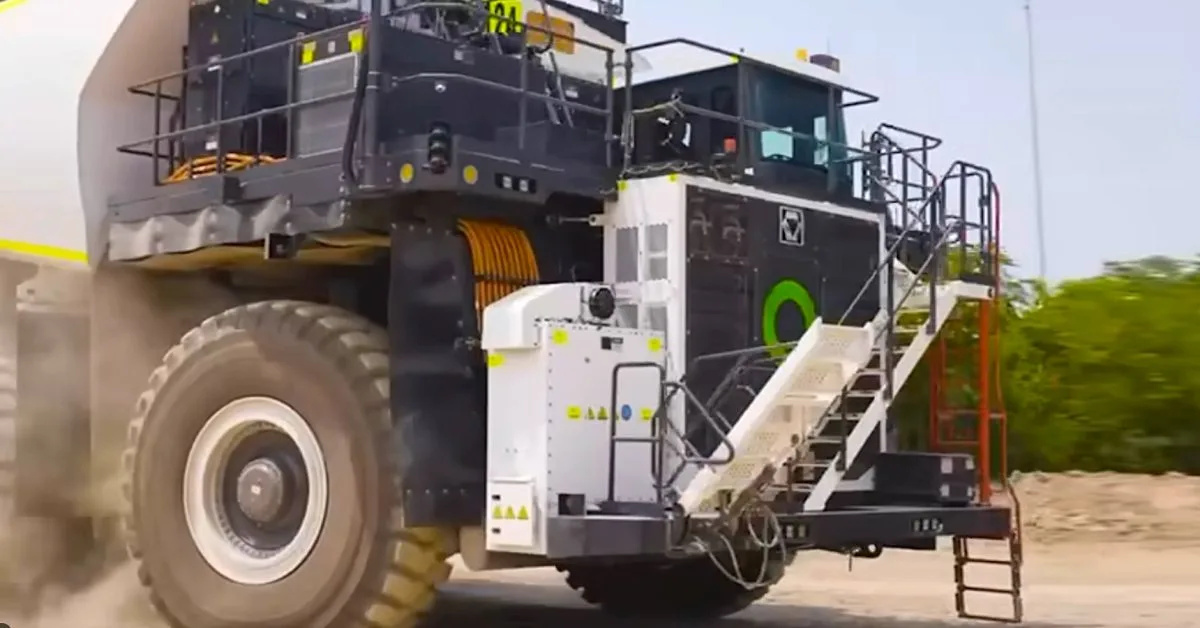
Industrial mining giant Fortescue is aggressively accelerating its transition to a zero-emission future, with CEO Dino Otranto recently taking the wheel of a massive 150-ton battery-electric haul truck. The test drive highlights the company's broader strategy to replace its entire diesel fleet and eliminate terrestrial emissions at its Pilbara operations by 2030.
Otranto shared footage of the ultra-class machinery testing via LinkedIn before its deployment to Australia. Fortescue is actively piloting several battery-electric prototypes to phase out fossil fuels across its global mining operations.
We’re moving rapidly to decarbonize our Pilbara iron ore operations and eliminate our Scope 1 and 2 terrestrial emissions by 2030. To achieve this target, we will need to swap out hundreds of pieces of diesel mining equipment at the end of their life with zero emissions alternatives.
- Dino Otranto, CEO, Fortescue
The company's electrification efforts extend far beyond a single vehicle. Fortescue's green lineup includes an electric retrofit of the massive Liebherr R 9400 excavator, an electric locomotive, and a 230-ton haul truck capable of ultra-fast 6 MW charging speeds. These upgrades are projected to displace over $400 million in diesel fuel costs annually while eliminating thousands of tons of carbon emissions.
The financial incentive for electrifying heavy machinery is staggering. According to IDTechEx, a single 150-ton diesel haul truck can consume over $850,000 worth of fuel in just one year. Competitors like Caterpillar, Hyundai, and Volvo CE are also racing to bring practical electric and autonomous mining equipment to market.
The Hidden Economics of Regenerative Braking
While the sheer size of a 240-ton electric haul truck grabs headlines, the real revolution lies in the physics of mining operations. Vehicles carrying massive loads downhill can generate immense amounts of electricity through regenerative braking, effectively turning the trucks into mobile power plants. This dynamic drastically alters the traditional total cost of ownership (TCO) model.
When a single diesel truck burns $850,000 in fuel annually, the upfront premium for battery-electric machinery pays for itself in record time. In specific scenarios with heavy regenerative braking, massive electric trucks can operate with minimal recharging costs. This proves that heavy industry decarbonization is driven just as much by raw profitability and reduced maintenance downtime as it is by environmental mandates.