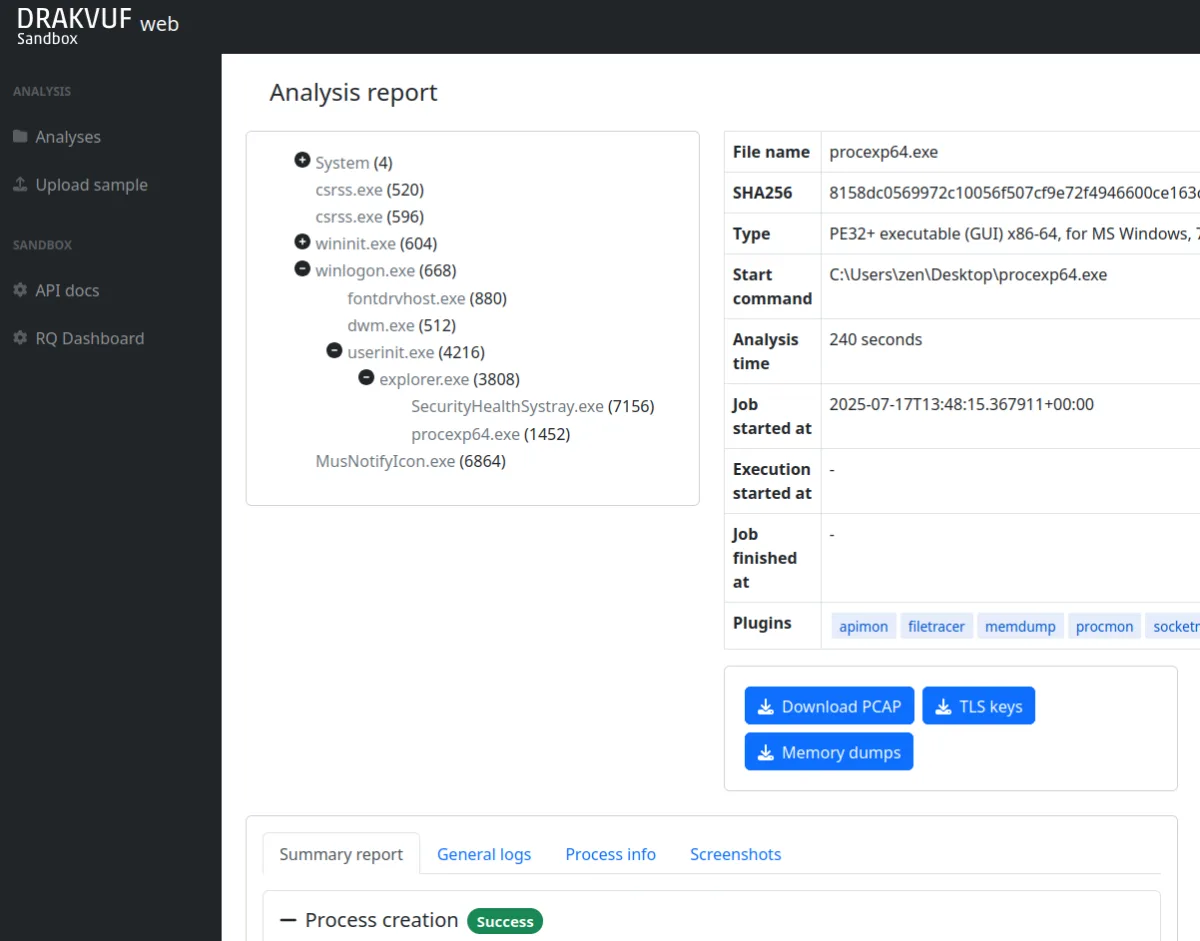
Security researchers and incident responders have a powerful new tool at their disposal with the release of DRAKVUF Sandbox v0.21.0. This automated, black-box malware analysis system operates entirely at the hypervisor level, allowing analysts to dissect suspicious files without installing any detectable agents on the guest operating system.
Maintaining a custom malware sandbox is traditionally a complex and frustrating task. The developers behind the project acknowledge this steep learning curve, famously warning users that maintaining their own sandbox means "Here be dragons." However, version 0.21.0 bridges the gap between advanced research and production deployment by introducing a guided installer and a user-friendly web interface for exploring analysis results, alongside easy access to the latest releases.
Hardware and Software Requirements
To successfully deploy the sandbox, systems must meet strict hardware and software prerequisites. The core requirement is an Intel processor equipped with Intel Virtualization Technology (VT-x) and Extended Page Tables (EPT) features.
- Host System: Must run Debian 12 Bookworm or Ubuntu 22.04 Jammy with the GRUB bootloader. The host requires a minimum of a 2-core CPU and 5 GB of RAM.
- Guest System: Supported environments include Windows 10 (x64, build 2004 or newer, with 22H2 highly recommended) or Windows 7 (x64).
Nested Virtualization Compatibility
Because the sandbox relies heavily on specific CPU features, nested virtualization support varies significantly across different platforms. Xen works out of the box, while KVM is actively supported and frequently used by the developers for testing.
- VMware Workstation Player is fully functional, provided the "Virtualize EPT" option is enabled for the virtual machine.
- Cloud hosting providers, including AWS, GCP, and Azure, are currently unsupported due to a lack of exposed CPU features required by the engine.
- Hyper-V and VMWare Fusion for Mac are entirely incompatible with the current build.
The Invisible Advantage in Malware Analysis
The true value of the DRAKVUF engine lies in its agentless architecture. Modern malware is increasingly "sandbox-aware," specifically designed to detect in-guest monitoring tools and alter its behavior to evade detection. By leveraging hardware virtualization extensions to perform guest introspection from the outside, the sandbox remains practically invisible to the malicious payload.
While the strict hardware requirements and lack of cloud support present initial deployment hurdles, the trade-off is a highly resilient, production-ready environment. Backed by organizations like CERT Polska and The Honeynet Project, this release provides security teams with a robust method to analyze sophisticated threats that would otherwise bypass traditional sandboxing solutions.
This article was written by AI from reporting by kitploit.com.