Ditching the bulky, sweat-inducing gaming headset for a sleek pair of underrated gaming earbuds can completely transform your setup. Many players endure unnecessary clamping pressure and moisture-trapping ear cushions, unaware that high-quality in-ear monitors (IEMs) and wireless buds offer zero-latency performance and superior positional audio. Whether you are grinding competitive matches or exploring expansive single-player worlds, you do not need a device with "gaming" in the title to get a competitive edge.
While massive brands like Apple and Bose dominate the personal audio market, specialized audio manufacturers are quietly releasing hardware that rivals traditional boom-mic headsets. The shift toward earbuds is driven by advancements in Bluetooth codecs like aptX Adaptive and LE Audio, alongside multi-driver setups that deliver the deep bass and crisp highs necessary for hearing enemy footsteps.
Here are five underrated gaming earbuds that offer a compelling alternative to traditional headsets:
- Heavys H1E ($189, MSRP $209): Packed with dynamic drivers and Bluetooth 5.4, these earbuds support multiple codecs including aptX Adaptive. They feature a dual-mic system with active noise cancellation (ANC) branded as "Hellblocker," IPX5 sweat resistance, and memory foam tips. Battery life hits seven hours on a single charge (90 minutes to fill), extending to 24 hours with the USB-C charging case, which takes two hours to charge.
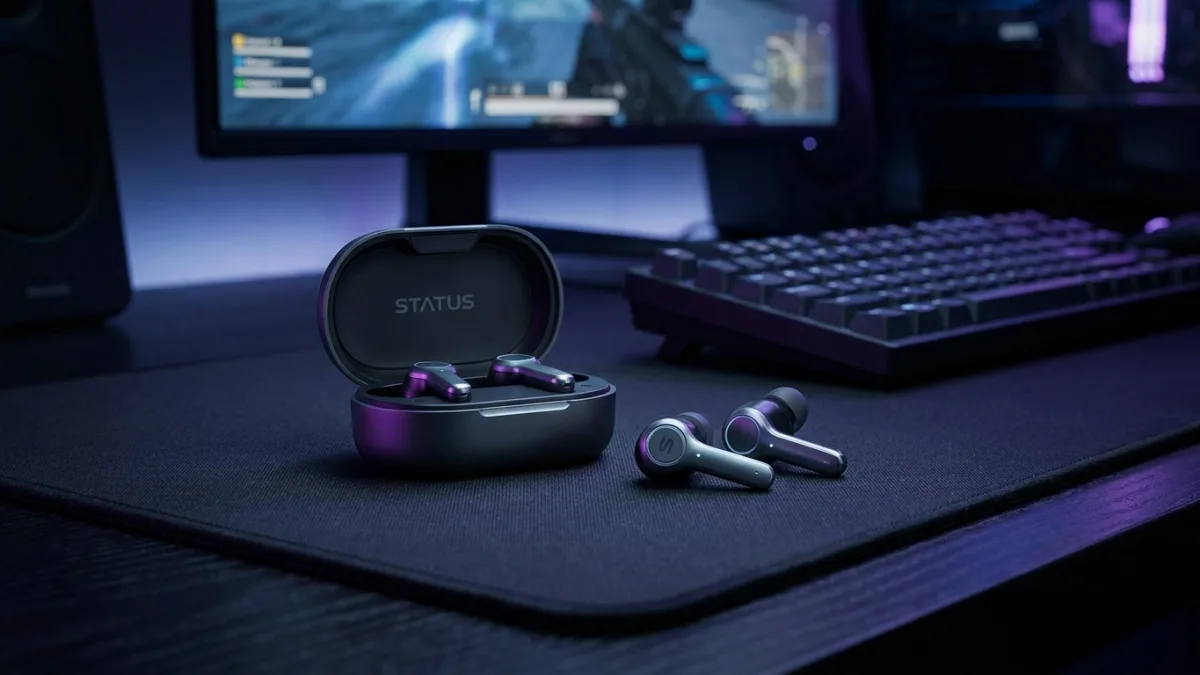
- Status Pro X ($249, MSRP $299): A premium wireless option featuring hybrid triple drivers (one 12mm dynamic and dual Knowles balanced armatures) supporting LDAC at 24-bit/96 kHz up to 990 kbps. Backed by Bluetooth 5.3 and LE Audio, they utilize six beamforming microphones with Voiceloom AI speech enhancement. They deliver eight hours of runtime, totaling 24 hours with the wireless or USB-C charging case.
- Shure SE215 PRO ($116.98): Designed for zero-latency competitive play, these wired over-ear monitors rely on a pure passive seal to block up to 37 dB of ambient noise. They feature a detachable MMCX cable with 360-degree rotation, meaning a broken wire is a simple $20 fix rather than a total replacement. They come with three sizes of flex and foam sleeves for optimal isolation.
- KZ AS10 IEM ($60): A budget-friendly wired powerhouse where each earbud houses five balanced armature drivers (one low, one mid, two highs, and one mid/high hybrid). They boast a 105 dB sensitivity, 14 ohms impedance, and a frequency range of 20 Hz to 40 kHz. The detachable 2-pin cable uses a 0.75mm connection, making them an easy plug-and-play solution for PC and consoles.
- GravaStar Sirius Plus ($79.95, MSRP $89.95): Blending aesthetics with performance, these wireless buds feature an aluminum alloy chassis, customizable RGB lighting, and IPX4 water resistance. They utilize Bluetooth 5.3 and a 10mm composite diaphragm dynamic driver, alongside hybrid dual-feed ANC. They offer seven hours of runtime on a 90-minute charge, with a massive 28 hours total using the case.
The Wired Renaissance in Competitive Play
The resurgence of wired in-ear monitors (IEMs) like the KZ AS10 and Shure SE215 PRO highlights a growing divide in the gaming community between casual convenience and competitive necessity. While Bluetooth technology has made massive strides with codecs like aptX Adaptive and LE Audio, the physics of wireless transmission still introduce marginal latency. In high-stakes tactical shooters where a millisecond delay in hearing a footstep dictates the outcome of a match, the zero-latency guarantee of a physical cable remains undefeated.
Furthermore, the omission of built-in microphones in these wired models is not a missing feature, but a strategic advantage. By separating the audio output from the microphone input, players are forced to adopt standalone desktop microphones, which drastically improves voice clarity for teammates compared to the compressed audio of inline or Bluetooth mics. As gaming setups become more modular, the traditional all-in-one headset is rapidly losing ground to specialized, dedicated audio components that prioritize raw performance over bundled convenience.
This article was written by AI from reporting by bgr.com.