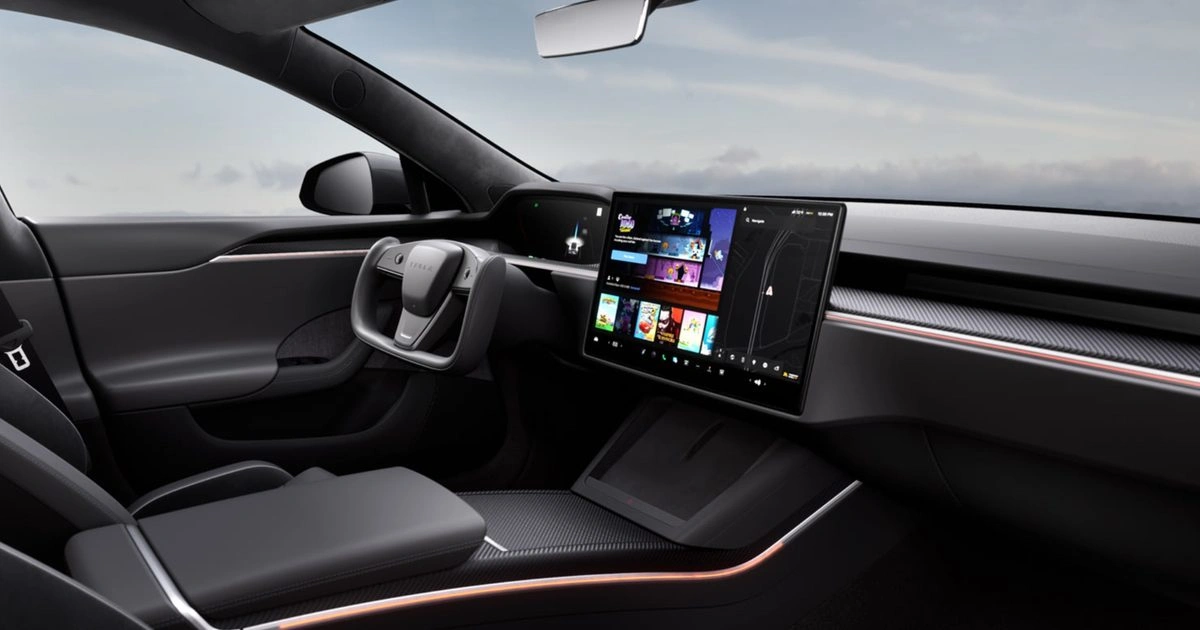
Tesla's futuristic yoke-style steering wheels are about to face their biggest regulatory challenge yet. China's draft safety regulations, published this month, require all steering wheels to undergo rigorous impact testing that yokes cannot passeffectively banning the half-wheel design from 2027 onward. This marks a significant pivot in how governments are approaching automotive innovation, prioritizing proven safety protocols over cutting-edge design.
The Regulatory Crackdown: What Beijing's New Rules Demand
Beijing's draft regulations impose mandatory impact testing standards that full-rim steering wheels can withstand, but yoke designs fundamentally cannot. The testing requirements are designed to ensure driver safety during collisions, and the geometry of a yokewith its open sides and reduced materialfails to meet these impact thresholds. This isn't a ban on innovation; it's a regulatory enforcement of crash-test physics. The 2027 deadline gives manufacturers roughly 12 months to redesign their steering systems or face market exclusion in one of the world's largest EV markets.
The implications are immediate and severe for Tesla, which has made yokes a signature feature of its premium models, including the Model S, Model X, and newer Model 3 variants. Chinese buyers represent a critical revenue stream for Tesla, and losing compliance in this market would force a costly redesign or market withdrawal for affected models.
Why Yokes Failed the Safety Test
Yoke steering wheels were designed with driver convenience and futuristic aesthetics in mind. They reduce the turning radius needed for parking and offer a modern, minimalist cabin design. However, they sacrifice the structural integrity that traditional steering wheels provide during high-impact collisions. The open design means less material to absorb and distribute impact forces, making them inherently weaker under the stress conditions that safety regulations test for.
This regulatory decision reflects a broader tension in automotive design: innovation versus safety. While yokes represent a step forward in user experience, they represent a step backward in crash protectiona trade-off that regulators are unwilling to accept, especially in markets like China where safety standards are tightening.
Market Impact: Beyond Tesla
While Tesla is the most visible casualty of this regulation, other manufacturers experimenting with yoke designs will also be affected. The ban reinforces a pattern: governments are increasingly skeptical of design choices that compromise established safety protocols. This creates a chilling effect on automotive innovation, where manufacturers must now balance aesthetic and functional improvements against regulatory compliance costs.
| Factor | Yoke Design | Traditional Steering Wheel |
|---|---|---|
| Impact Test Compliance | Fails | Passes |
| Material Strength | Lower (open design) | Higher (full rim) |
| Parking Ease | Better (reduced turns) | Standard |
| Aesthetic Appeal | Modern, minimalist | Conventional |
| China Compliance (2027) | Non-compliant | Compliant |
The Broader Regulatory Trend
China's steering wheel regulation is part of a larger pattern of governments reasserting control over automotive design in the EV era. As manufacturers push boundaries with autonomous driving features, minimalist interiors, and unconventional controls, regulators are stepping in to ensure that safety fundamentals aren't compromised. This is particularly important in China, where EV adoption is accelerating rapidly and safety standards must keep pace with market growth.
The regulation also signals that governments view certain design choices as non-negotiable. Unlike software features that can be updated remotely, steering wheel design is a physical safety component that cannot be easily modified after purchase. This makes regulatory compliance non-optional.
What's Next for Tesla and the Industry
Tesla has three options: redesign its steering systems to comply with the new standards, withdraw affected models from the Chinese market, or challenge the regulation through industry lobbying. Given China's market importance and the regulatory environment's resistance to exceptions, a redesign is the most likely path. This will add development costs and delay new model launches, but it's preferable to losing access to the world's largest EV market.
For the broader automotive industry, this regulation serves as a reminder that innovation must operate within safety boundaries. Manufacturers can still pursue cutting-edge designs, but they must do so without compromising crash protection or other established safety protocols.
My Take
China's yoke ban represents a necessary correction in the EV design conversation. While yokes are undeniably cool and functionally interesting, they're not worth the safety trade-offand regulators are right to enforce that boundary. This doesn't mean the end of automotive innovation; it means innovation must be smarter about which conventions to break. Tesla and other manufacturers will adapt, and the industry will move forward with designs that are both modern and safe. The real lesson here is that in automotive design, physics and regulations ultimately trump aesthetics.
This article was written by AI from reporting by digitaltrends.com.