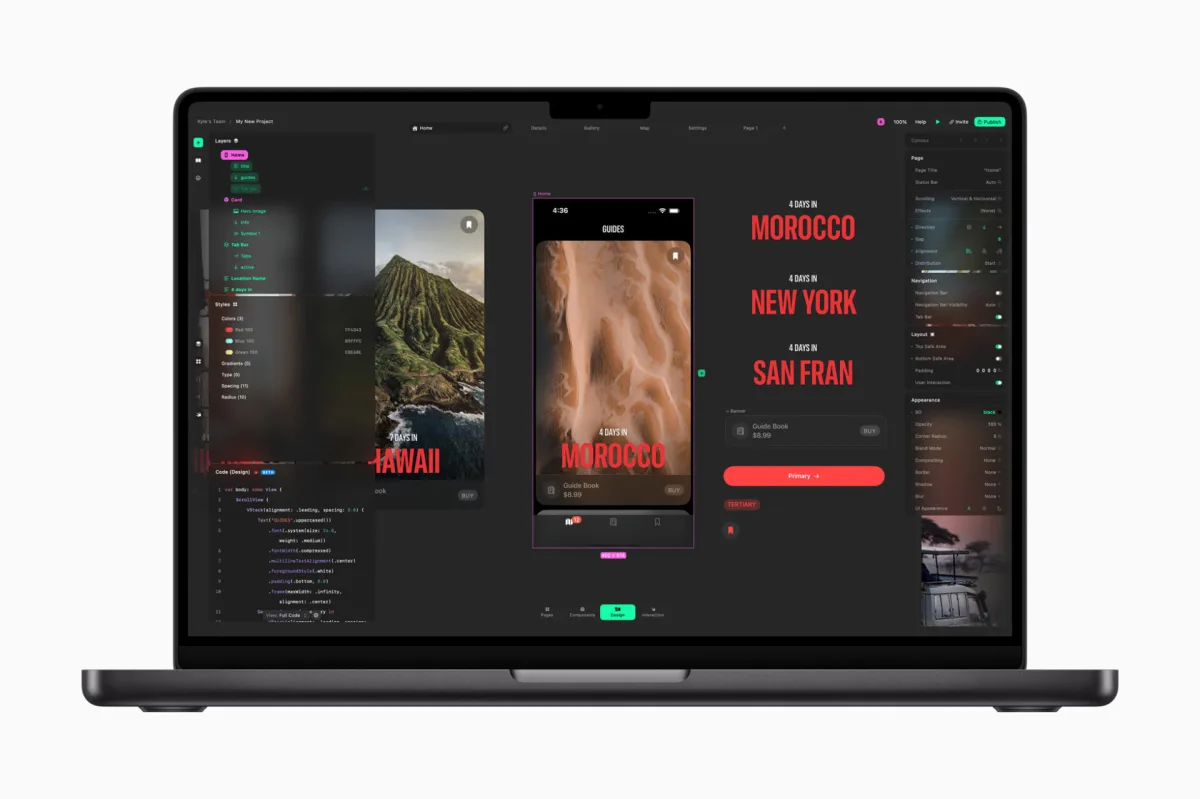
Apple has quietly acquired the core assets and development team behind Play, a highly acclaimed prototyping application, in a move to strengthen its native software development ecosystem. The secret acquisition, which began taking shape in February 2026, was recently exposed through regulatory filings published by the European Union. Under the new rules of the Digital Markets Act (DMA), major tech corporations are required to disclose acquisitions that could impact the European software market, leading to the public listing after a mandatory four-month waiting period.
Developed by Rabbit 3 Times, Play was a robust mobile and desktop application tailored for creators designing user interfaces. It allowed developers and designers to build interactive prototypes directly on their iPhone or Mac using native Apple frameworks, specifically SwiftUI and Core Animation. Once the visual mapping and user experience were finalized, creators could seamlessly export their projects directly into Xcode to complete the coding process.
Play is a sophisticated yet accessible tool that lets users build interactive prototypes with SwiftUI frameworks. Its thoughtfully crafted user interface is both powerful and easy to navigate, helping designers create interactive prototypes and collaborate across Mac and iPhone, all synced in real time for seamless creativity.
- Apple
The application has already been permanently removed from the App Store. Rabbit 3 Times officially ceased support for its iPhone and Mac applications on April 20, 2026. To ease the transition for its dedicated user base, the company temporarily made its premium Xcode export feature available for free, allowing designers to save their work before the official website was taken offline entirely.
The Push for Visual Development in Xcode
While Apple has not officially announced how Play’s technology will be integrated, the acquisition signals a clear strategic shift for the company's developer tools. Historically, Apple’s native environments like Xcode have catered heavily to traditional programmers, leaving the visual-first prototyping market to third-party giants like Figma. By absorbing the talent behind Play, Apple is likely preparing to bake fluid, drag-and-drop SwiftUI prototyping directly into future versions of Xcode or Swift Playgrounds.
This move bridges the frustrating gap between UI designers and developers. If Apple successfully integrates Play's core mechanics, it could allow creators to generate production-ready native code simply by designing a functional interface on an iPad or Mac. Ultimately, this acquisition is less about eliminating a competitor and more about modernizing Apple's own toolset to keep developers locked into its proprietary ecosystem from the very first wireframe.
This article was written by AI from reporting by iphoneincanada.ca.