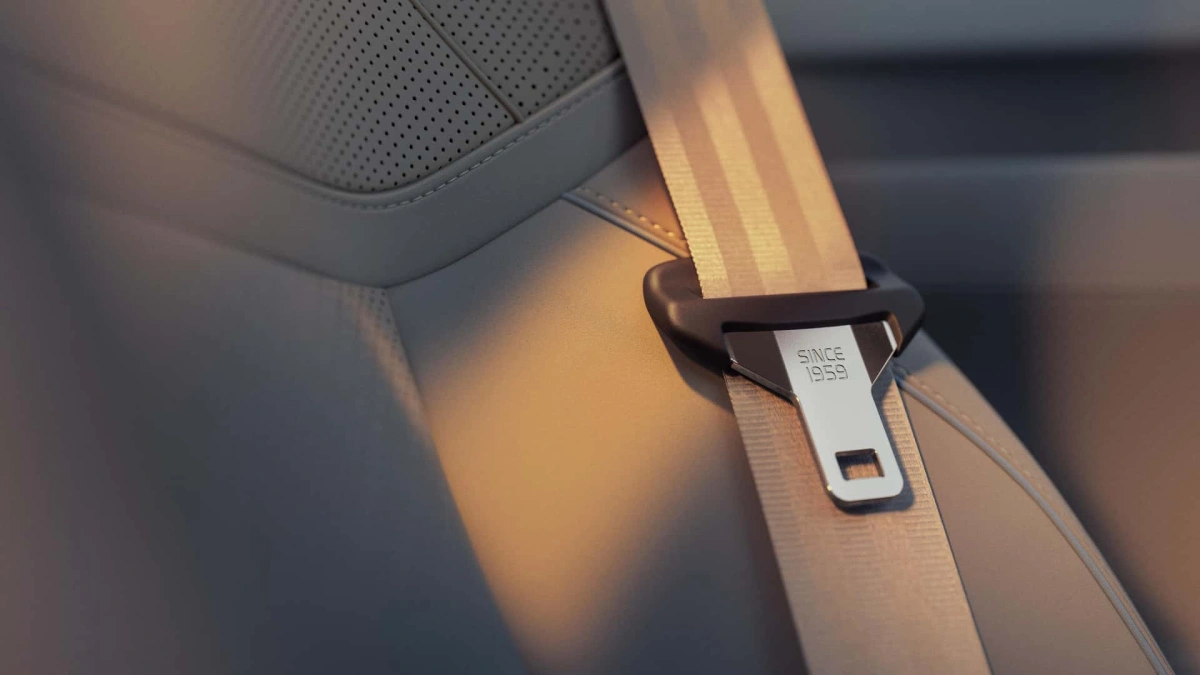
Volvo is revolutionizing automotive safety with the introduction of its new multi-adaptive seatbelt technology in the upcoming EX60 SUV. Marking the 70th anniversary of the automaker's first seatbelt prototype, this intelligent system abandons the traditional one-size-fits-all approach in favor of real-time, sensor-driven passenger protection.
This development is highly relevant for safety-conscious drivers, automotive tech enthusiasts, and future EV buyers. By integrating dynamic tension adjustments, the technology promises to significantly reduce the risk of chest and head injuries during collisions, offering a personalized safety shield that adapts to occupants of all sizes and body types.
For seven decades, the fundamental mechanics of the seatbelt have remained largely static since Volvo design engineer Nils Bohlin introduced the standard three-point design in 1959. As vehicles become more advanced with autonomous features and electric powertrains, passive safety systems must evolve to match. The shift toward software-defined safety mechanisms represents a critical leap in modern automotive engineering, ensuring that physical restraints are as intelligent as the vehicles they inhabit.
How the Multi-Adaptive Seatbelt Works
The system relies on a sophisticated network of interior and exterior sensors. These sensors continuously gather real-time data to monitor a passenger's physical build, seating position, the vehicle's deceleration intensity, and overall impact dynamics. Based on this continuous stream of information, the system automatically calculates and chooses the optimal restraining strategy for each individual occupant.
For example, if a collision occurs, the system might apply greater restraining force to a larger passenger to prevent severe head injuries. Conversely, a lighter passenger would experience reduced belt tension, specifically calculated to minimize the risk of chest trauma. This dynamic load adjustment ensures that the restraint is proportional to the physical needs of the person wearing it.
Furthermore, the multi-adaptive seatbelt is designed to learn and adapt over time. It supports over-the-air (OTA) software updates, ensuring that the safety algorithms can be refined and improved long after the vehicle leaves the dealership. This means the car's passive safety systems can adapt to new research and potential road hazards continuously.
The Legacy of Volvo Safety
The debut of this technology in the EX60 SUV, which goes on sale later this year, coincides with a major historical milestone. While inventors Roger Griswold and Hugh de Haven applied for a seatbelt patent in 1955, Volvo's two-point cross-chest diagonal belt debuted in 1956 on the Amazon prototype and is largely considered the first of its kind. Just three years later, in 1959, Volvo became the first manufacturer to equip cars with the modern three-point seatbelt as standard equipment.
Nicole Melillo Shaw, Managing Director of Volvo Car UK, emphasized the importance of this evolution. She noted that the latest multi-adaptive seatbelt in the new EX60 is a direct testament to the company's pioneering technology and its enduring approach to safety innovation.
Frequently Asked Questions
Which vehicle will feature the new multi-adaptive seatbelt?
The technology will debut in the upcoming Volvo EX60 SUV, which is scheduled to go on sale later this year.
How does the multi-adaptive seatbelt improve passenger safety?
It uses a network of sensors to assess a passenger's size, seating position, and crash dynamics, automatically adjusting the belt's tension to minimize specific injury risks, such as head or chest trauma.
Can the seatbelt system be updated after purchase?
Yes, the system supports over-the-air (OTA) software updates, allowing Volvo to enhance and refine its safety algorithms over time.
My Take
The introduction of the multi-adaptive seatbelt in the EX60 SUV is a brilliant strategic move that reinforces Volvo's core brand identity: uncompromising safety. By integrating OTA updates into a physical restraint system, Volvo is bridging the gap between traditional mechanical safety and modern software-defined vehicles. The fact that the system dynamically adjusts tension based on passenger weight and crash severity addresses a long-standing flaw in static seatbelts, which can sometimes cause secondary injuries in severe impacts. As the EX60 hits the market later this year, this technology will likely set a new benchmark, forcing competitors to upgrade their own passive safety systems to remain competitive in the premium EV segment.
This article was written by AI from reporting by motor1.com.