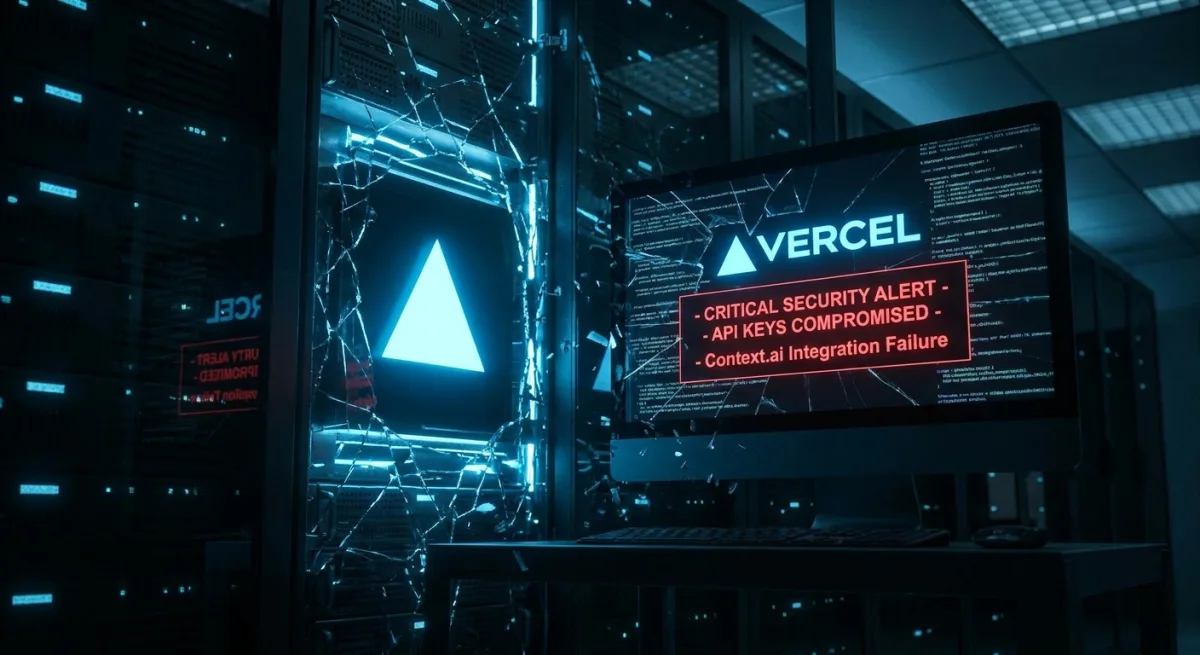
The recent Vercel security breach has sent shockwaves through the Web3 development community, forcing crypto teams to urgently rotate their API keys to prevent unauthorized access. The web infrastructure provider, which serves as the primary steward of the Next.js framework, disclosed that an attacker successfully infiltrated its internal environments. The intrusion was traced back to a compromised Google Workspace connection utilized by a third-party AI tool known as Context.ai.
According to Vercel, the hacker managed to access behind-the-scenes settings that were not properly locked down. This potentially exposed critical API keys, which act as digital passwords allowing software to connect to databases, external services, and crypto wallets. A threat actor on the cybercrime platform BreachForums has already claimed to be selling the stolen Vercel data, including source code and access keys, for $2 million, though these claims remain independently unverified.
Vercel maintains that environment variables explicitly marked as sensitive are stored using encryption that prevents them from being read, and the company has found no evidence that these specific variables were accessed. However, because Vercel underpins the frontend infrastructure for countless decentralized applications, the incident has triggered a massive security review across the industry. The company is currently working with incident response firms and law enforcement to determine the full extent of the data exfiltration.
Immediate Steps for Web3 Developers
Because frontend environments often store credentials that connect user interfaces to blockchain data providers, developers hosting projects on Vercel must take immediate defensive action. Relying on default encryption is not enough when internal environments are compromised.
- Rotate Deployment Credentials: Immediately revoke and regenerate all API keys and deployment tokens connected to your Vercel hosting environment.
- Audit Environment Variables: Review all stored variables to ensure no hardcoded private keys or unencrypted database passwords are exposed in the frontend configuration.
- Monitor API Usage: Check your backend services and RPC nodes for unusual traffic spikes, which could indicate that a stolen key is being used to burn through usage limits or impersonate your application.
The Orca Response and Broader Contagion
Several major Web3 teams have already initiated emergency protocols. Orca, a prominent Solana-based decentralized exchange, confirmed that its frontend is hosted on Vercel and that it has proactively rotated all deployment credentials. The project assured its users that its on-chain protocol and user funds remain completely unaffected by the frontend vulnerability.
This infrastructure breach arrives during a catastrophic April 2026 for the crypto sector. Just days prior, a $292 million exploit of the Kelp DAO rsETH token triggered a severe liquidity crunch across decentralized finance, leading to massive withdrawals from lending platforms like Aave. LayerZero attributed the Kelp DAO attack to North Korea's Lazarus Group, noting that the hackers compromised two RPC nodes and used a DDoS attack to force a failover, exploiting Kelp's decision to use a single-verifier configuration.
The contagion has spread rapidly, making this one of the worst months for crypto security on record. Beyond Kelp DAO, the industry has suffered a string of devastating attacks. Other exploited protocols include:
- Drift (drained of approximately $285 million in a separate attack linked to North Korean actors)
- CoW Swap
- Zerion
- Rhea Finance
- Silo Finance
The Centralization Paradox in DeFi
This cascading series of exploits highlights a glaring structural flaw in modern decentralized finance: the heavy reliance on centralized Web2 infrastructure. While the underlying blockchain protocols and smart contracts may be decentralized and immutable, the user-facing frontends are almost entirely hosted on centralized platforms like Vercel. When a single third-party AI tool like Context.ai gets compromised, it creates a backdoor that threatens the integrity of dozens of supposedly decentralized applications.
The LayerZero analysis of the Kelp DAO exploit serves as a critical warning for the entire industry. Ignoring multi-verifier recommendations and relying on single points of failure - whether that is a single RPC node or a centralized frontend host - leaves protocols highly vulnerable to sophisticated state-sponsored actors like the Lazarus Group. Moving forward, Web3 projects must invest as heavily in frontend security and decentralized hosting alternatives as they do in smart contract audits, or risk losing user trust entirely.
This article was written by AI from reporting by coindesk.com.